



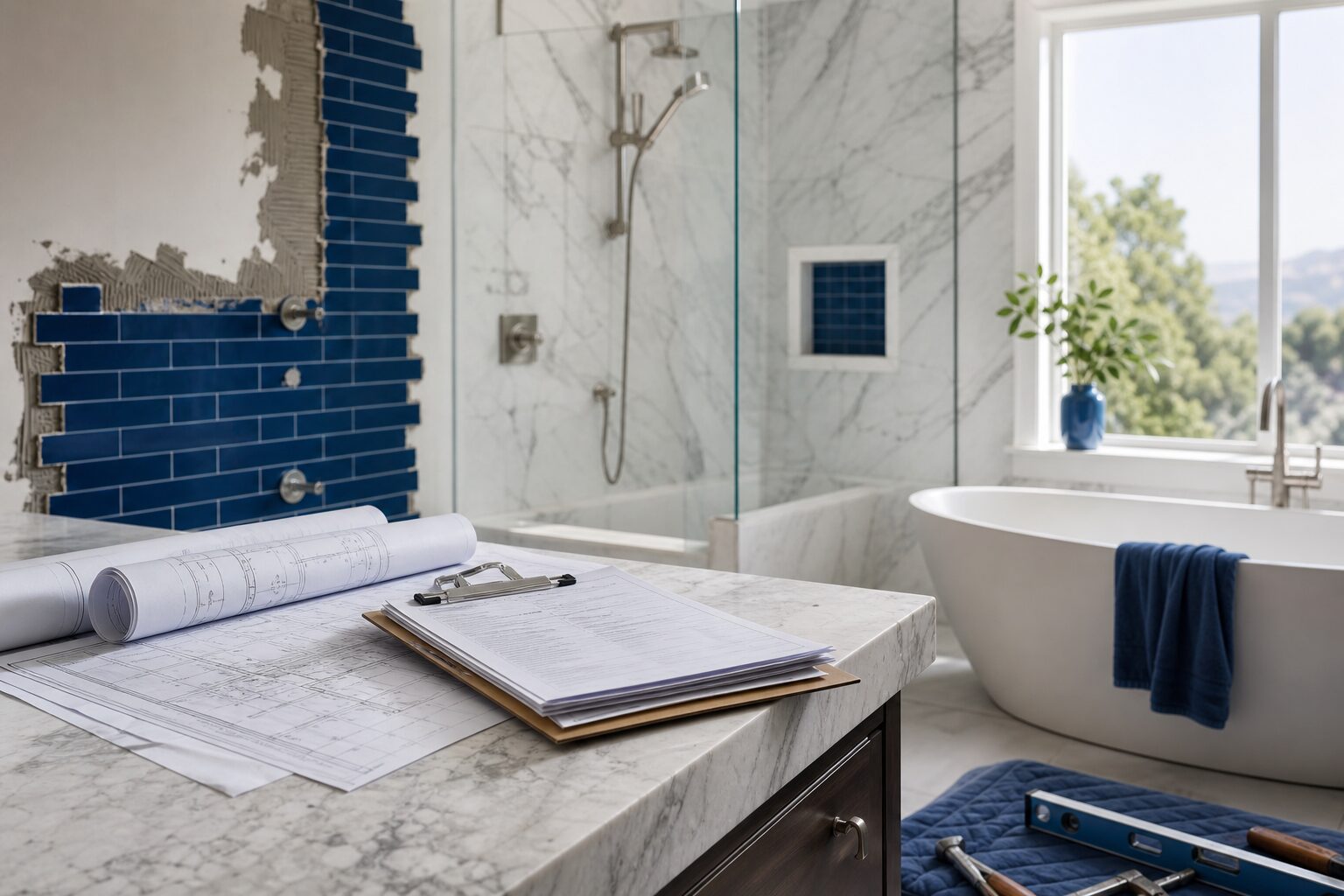
Most bathroom remodels in California require at least a building permit, and depending on the scope of work, you may need separate electrical, plumbing, and mechanical permits as well. The difference between a minor cosmetic refresh and a full renovation hinges entirely on whether you’re touching structural elements, moving plumbing lines, or upgrading electrical systems. Skipping permits to save time or money is how homeowners end up with unpermitted work that tanks resale value, fails inspections, or creates liability issues down the line.
Here’s what you actually need to know to navigate this process without surprises.
Which Permits Do You Actually Need for a Bathroom Renovation?
The permit requirements depend on what you’re changing. A cosmetic refresh, new tile, fixtures, paint, vanity replacement, typically requires only a building permit. But the moment you move plumbing, add electrical outlets, relocate walls, or upgrade ventilation, you’re triggering additional permits.
Building permits are mandatory for any structural changes, fixture relocations, or work that affects the home’s safety systems. In California, this includes alterations to the bathroom’s layout, wall removal, or any work that changes the room’s footprint.
Plumbing permits are required whenever you install new pipes, relocate drains, or add fixtures like a new shower or bathtub. Even moving a toilet or sink to a different wall requires a plumbing permit. California’s plumbing code is strict about this because improper installation can lead to leaks, mold, and structural damage.
Electrical permits are triggered by new outlets, lighting, heated floors, or ventilation upgrades. If you’re installing a heated towel rack, ventilation fan, or adding recessed lighting, you need an electrical permit. California requires all electrical work to be inspected to prevent fire hazards and ensure code compliance.
Mechanical permits cover HVAC and ventilation systems. A bathroom exhaust fan upgrade or new ventilation system requires a mechanical permit to ensure proper moisture control and air quality.
The key insight: permit requirements vary by county and city. What San Diego requires may differ slightly from Los Angeles or Orange County. Always check with your local building department before starting work.
What’s the Typical Timeline for Permit Approval in California?
Permit approval timelines vary widely depending on your location and the complexity of your project. In most Southern California jurisdictions, a straightforward bathroom remodel takes 2 to 4 weeks for initial review and approval. But that’s only if your application is complete and accurate the first time.
Incomplete applications are the single biggest cause of delays. Missing documentation, unclear plans, or insufficient detail sends your application back for revision, adding 1 to 3 weeks to the timeline. Some jurisdictions process applications faster than others. Smaller cities often move quicker than major urban centers, though this isn’t a hard rule.
Once permits are approved, inspections happen at key stages: framing, plumbing rough-in, electrical rough-in, and final inspection. Each inspection must pass before the next phase begins. If an inspector finds code violations, you’re looking at rework and a re-inspection, which adds time. Plan for 1 to 2 weeks between each inspection phase.
The bathroom remodeling timeline in Southern California typically accounts for 4 to 8 weeks of permitting and inspection time on top of the actual construction work. Weather, inspector availability, and contractor scheduling all factor in.
What Causes Permit Delays, and How Do You Avoid Them?
Incomplete or inaccurate permit applications are the most common culprit. Plans that don’t clearly show existing conditions, proposed changes, or compliance with current code are rejected outright. Vague descriptions of work scope create confusion and back-and-forth communication that eats weeks.
Code violations discovered during inspection halt progress immediately. If your contractor installs plumbing that doesn’t meet current California code, the inspector will flag it, and you’ll need to tear it out and redo it. This is expensive and time-consuming, which is why hiring a contractor who knows current code requirements is non-negotiable.
Permit backlogs are real in high-volume jurisdictions. Some cities experience 6 to 8 week delays simply because their building departments are understaffed. You can’t control this, but you can plan for it by submitting applications early and asking your contractor about typical processing times in your specific city.
Scope creep during construction often requires permit amendments. If you decide mid-project to relocate the shower or add a second vanity, that’s a new permit application and more inspections. Nail down your design and scope before permits are submitted.
The California home remodeling permits guide outlines common pitfalls and how to sidestep them. Work with a contractor who submits complete applications the first time and maintains relationships with local building departments.
How Do Permits Affect Your Project Cost and Budget?
Permit costs are separate from construction costs, and they vary by jurisdiction and project scope. In Southern California, building permits for a bathroom remodel typically range from $300 to $1,000, depending on the estimated project value. Plumbing, electrical, and mechanical permits add $200 to $500 each.
Permit costs are usually calculated as a percentage of the project’s estimated value. A $30,000 bathroom renovation might cost $600 to $1,200 in permits alone. This is non-negotiable and required by law.
Unpermitted work costs far more in the long run than the permit fees themselves. If you sell your home and the buyer’s inspector discovers unpermitted bathroom work, you’ll face demands to bring it up to code, remove it entirely, or accept a significant price reduction. Some lenders won’t finance homes with unpermitted renovations. The liability exposure isn’t worth the short-term savings.
Contractor experience directly impacts your timeline and, by extension, your total cost. A contractor who knows the permitting process, maintains relationships with inspectors, and submits complete applications moves faster and avoids costly rework. Hiring the cheapest contractor often means hiring someone who cuts corners on permits and inspections, which creates problems later.
Factor permit time into your project schedule and budget. If your contractor tells you they can start work immediately without waiting for permits, that’s a red flag. Legitimate work requires permits, inspections, and compliance with California code.
What Happens During Inspections?
Inspections are your protection, not your obstacle. An inspector verifies that work meets California Building Code and local requirements. For bathroom remodels, this means checking plumbing for proper slope and venting, electrical work for safe installation and grounding, structural integrity, and ventilation adequacy.
Framing inspection happens after walls are framed but before drywall. The inspector checks that any structural changes are sound and that plumbing and electrical rough-ins are in place and code-compliant.
Plumbing inspection occurs after pipes are installed but before they’re covered. The inspector verifies proper venting, slope, and connections.
Electrical inspection checks that all wiring, outlets, and fixtures are installed safely and to code.
Final inspection happens after all work is complete. The inspector walks through, verifies that everything matches the approved plans, and signs off on the project. Only after final inspection can you legally occupy and use the renovated space.
If an inspection fails, your contractor must correct the issue and request a re-inspection. This adds time and cost, which is why working with an experienced contractor who gets it right the first time matters.
Do You Need a Contractor License to Pull Permits?
In California, homeowners can pull permits for their own homes without a contractor license. However, once permits are issued, the work must be performed by licensed contractors for electrical, plumbing, and HVAC work. You can’t legally do this work yourself, even in your own home.
General construction work like framing, drywall, and tile can be done by an unlicensed person if it’s your own home, but inspectors will still verify that it meets code. Hiring a licensed general contractor who coordinates all trades ensures everything is done correctly and passes inspection.
Pro tip: Always verify your contractor’s license with the California Department of Consumer Affairs before hiring. A licensed contractor carries insurance, maintains bonding, and is accountable if something goes wrong. This is your recourse if there are disputes or defects.
Frequently Asked Questions
How long does it take to get a bathroom remodeling permit in California?
Most bathroom permits take 2 to 4 weeks for approval in Southern California, assuming your application is complete and accurate. Some jurisdictions process faster, while high-volume cities may take 6 to 8 weeks. Incomplete applications add 1 to 3 weeks of revision time. Once approved, inspections at each phase of construction add another 4 to 8 weeks to the overall project timeline.
Can I start my bathroom remodel before the permit is approved?
No. Starting work before permits are issued is illegal in California and can result in fines, stop-work orders, and demands to remove unpermitted work. You must have permits in hand and inspections scheduled before any construction begins. This protects you legally and ensures the work meets code.
What if I do bathroom work without a permit?
Unpermitted work creates serious problems. When you sell your home, the buyer’s inspection may reveal unpermitted renovations, triggering demands to bring it up to code or remove it entirely. Some lenders won’t finance homes with unpermitted work. You may also face code violation fines from your city. The cost of fixing unpermitted work retroactively far exceeds the cost of getting permits upfront.
Do I need separate permits for tile, countertops, and fixtures?
Cosmetic work like tile, countertops, paint, and fixture replacement doesn’t require separate permits beyond the building permit. However, if you’re relocating a fixture or changing plumbing connections, that requires a plumbing permit. Always clarify the scope with your contractor and local building department.
How much do bathroom remodeling permits cost in California?
Permit costs vary by jurisdiction and project value. Building permits typically range from $300 to $1,000. Plumbing, electrical, and mechanical permits add $200 to $500 each. Costs are usually calculated as a percentage of the estimated project value. Ask your contractor for a permit cost estimate specific to your city and project scope.
What happens if my bathroom fails inspection?
If work doesn’t meet code, the inspector will document the violations. Your contractor must correct the issues and request a re-inspection. This adds time and cost to the project. Working with an experienced contractor who understands California code requirements minimizes the risk of failed inspections.
Can I pull permits myself, or does my contractor need to do it?
Homeowners can pull permits for their own homes in California. However, once permits are issued, licensed contractors must perform electrical, plumbing, and HVAC work. General construction work can be done by an unlicensed person if it’s your own home, but it still must pass inspection. Most homeowners hire a contractor to manage the entire permitting and inspection process.
