
Wet rooms and floating vanities are no longer niche moves in luxury Southern California bathrooms. They’re becoming the baseline expectation for anyone serious about a high-end remodel right now. The shift isn’t about chasing trends for trend’s sake. It’s about how material innovation and spatial thinking have matured enough that these layouts actually work without compromise.
What’s Actually Driving Bathroom Design in 2027?
Three things are reshaping how we think about the bathroom: material performance has leaped forward, minimalism has matured into something more livable, and Southern California’s luxury market is no longer tolerating bathrooms that feel like afterthoughts. Homeowners aren’t asking for more stuff in their bathrooms anymore. They’re asking for better materials, cleaner lines, and spaces that feel like sanctuaries instead of utility rooms.
The marble aesthetic is evolving. We’re seeing less of the heavily veined statement wall and more of sophisticated, understated marble in unexpected places: shower surrounds, floor inlays, even ceiling details. The metallics are warmer now too. Brushed brass and soft gold are replacing chrome and polished nickel across fixtures, hardware, and trim. It reads as refined without feeling cold.
Are Wet Rooms and Open Showers Still Relevant?
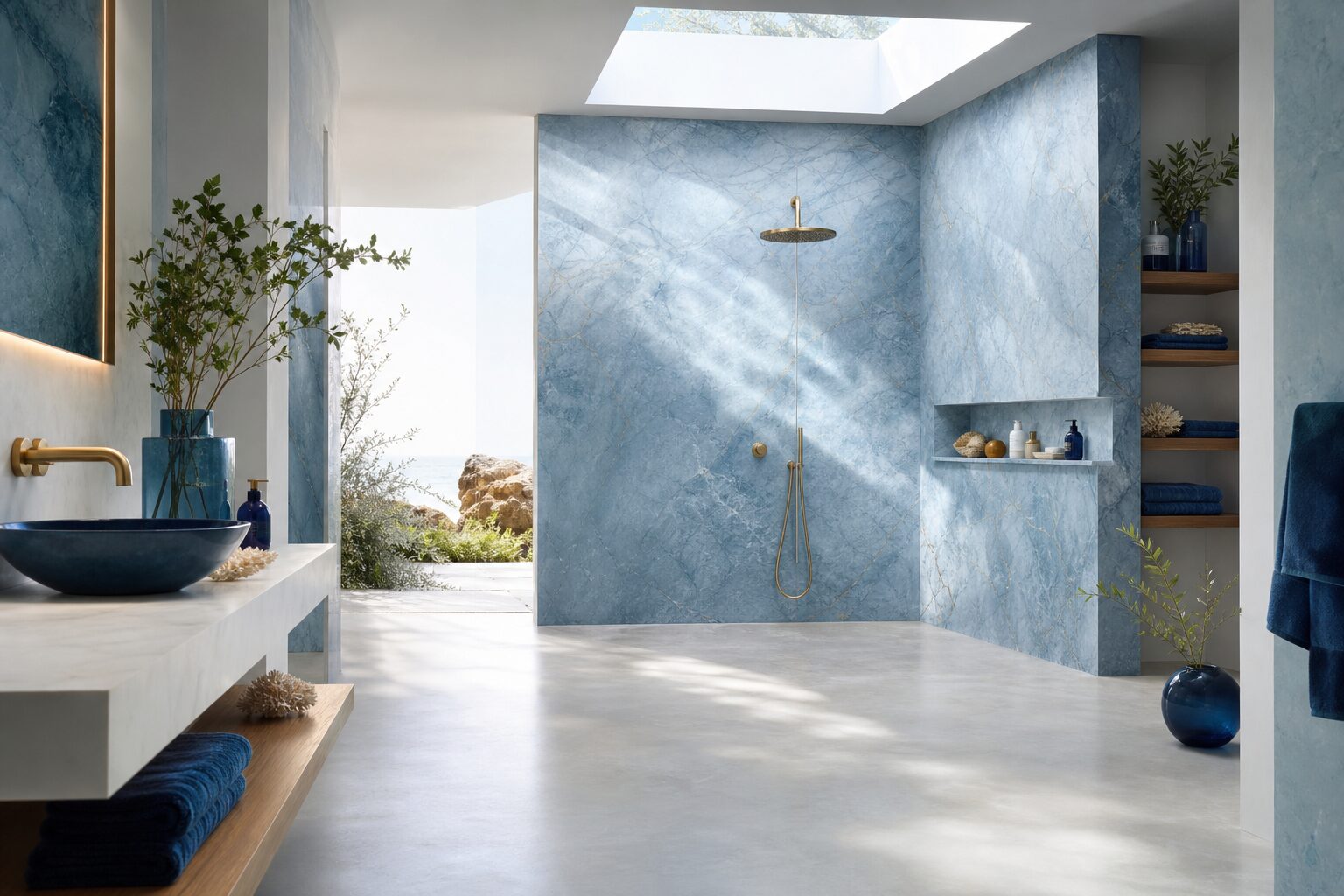
Yes, but only if the space and drainage work properly, which is why they’re moving from luxury novelty to standard in high-end builds. The wet room concept solves a real problem: it maximizes perceived space in a bathroom while delivering a genuinely luxurious shower experience. No glass enclosure to clean, no grout lines to maintain, just a seamless transition from bathroom to shower zone.
What’s changed is the execution. Waterproofing systems have gotten better. Slope and drainage can now be nearly invisible. Heated floors aren’t a luxury add-on anymore; they’re standard in the homes we’re remodeling. A wet room design that felt risky five years ago now feels inevitable if your bathroom footprint allows it.
The catch: wet rooms demand space. If you’re working with a compact bathroom, you’re fighting physics. In those cases, a floating vanity paired with a frameless shower enclosure delivers the same clean, minimal aesthetic without the drainage complexity.
What Materials Are Defining Luxury Bathrooms Right Now?
Large-format tiles are winning across the board. Not because they’re trendy, but because they reduce visual clutter. Fewer grout lines means cleaner sightlines, which is exactly what minimalist design demands. We’re talking 12×24, 24×48, even larger in some cases. The material itself matters less than the format. Porcelain, natural stone, engineered quartz: all of these work when they’re specified in larger formats.
Large-format tiles in bathroom remodeling also perform better. Fewer seams mean less water infiltration, less maintenance, and a longer lifespan. That’s not a marketing angle. That’s physics.
Natural stone is having a moment again, but it’s specified differently now. Honed marble instead of polished. Slate in unexpected colors. Limestone for warmth. The finish matters as much as the material. A matte or honed finish reads as more contemporary and sophisticated than a high-gloss polish.
Luxury vinyl is no longer the budget option. The engineering has improved enough that high-end vinyl can mimic natural materials convincingly while delivering superior durability and water resistance. In a bathroom where moisture is constant, that performance advantage is real.
How Are Vanities Changing?
Floating vanities are standard now. Wall-mounted, no legs, clean sight lines to the floor. It’s not just aesthetic. A floating vanity makes a small bathroom feel larger and makes cleaning the floor infinitely easier. The trend isn’t reversing.
What’s evolving is the material and finish. Warm wood tones are replacing the stark white or gray vanity cabinet. Soft whites and warm creams are more sophisticated than clinical bright white. Integrated storage is getting smarter: pull-out drawers, hidden compartments, materials that age well and don’t show water spots.
The countertop is where material storytelling happens. Marble, quartz, concrete, even wood with waterproof finishes. The countertop is no longer invisible. It’s a design statement that ties the whole aesthetic together.
What Role Do Fixtures and Hardware Play?
Fixtures are getting more sculptural and intentional. A statement faucet isn’t about chrome or polish anymore. It’s about form, finish, and how it relates to the overall design language. Brushed brass, matte black, warm gold: the finish communicates the entire mood of the space.
Hardware is following the same logic. Cabinet pulls, towel bars, and trim details in warm metallics create cohesion without feeling matchy or overdone. One consistent metal finish throughout the bathroom feels more refined than mixing three different metals.
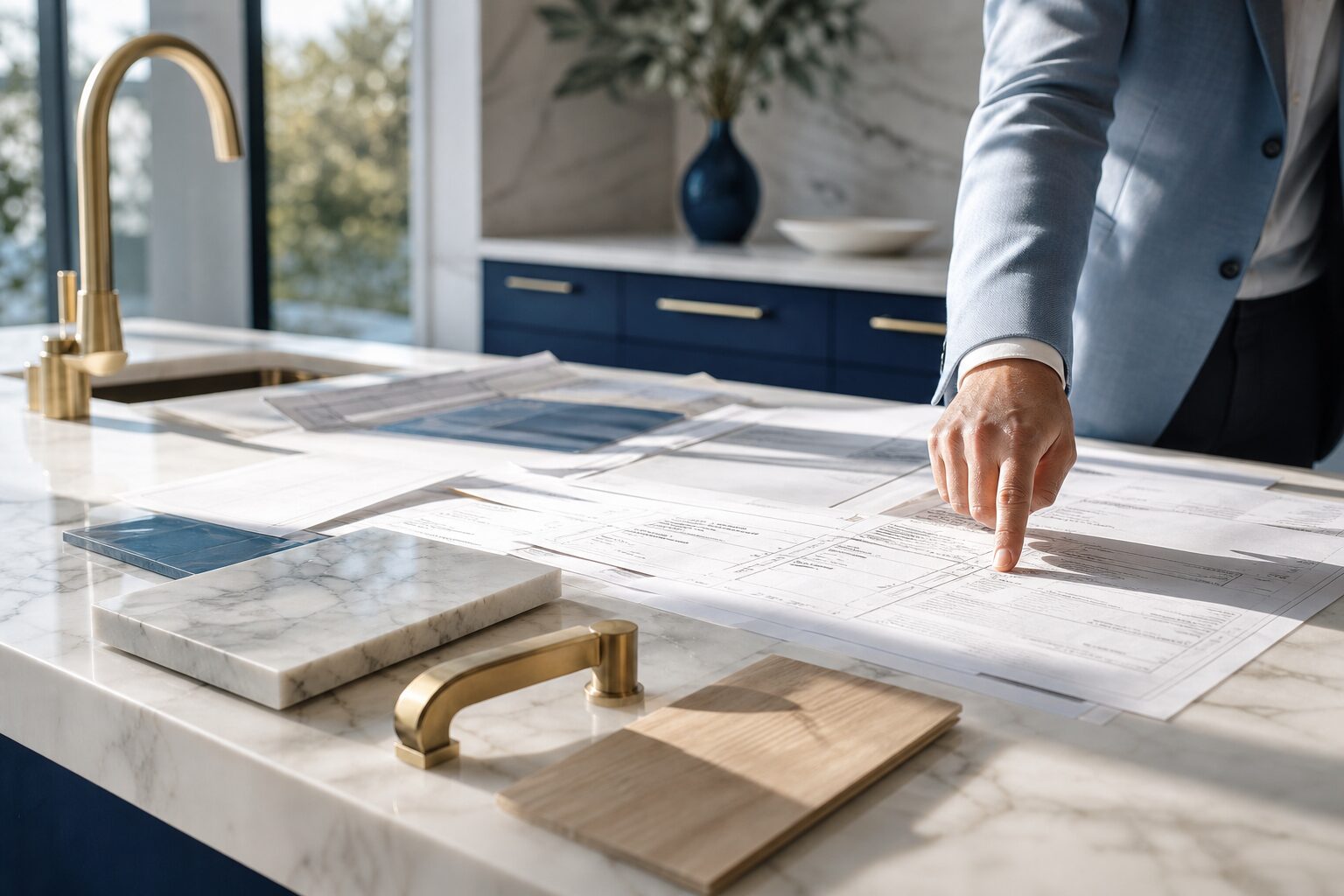
Pro tip: Specify all fixtures and hardware finishes at the same time. Coordinating them later is expensive and often impossible if products are discontinued.
Are Lighting Trends Shifting?
Layered lighting is non-negotiable in a luxury bathroom. Task lighting around the mirror, ambient lighting in the ceiling or soffit, accent lighting for the shower or a featured wall. Single overhead lighting reads as dated and unfinished.
Warm color temperature is standard now. 2700K or 3000K, never the harsh 4000K or 5000K that made bathrooms feel clinical. The warmth complements the material palette and makes the space feel more inviting.
Dimming capability is becoming expected, not optional. A bathroom that can shift from bright and functional to soft and relaxing feels like a luxury amenity, not a utility space.
What About Color and Finish Palettes?
Bright, airy minimalism is the dominant aesthetic in Southern California luxury bathrooms right now. Soft whites, warm creams, pale grays, and natural wood tones create a calm, cohesive backdrop. Bold color is rare and usually reserved for a single accent wall or tile detail, never the entire space.
Matte and honed finishes are replacing glossy surfaces. A matte tile, a honed marble countertop, a flat-finish cabinet: these materials feel more sophisticated and contemporary than anything with shine or reflection.
Warm metallics tie everything together. Brushed brass, soft gold, warm bronze: these finishes add richness and sophistication without the coldness of chrome or polished nickel.
How Is Storage Evolving?
Hidden storage is the goal. Open shelving reads as clutter. Closed cabinetry, built-in niches, pull-out drawers, and concealed medicine cabinets keep the visual field clean. Everything has a place, and nothing is visible unless it’s decorative or essential.
Custom millwork is becoming more accessible. Built-in shelving, recessed niches, and integrated storage solutions no longer feel like luxury add-ons. They’re expected in a thoughtfully designed bathroom.
What About Sustainability and Material Longevity?
Durability is the new sustainability story. A material that lasts 20 years without degradation is more sustainable than something that needs replacement in five. Porcelain tile, engineered quartz, sealed natural stone: these materials perform and age well.
Water efficiency is expected, not optional. Low-flow fixtures, efficient ventilation, and materials that resist mold and mildew are baseline specifications now, not premium upgrades.
How Should You Approach a 2027 Bathroom Remodel?
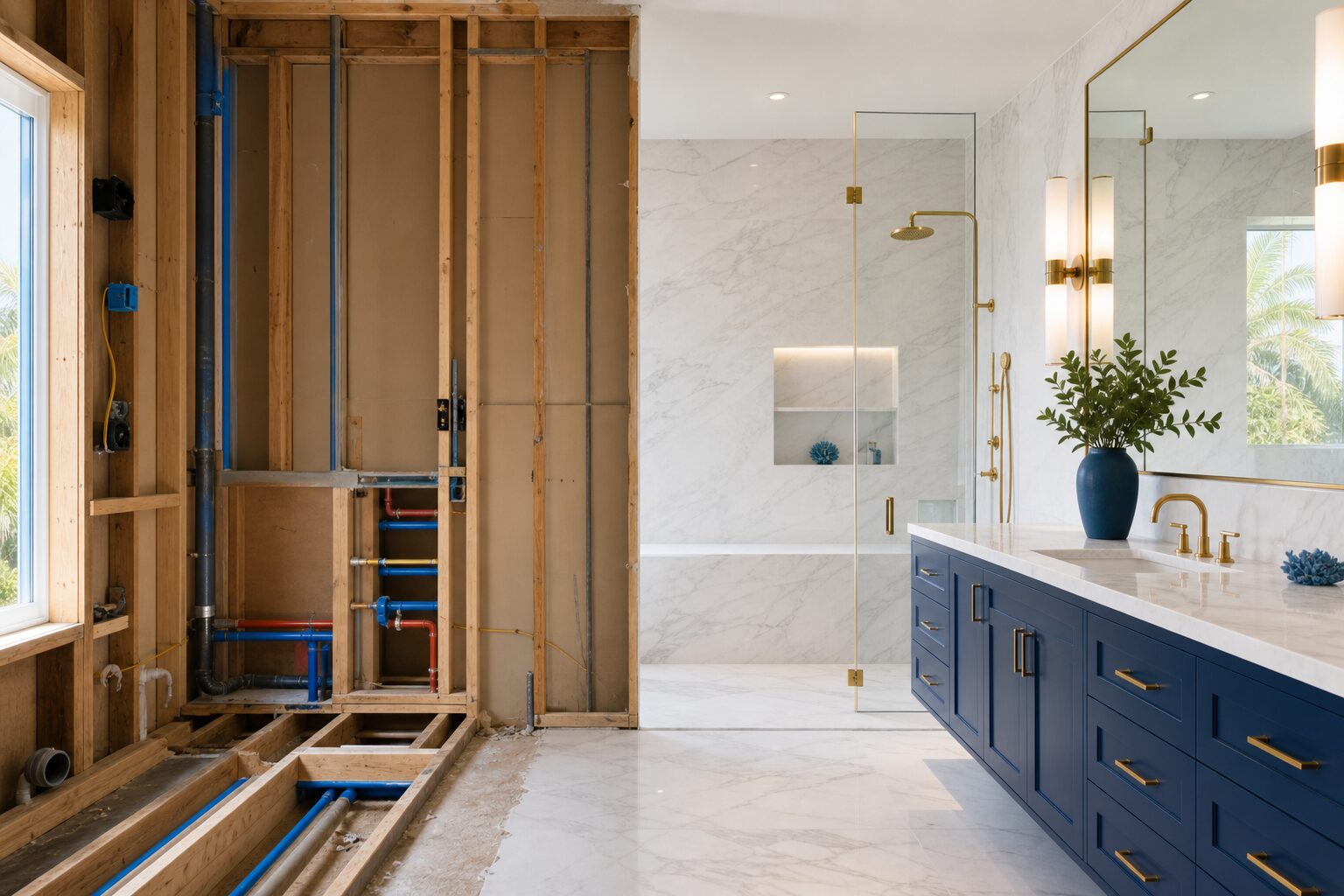
Start with the bones. Layout, waterproofing, ventilation, and drainage are invisible but non-negotiable. A beautiful bathroom with poor ventilation or drainage is a failing bathroom. Get the infrastructure right first.
Choose materials for longevity and performance, not just appearance. The marble, tile, and finishes you specify today will define the bathroom for a decade or more. Specify things that age well and don’t show every fingerprint or water spot.
Resist the urge to fill the space. Negative space and clean sightlines are what make a bathroom feel luxurious. Less stuff, better materials, more thoughtful design.
Coordinate finishes across fixtures, hardware, and trim. One consistent metal finish, one cohesive color palette, one clear design direction. That coherence is what separates a luxury bathroom from a collection of nice elements.
Frequently Asked Questions
Are wet rooms worth the investment in a smaller bathroom?
Not always. Wet rooms work best when you have at least 75 to 100 square feet of bathroom space and the structural layout allows for proper drainage slope. In a smaller space, a floating vanity with a frameless shower enclosure delivers the same minimal aesthetic with less complexity and cost.
What’s the most durable tile finish for a bathroom?
Honed or matte porcelain tile in large format is the most durable and lowest-maintenance option. It resists water infiltration better than natural stone, shows fewer water spots than polished finishes, and the larger format means fewer grout lines where moisture can accumulate.
Should I choose warm or cool metal finishes?
Warm metallics (brushed brass, soft gold, warm bronze) are dominating luxury bathrooms right now and pair better with the current color palettes of soft whites, creams, and natural wood. If you choose cool finishes like chrome or polished nickel, commit to them throughout the entire space for cohesion.
Is marble still a good choice for bathroom countertops?
Marble is beautiful but requires sealing and maintenance. If you want the marble aesthetic without the upkeep, engineered quartz or porcelain with a marble look delivers the same visual impact with better durability and easier maintenance. If you choose real marble, specify honed finish and accept that it will age and develop patina.
How important is layered lighting in a bathroom?
Essential. A single overhead light makes any bathroom feel unfinished and utilitarian. Task lighting around the mirror, ambient ceiling light, and accent lighting for design features create a space that feels intentional and luxurious. Dimming capability adds another layer of sophistication.
What’s the best approach to bathroom storage?
Hidden storage is the goal. Closed cabinetry, pull-out drawers, built-in niches, and integrated shelving keep the visual field clean. Open shelving should be minimal and reserved for decorative items or essential daily-use products. Everything else should be concealed.
