
Homeowners in 2026 are prioritizing material authenticity and architectural clarity over trend-chasing. They want spaces that feel intentional, built to last, and grounded in honest materials rather than visual shortcuts. This shift away from maximalism toward refined minimalism is reshaping what gets budgeted, designed, and installed.
The renovation landscape has matured. Homeowners have seen enough Instagram-ready spaces that fall apart in three years. What’s moving now is different: kitchens and bathrooms designed around durable, beautiful materials; flooring choices that balance performance with aesthetic integrity; and a willingness to invest in quality over quantity.
Are kitchens still the priority renovation?
Yes, but the kitchen brief has tightened. Homeowners are still investing heavily in kitchen remodeling, but they’re being more surgical about it. The sprawling, oversized kitchen island is giving way to efficiently scaled spaces with better workflow. Cabinetry is leaner, hardware is minimal, and the focus is on functional beauty rather than statement pieces.
The kitchen investment is shifting from size to material quality and architectural detail. Countertops are moving toward natural stone and engineered surfaces that age gracefully. Cabinet finishes are matte or naturally textured rather than high-gloss. Backsplashes are either completely absent (clean wall) or architecturally purposeful, not decorative fill.
Homeowners understand that a kitchen remodel is a ten-to-fifteen-year commitment. They’re choosing materials and proportions that will feel refined in 2035, not just Instagram-ready in 2026.
What’s driving bathroom renovation choices right now?
Bathrooms are now treated as private sanctuaries, not afterthoughts. The bathroom remodeling budget is climbing because homeowners see this space as personal infrastructure, not guest-facing real estate.
Shower installation and bathtub installation are getting the lion’s share of attention. Walk-in showers with frameless glass, clean tile work, and minimal hardware are standard. Bathtub choices are moving toward freestanding soaking tubs in muted materials (concrete, stone, or warm-toned enameled steel) rather than whirlpool jets and built-in seating.
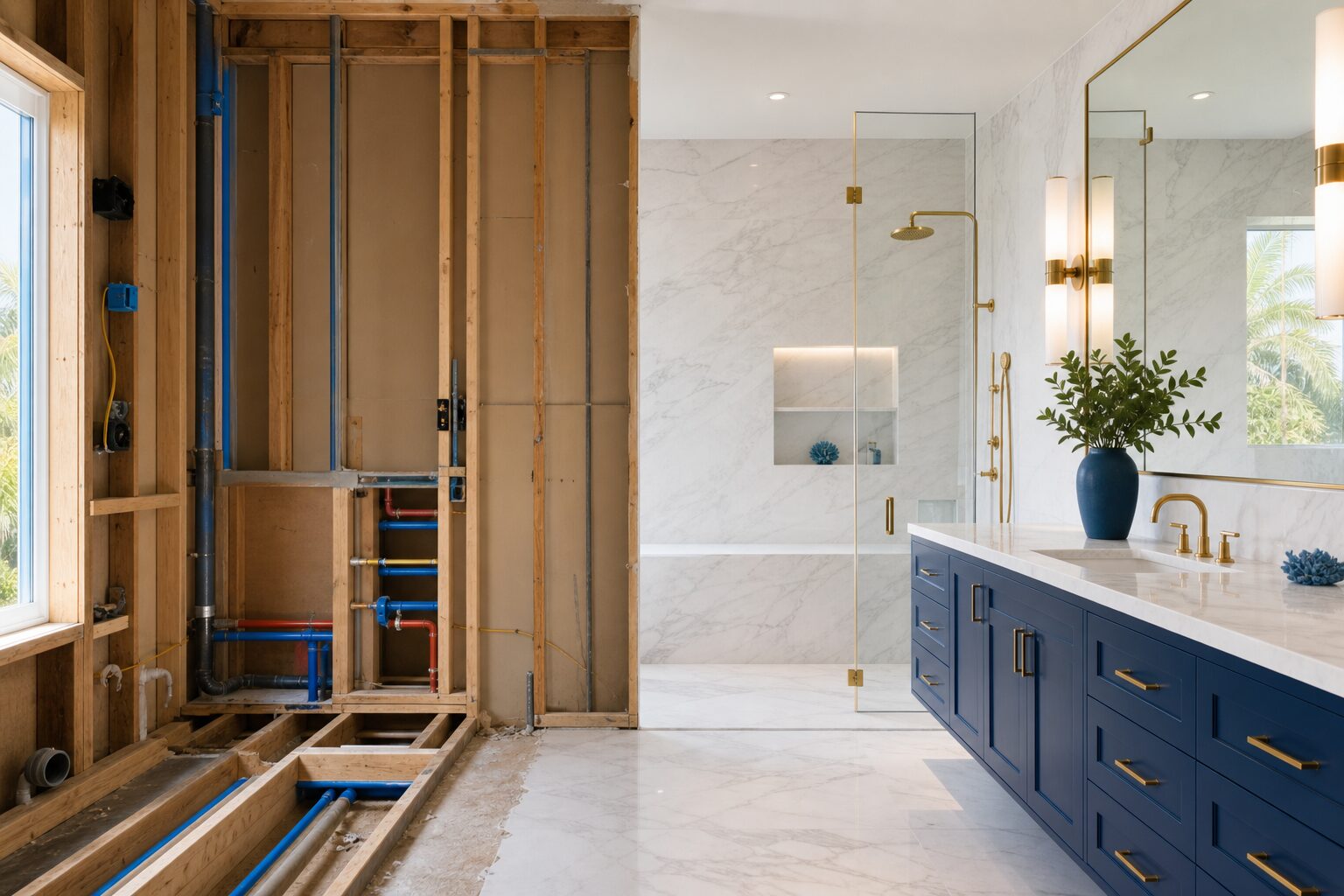
The bathroom trend is toward spa-like simplicity with architectural precision. Tile flooring in bathrooms is moving away from small mosaic patterns toward larger format tiles with subtle texture. Vanities are custom-built to fit the specific footprint rather than stock pieces. Lighting is recessed and warm, creating a sense of calm rather than clinical brightness.
Homeowners are also investing in ventilation and moisture management as invisible infrastructure. They understand that a beautiful bathroom fails without proper engineering behind the walls.
Which flooring materials are homeowners actually choosing?
Flooring installation is where material authenticity shows up most visibly. The hierarchy is clear: hardwood flooring remains the aspirational choice for living spaces, but homeowners are being selective about species and finish. Wide-plank, matte-finish hardwood in neutral tones dominates. Glossy finishes and narrow planks feel dated.
Luxury vinyl flooring has matured into a legitimate choice, especially in kitchens and bathrooms. The stigma is gone. Homeowners choose it for performance (waterproofing, durability, warmth underfoot) rather than as a budget compromise. High-quality luxury vinyl now mimics natural wood and stone with enough authenticity that the material choice feels honest, not like a fake-out.
Tile flooring is having a moment in kitchens and entryways. Large-format ceramic tiles in warm neutrals or subtle geometric patterns are replacing the smaller subway tile aesthetic. Tile is chosen for its longevity and the architectural weight it brings to a space.
Carpet flooring is nearly gone from new kitchen and bathroom remodels, but it’s holding steady in bedrooms and living areas where warmth and acoustic comfort matter. When homeowners choose carpet, they’re selecting natural fibers and neutral palettes.
Laminate flooring has largely exited the conversation for high-end residential work. It’s been replaced by luxury vinyl and engineered hardwood in the mid-range, and by authentic hardwood or tile at the premium end.
| Flooring Type | Primary Use in 2026 | Material Trend |
|---|---|---|
| Hardwood Flooring | Living spaces, bedrooms | Wide-plank, matte finish, neutral species |
| Luxury Vinyl Flooring | Kitchens, bathrooms, high-traffic areas | High-fidelity wood or stone look, warm undertones |
| Tile Flooring | Kitchens, bathrooms, entryways | Large-format, warm neutrals, subtle texture |
| Carpet Flooring | Bedrooms, living rooms | Natural fiber, neutral color, performance backing |
What’s the countertop conversation in 2026?
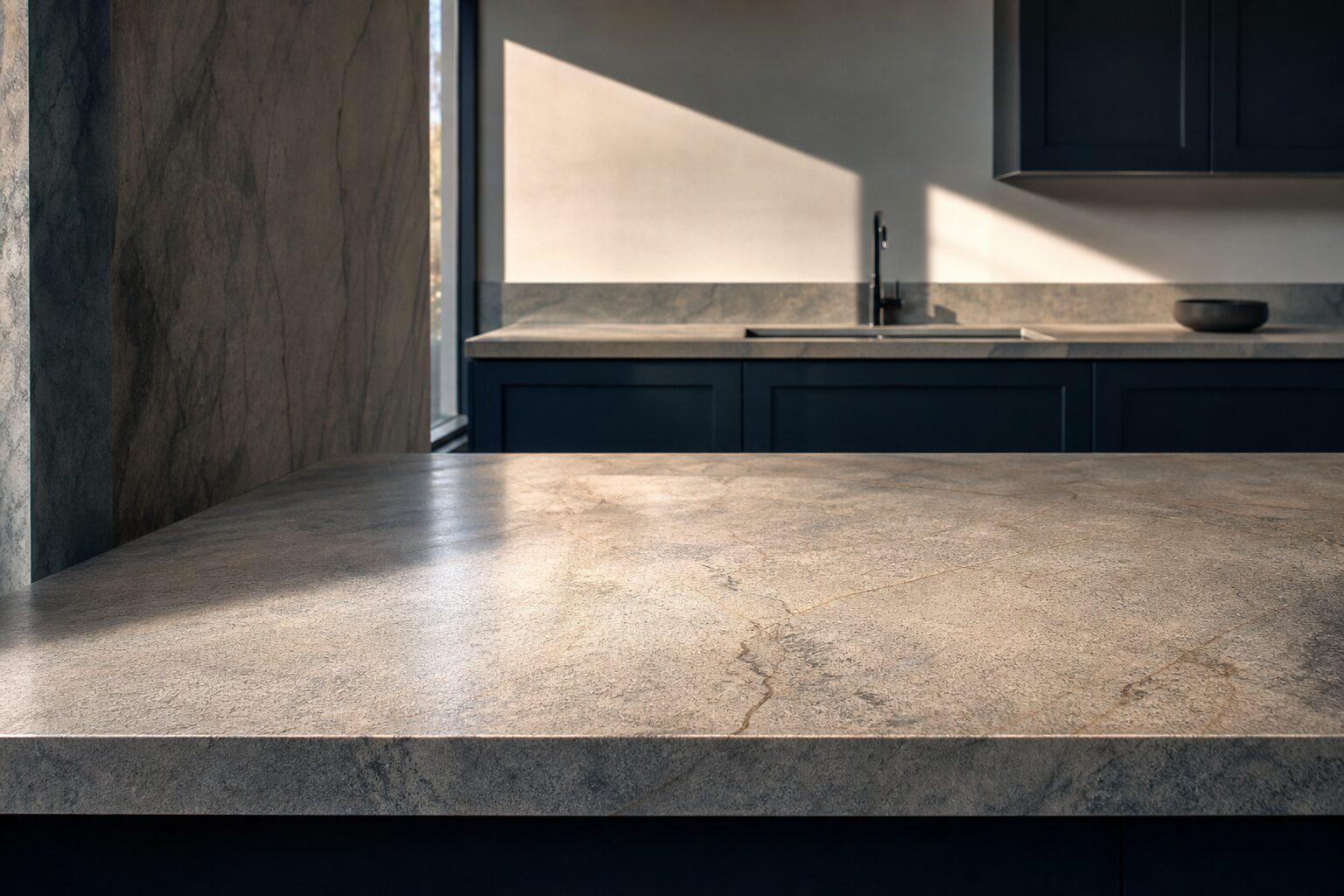
Countertops have become a material statement. Quartz and granite are still popular, but the aesthetic has shifted. Homeowners are choosing matte or honed finishes instead of polished. Veining is subtle rather than dramatic. Color palettes are warm neutrals: creams, soft grays, warm whites, and understated earth tones.
Engineered stone and composite countertops are gaining ground because they offer consistency, durability, and the ability to specify exact finishes. Butcher block is making a comeback in specific applications (kitchen islands, breakfast bars) where warmth and texture serve the design intent, not as a default choice.
The countertop trend reflects the larger shift: material honesty over visual drama. A countertop should feel like it belongs in the space, not like it’s trying to be the focal point. Waterfall edges and thick overhangs are out. Clean lines, modest overhangs, and integrated undermount sinks are in.
Edge profiles matter more now. Homeowners are choosing simple bevels or eased edges rather than ornate ogee or bullnose profiles. The detail should feel architectural, not decorative.
Are kitchen cabinets still a major renovation investment?
Kitchen cabinets remain the structural and visual anchor of any kitchen remodel. The investment is still significant, but the approach has evolved. Semi-custom and fully custom cabinetry is standard for high-end work. Stock cabinets are rarely specified in homes over $500,000.
Cabinet finishes are moving toward natural wood tones and matte painted finishes. Soft whites, warm grays, and natural oak are dominant. High-gloss lacquer feels corporate. Stainless steel hardware is being replaced by warm metallics: brushed brass, warm bronze, and matte black.
Interior organization and functionality are getting more attention than external styling. Homeowners want pull-out shelves, soft-close hinges, and thoughtful drawer organization. The cabinet should work invisibly; its beauty comes from proportion and material, not from ornamental details.
Pro tip: Cabinet layout and workflow should be designed with the homeowner’s actual cooking habits in mind. A beautiful kitchen that doesn’t function for how the family actually cooks is a missed opportunity. Invest time in the planning phase.
What’s driving the overall renovation priority in 2026?
Homeowners are investing in durability and emotional comfort. The pandemic reset expectations around home value. People spend more time at home, and they want spaces that feel refined, function flawlessly, and age beautifully.
Kitchen and bathroom remodels still capture the largest share of renovation budgets, but flooring installation is climbing as homeowners recognize that good flooring ties the entire home together. A kitchen remodel without attention to the surrounding flooring and material continuity feels incomplete.
The secondary priority is always the master bathroom. Homeowners see this as personal infrastructure: a place to retreat, not a room to show off. Spa-like qualities matter more than luxury finishes.
Structural and mechanical upgrades (HVAC, insulation, electrical) are being bundled into aesthetic remodels rather than treated separately. Homeowners understand that a beautiful kitchen fails if the house is uncomfortable or energy-inefficient.
How should you approach a 2026 renovation project?
Start with material selection, not trend chasing. Choose finishes and materials that you’ll want to live with for a decade. If something feels trendy rather than timeless, it probably is.
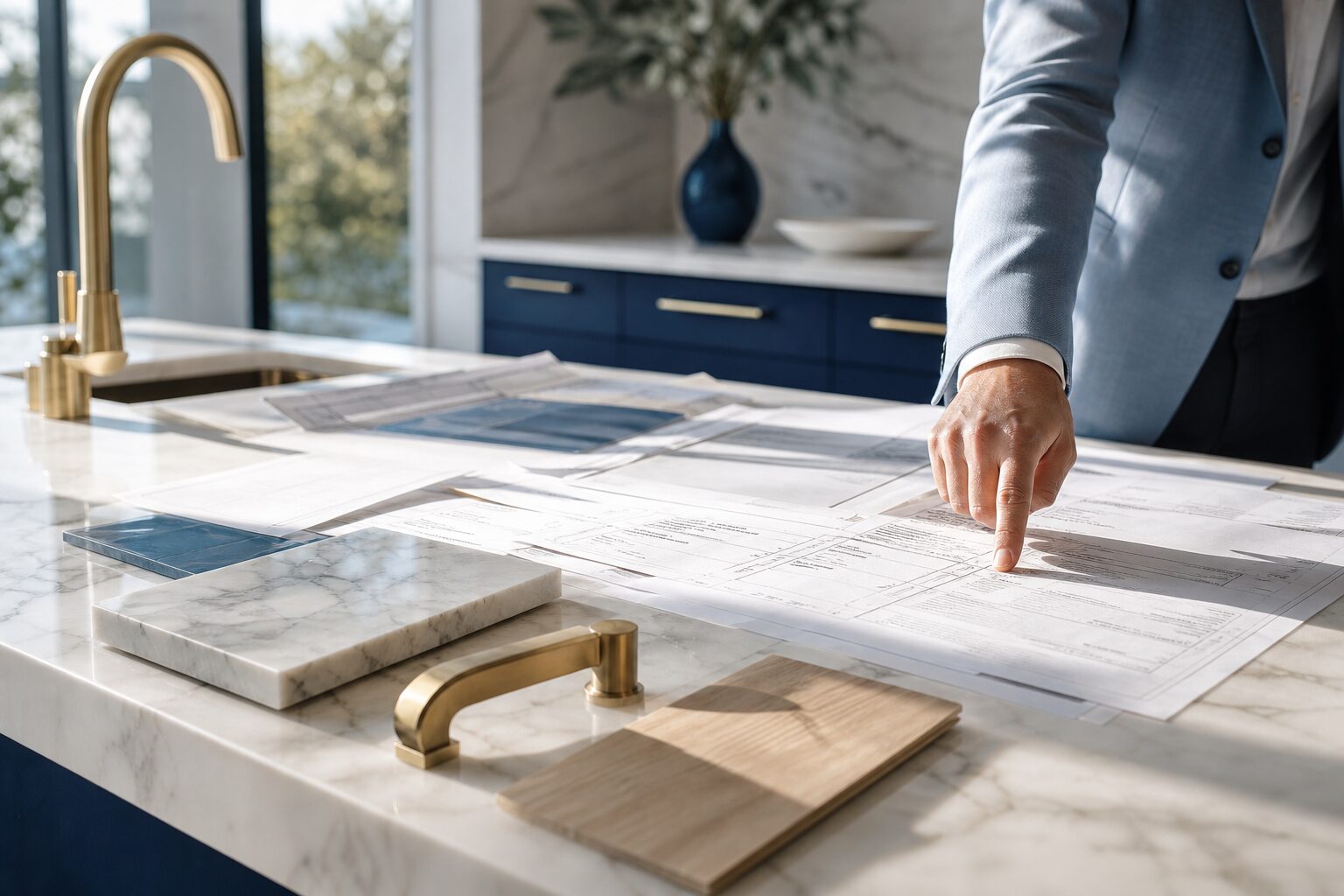
Invest in professional design and planning. The difference between a good kitchen remodel and a great one is usually in the planning phase, not in the budget. A well-designed kitchen with mid-range materials will outperform a poorly planned kitchen with premium finishes.
Prioritize workflow and function. A beautiful space that doesn’t work is frustrating every day. The best renovations feel invisible because they work so well that you stop thinking about them.
Choose a contractor who understands material authenticity and architectural detail. Not all contractors are equipped to execute refined minimalism. You need someone who understands that beauty comes from proportion, material quality, and honest execution, not from adding more features.
Frequently Asked Questions
Should I choose hardwood or luxury vinyl flooring?
Hardwood flooring is the aspirational choice and will feel more refined in living spaces. Luxury vinyl flooring is the practical choice for kitchens, bathrooms, and high-traffic areas where water and wear are concerns. Both can be beautiful when chosen thoughtfully. The decision should be based on the room’s function and your tolerance for maintenance, not on budget alone.
What countertop material will hold up best over time?
Engineered stone and composite countertops offer the most consistent durability and lowest maintenance. Natural stone (granite, marble) requires more care but ages beautifully if you’re willing to maintain it. The best choice depends on your lifestyle and how much maintenance you’re comfortable with. All three are legitimate options in 2026.
Is a kitchen remodel still worth the investment?
Yes, but approach it as a long-term quality-of-life investment, not as a short-term resale strategy. A well-executed kitchen remodel will serve your home for fifteen years or more. The return on investment varies by market and scope, but the daily value of a functional, beautiful kitchen is immeasurable.
How much should I budget for a bathroom remodel?
A mid-range bathroom remodel (new fixtures, tile work, vanity, lighting) typically runs $15,000 to $30,000. A high-end bathroom remodel with custom cabinetry, premium materials, and architectural detail can exceed $50,000. The scope and material choices drive the budget more than square footage.
Should I hire a designer for my kitchen remodel?
Yes. A designer will catch workflow issues, material compatibility problems, and proportion mistakes that contractors alone might miss. The designer’s fee (typically 5 to 15 percent of the project budget) is usually recouped in avoided mistakes and better material choices.
What’s the most important factor in choosing a contractor?
Portfolio and references matter most. Look at completed projects that match your aesthetic and scope. Talk to past clients about the contractor’s communication, timeline adherence, and how they handle problems. A contractor who understands your design intent and executes with precision is worth more than the lowest bid.
