
Mid-century modern renovation isn’t about freezing a home in 1955. It’s about understanding the core design philosophy that made those homes work, clean lines, honest materials, functional beauty, and then applying that rigor to how people actually live today. The best renovations don’t feel like museum pieces. They feel inevitable.
What Makes Mid-Century Modern Design Actually Work?
The movement emerged from a genuine problem-solving impulse. Post-war architects and designers rejected ornament for ornament’s sake. They believed form should follow function, materials should be truthful, and spaces should breathe. That’s not nostalgia. That’s a design ethic that still holds.
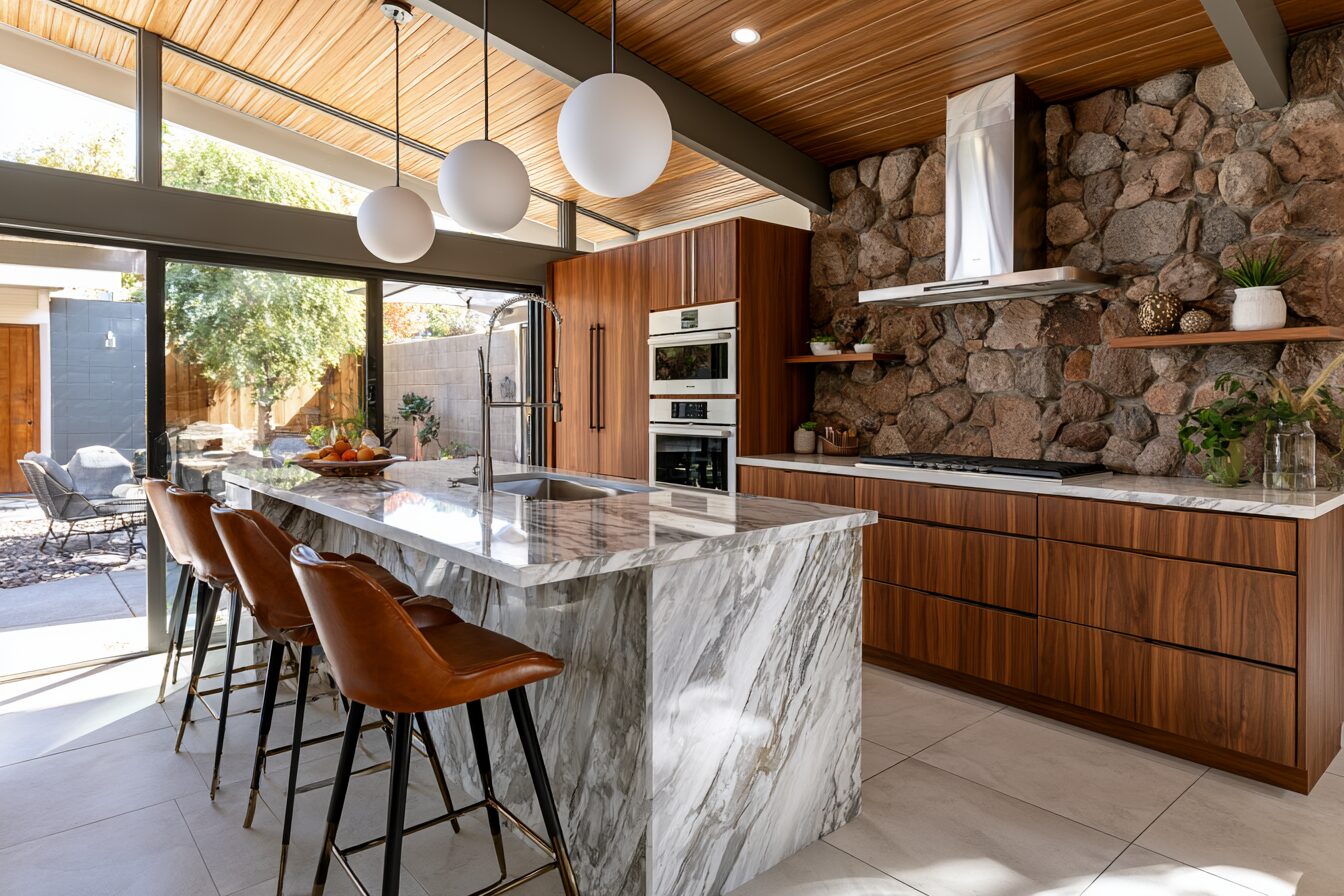
When you walk into a well-executed mid-century space, you’re not seeing decoration layered on top of structure. You’re seeing structure that is, itself, the decoration. A walnut credenza isn’t hiding something ugly underneath. The joinery, the grain, the proportions, those are the point. Marble, brass, teak, concrete, glass. Materials chosen because they age beautifully and tell the truth about what they are.
This is why mid-century modern translates so cleanly into contemporary renovation: the philosophy is about reduction and clarity, not about specific objects from a specific decade.
Which Architectural Details Matter Most When Renovating?
Not every detail from the original era deserves to survive. The trick is knowing which ones carry the actual DNA of the design and which ones are just period quirks.
Preserve the bones. If the home has clean sight lines, open floor plans, or that signature horizontal emphasis (long windows, cantilevered overhangs, ribbon glass), those are structural decisions that define the character. Removing a wall to open the kitchen might feel modern, but if it erases the home’s original spatial logic, you’ve lost something real.
Preserve material honesty. If the original design featured exposed wood beams, concrete floors, or brick walls left raw, those weren’t budget constraints. They were intentional. When you renovate, resist the urge to cover them with drywall or carpet. If they’re damaged, restore them. If they’re dated, clean them and let them be what they are.
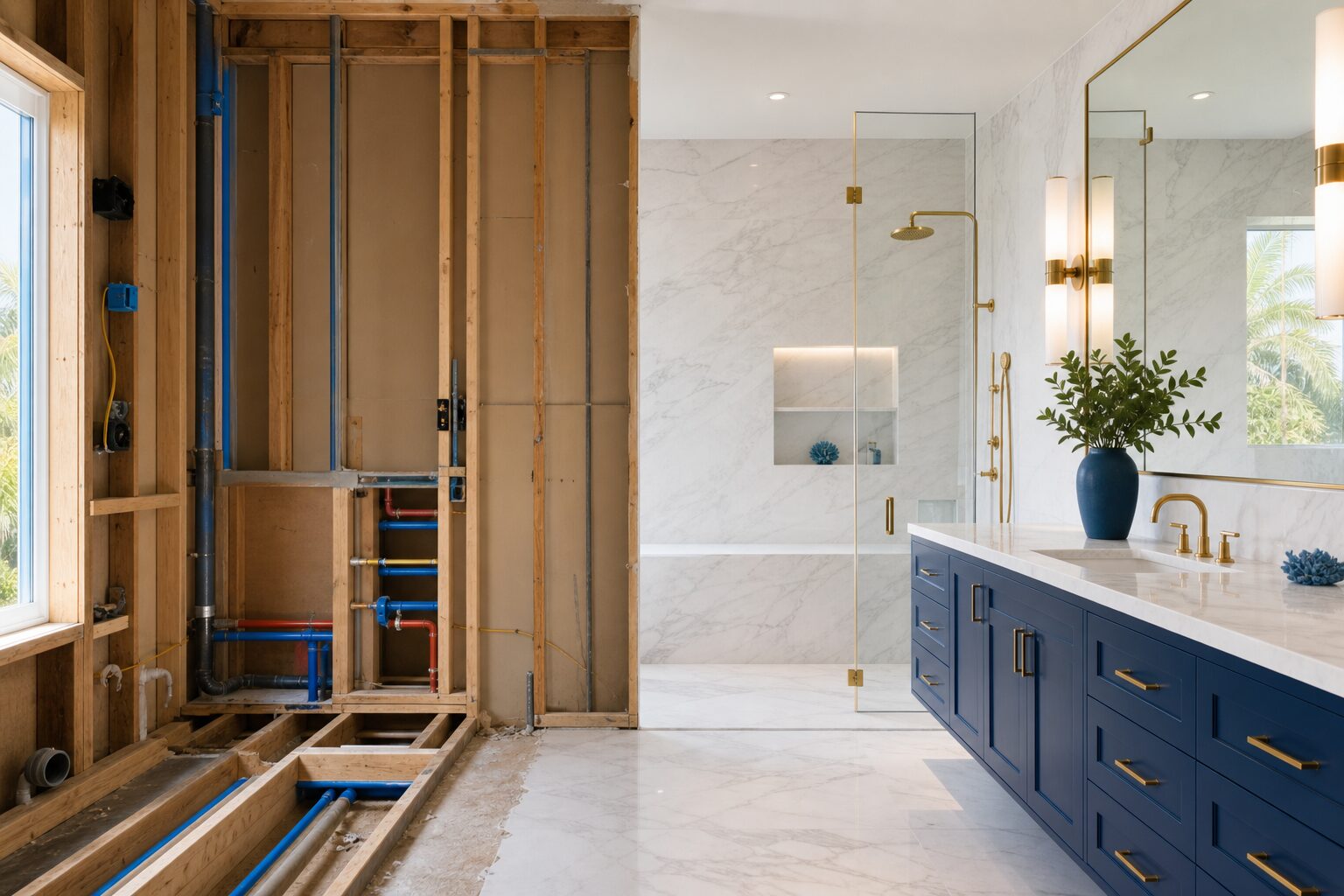
Update the systems ruthlessly. Electrical, plumbing, HVAC, insulation, these should be completely modern. Mid-century homes often run cold or hot. They weren’t built with contemporary climate control in mind. Upgrading these systems is not a betrayal of the design. It’s respecting the original intent: function first.
Reconsider the kitchen and bathrooms. This is where most mid-century homes show their age most obviously. Original kitchens are often cramped. Original bathrooms are often tiny and poorly lit. These spaces should be reimagined for contemporary use, but the design language should stay coherent. Clean cabinetry, minimal hardware, quality materials, good lighting. That’s mid-century modern sensibility applied to modern life.
How Do You Choose Materials That Honor the Period?
Mid-century designers worked with what was available and what was beautiful: marble, teak, walnut, brass, steel, glass, ceramic tile. They weren’t trying to be precious. They were choosing materials that would look better with age, not worse.
Natural stone works. Marble, limestone, terrazzo, slate. These materials were central to mid-century design. If you’re renovating a kitchen or bath, consider marble countertops or a marble feature wall. It’s not trendy. It’s historically coherent and it ages with grace. The same applies to flooring: natural stone, polished concrete, or quality hardwood in warm tones (walnut, oak, teak where available).
Metallic accents should be warm and restrained. Brass, copper, and warm steel were the metals of the era. Chrome and polished nickel work too, but use them sparingly. A brass faucet, brass drawer pulls, a steel-frame mirror. These details anchor a space without overwhelming it.
Avoid faux finishes. If you can’t afford real walnut, don’t use walnut-look laminate. Choose a simpler material that is honestly what it is. A light oak, a natural maple, a painted finish. Mid-century design was about truth in materials. That principle matters more than hitting a specific wood species.
Pro tip: When sourcing materials, work with suppliers and craftspeople who understand the era. A contractor who has restored mid-century homes will know where to find period-appropriate tile, hardware, and fixtures, and which modern alternatives genuinely improve on the originals without breaking the design language.
What’s the Right Approach to Color and Lighting?
Mid-century modern loved color, but it was color used architecturally, not decoratively. Think muted earth tones, soft grays, warm whites. Accent colors appeared in tile, in upholstery, in art, not in every wall.
For a contemporary renovation, keep walls neutral and let the materials do the work. Warm white, soft gray, or a subtle warm beige. If you want color, introduce it through tile in the kitchen or bath, through cabinetry, or through furnishings you can change later.
Lighting is non-negotiable. Mid-century homes often had small windows and poor artificial lighting. Modern renovation should bring in as much natural light as possible. Larger windows, glass doors, skylights where they make sense. For artificial lighting, choose fixtures that feel of the era, clean lines, minimal ornamentation, but with contemporary LED efficiency. A well-lit mid-century space feels nothing like the dim, moody rooms people sometimes imagine.
How Do You Balance Authenticity with Modern Living?
This is the real tension. A mid-century home wasn’t designed for open-concept living, for home offices, for the way we actually use space now. You have to make choices.
Start with the original floor plan. If it works for how you live, keep it. If it doesn’t, modify it thoughtfully. Opening a wall between the kitchen and living room might make sense. Turning a formal dining room into a home office might not, depending on the home’s original character. Ask yourself: does this change respect the home’s spatial logic, or does it erase it?
Technology should be invisible. Mid-century design didn’t have to accommodate TV walls, speaker systems, or charging stations. Plan for these things, but hide them. Built-in cabinetry, cable management, recessed shelving. The design should feel clean and uncluttered, even if the systems underneath are complex.
Storage matters. Mid-century homes often lacked adequate closets and built-in storage. Add it, but do it architecturally. Custom cabinetry with clean lines, integrated into the walls, not added on top of them.
What’s the Renovation Process Actually Look Like?
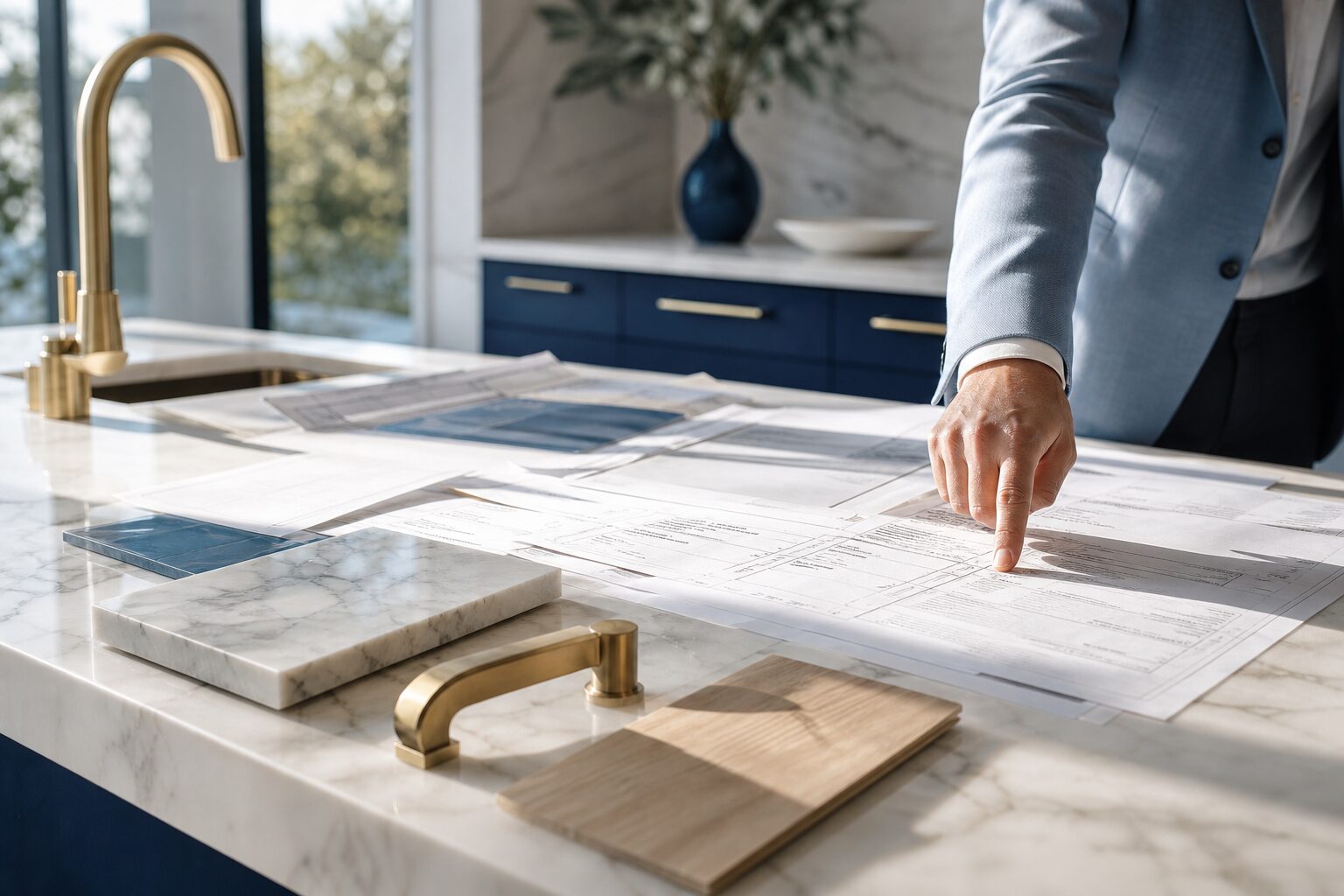
Start with a thorough assessment. Bring in a contractor and a designer who understand the era. Photograph everything. Document original details, materials, and finishes. Some of what you find might be worth keeping. Some might surprise you.
Create a phased plan. Full gut renovations are rarely necessary. Often, the structure and bones are sound. You’re updating systems, refreshing finishes, and reimagining a few key spaces. Prioritize the kitchen and primary bath. These are where people spend time and where outdated systems cause real problems.
Source materials early. Quality marble, hardwood, and hardware take time. If you’re working with a specialist like California Signature Kitchen, Bath & Flooring, they can source materials that are both period-appropriate and built to last. This isn’t something to rush or compromise on.
Plan for the unexpected. Older homes have surprises. Structural issues, hidden water damage, outdated wiring that needs complete replacement. Build contingency into your timeline and budget.
Frequently Asked Questions
Should I restore original mid-century fixtures or replace them?
Restore if they’re structurally sound and historically significant. Original hardware, light fixtures, or built-in cabinetry often have craftsmanship worth preserving. Replace if they’re broken, inefficient, or compromising function. A 1960s electrical system should be completely replaced. An original brass door handle can be restored and reused.
Is it expensive to renovate a mid-century home authentically?
It doesn’t have to be more expensive than any quality renovation. The cost comes from using good materials and skilled craftspeople, not from the era itself. Where you might spend more is on custom cabinetry and sourcing materials that match the design language. Where you might save is by keeping original structural elements and not over-decorating.
Can I add modern conveniences without breaking the design?
Absolutely. Modern HVAC, updated electrical, new appliances, and contemporary plumbing all belong in a mid-century renovation. The design language is about clean lines and honest materials, not about avoiding modern comfort. A contemporary kitchen with stainless steel appliances and marble countertops can feel entirely mid-century modern if the proportions and details are right.
What if the original layout doesn’t work for how I live?
Modify it thoughtfully. Opening the kitchen to the living room often makes sense. Converting a formal dining room to a home office might. The key is understanding why the original layout existed and whether your changes honor or erase the home’s spatial character. Work with a designer who can help you make these decisions with confidence.
How do I know if a contractor understands mid-century modern design?
Ask about their experience with homes from this era. Look at their portfolio. Ask how they approach material selection and historical accuracy. A good contractor will ask you questions about what you want to preserve and why, not just show up with a generic renovation plan.
