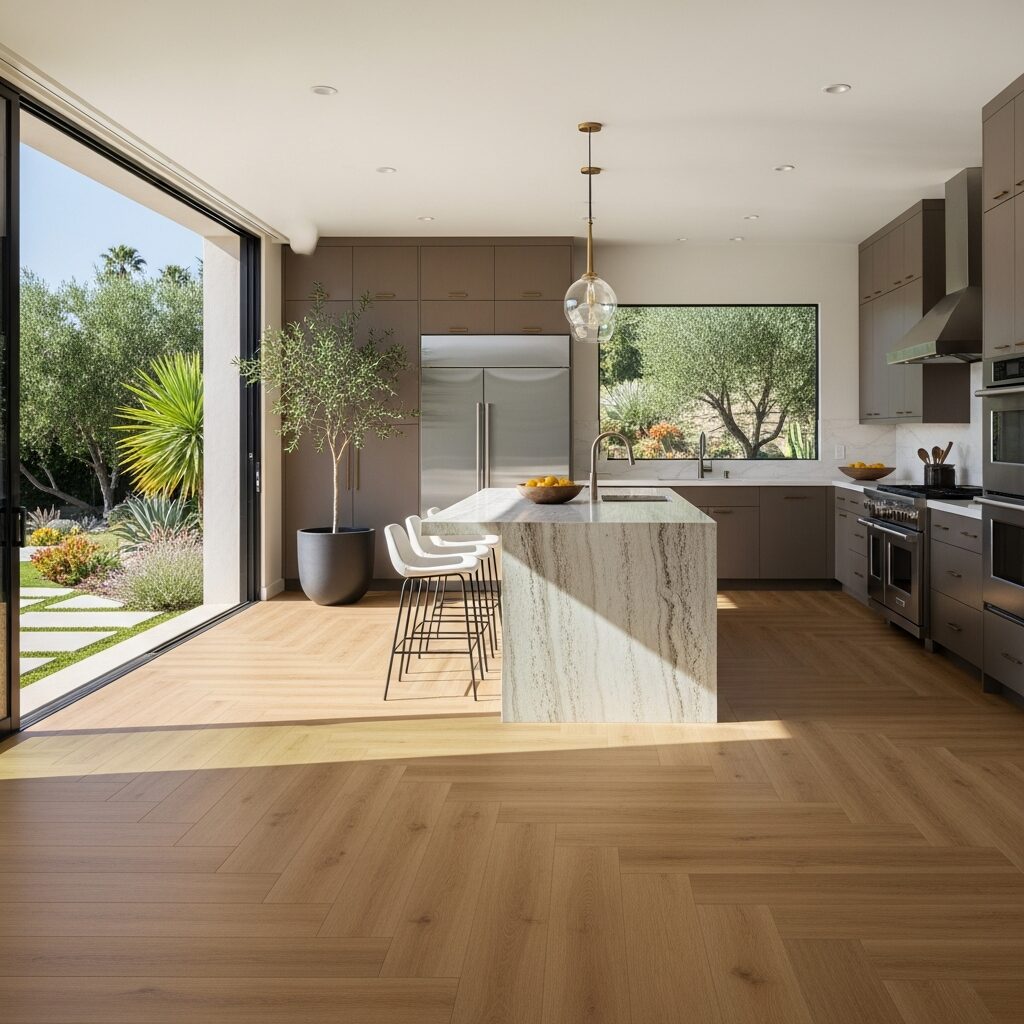
Luxury Vinyl Plank vs. Hardwood: Modern Home Flooring Choices
Choosing the right flooring is one of the most foundational decisions in any home remodeling project. It sets the tone for your entire space, impacts daily life, and represents a significant investment in your property’s value. For decades, traditional hardwood was the undisputed king of quality flooring. Today, however, a modern contender has emerged: Luxury Vinyl Plank (LVP). As a contractor with over 20 years of experience in flooring renovation, I’ve seen firsthand how this choice between LVP and hardwood can define a project. This comprehensive comparison will break down the critical factors—durability, performance, ROI, and aesthetics—to help you make an expert decision for your home.
Understanding Your Flooring Options: LVP and Hardwood Essentials
Before we can compare performance, it’s crucial to understand what these materials fundamentally are. Their composition is the source of all their respective strengths and weaknesses.
Defining Luxury Vinyl Plank (LVP)
Luxury Vinyl Plank is not the sheet vinyl of the past. It’s a highly engineered, multi-layered product designed for superior performance and hyper-realistic visuals. A typical plank consists of a rigid core for stability (often a stone-polymer composite or wood-polymer composite), a high-definition printed visual layer that mimics wood or stone, and a critical transparent wear layer on top that protects against scratches, stains, and UV fading. This layered construction is the key to its durability and water resistance. You can explore a wide variety of high-quality luxury vinyl options that demonstrate this advanced engineering.
Exploring Hardwood Flooring Types
Hardwood flooring falls into two main categories. Solid hardwood is exactly what it sounds like: a single, solid piece of milled timber, typically 3/4-inch thick. Its greatest advantage is its longevity, as it can be sanded and refinished numerous times. Engineered hardwood, on the other hand, consists of a top layer of real hardwood veneer bonded to multiple layers of high-quality plywood or HDF core. This cross-layered construction provides greater dimensional stability, making it more resistant to changes in humidity than solid wood.
Key Differences in Composition and Structure
The core difference is simple: LVP is a synthetic, man-made product, while hardwood is a natural, organic material. LVP’s core is a stable polymer composite, making it inert to moisture. Hardwood is composed of wood fibers, which naturally expand and contract with changes in humidity and temperature. This single distinction dictates how each flooring type will perform in different environments and under different conditions.
Durability and Longevity: Which Flooring Stands the Test of Time?
Durability isn’t a single metric; it’s a combination of how a floor resists daily wear and how long it maintains its structural integrity and appearance over decades.
Scratch, Dent, and Wear Resistance
This is where LVP often shines in a modern, active household. Its protective wear layer, measured in mils (thousandths of an inch), is incredibly tough. A quality LVP with a 20-mil wear layer can withstand impressive punishment from dropped objects, furniture legs, and general foot traffic without scratching or denting. Hardwood, being a natural material, is softer. Its hardness is measured on the Janka scale, but even the hardest species like hickory or oak can be scratched and dented. While these marks can be seen as “character” by some, they are permanent until the floor is refinished.
Impact of Pet and Foot Traffic
For homeowners with pets and children, LVP is often the more practical choice. Pet claws have a difficult time scratching the commercial-grade wear layer, and its waterproof nature means accidents are not catastrophic. High foot traffic is handled with ease. With beautiful hardwood floors, pets present a real challenge. Their claws can leave fine scratches over time, and liquid accidents can stain the wood or seep between planks if not cleaned immediately.
Long-Term Lifespan Expectations
Here, the tables turn in favor of hardwood. A well-maintained solid hardwood floor can last for over 100 years. Its ability to be completely sanded down and refinished 4-6 times over its life means it can be restored to a like-new condition every decade or two. LVP has a finite lifespan, typically ranging from 15 to 30 years depending on its quality. Once the wear layer is compromised or the style becomes dated, the entire floor must be replaced; it cannot be refinished.
Performance in Moisture-Prone & Coastal Environments: A Critical Look
Water and humidity are the natural enemies of many flooring materials. In Southern California, from kitchens and bathrooms to our coastal communities, moisture management is a non-negotiable aspect of any flooring renovation.
Water Resistance of Luxury Vinyl Plank
Luxury Vinyl Plank is 100% waterproof. The planks themselves are impervious to water damage from the top down. This makes LVP the undisputed champion for moisture-prone areas. You can install it in bathrooms, kitchens, laundry rooms, and basements with complete confidence that spills, splashes, or even minor leaks won’t cause the material to swell, buckle, or delaminate.
Hardwood’s Vulnerability to Humidity and Spills
As a natural, porous material, wood absorbs water. A significant spill or leak can cause permanent cupping, warping, and discoloration. Beyond direct water contact, ambient humidity is a constant concern. Wood expands in humid conditions and contracts in dry conditions, which can lead to gaps between boards or buckling over time. This is a critical factor to manage in any home with hardwood.
Best Practices for Kitchen and Bathroom Flooring Renovation
From a technical standpoint, LVP is the superior choice for full bathrooms and high-use kitchens. Its waterproof nature eliminates the risk associated with plumbing leaks, dishwasher spills, or splashes from the tub. While some homeowners choose to run engineered hardwood into their kitchens for a seamless look, it requires meticulous care and acceptance of risk. For any kitchen or bathroom flooring remodeling project, we always counsel clients on the practical performance of LVP in these demanding spaces.
Considerations for Southern California Coastal Properties
Living near the coast means contending with the marine layer and higher ambient humidity. This environment can be challenging for solid hardwood, causing it to expand more frequently. Engineered hardwood, with its stable core, performs much better in these conditions. However, LVP offers total immunity to these humidity swings, providing a dimensionally stable and worry-free solution for coastal homes.
Return on Investment (ROI) and Property Value: Maximizing Your Renovation
Flooring is an investment. It’s important to consider not only the upfront cost but also how that choice affects your property’s long-term value and your ongoing maintenance budget.
Initial Costs: LVP vs. Hardwood
Generally, LVP is more affordable than hardwood for both materials and installation. High-end LVP can approach the cost of lower-end engineered hardwood, but on average, you can expect solid and high-quality engineered hardwood to be a more significant upfront investment.
Resale Value Impact
This is where the value proposition gets interesting. Traditional hardwood flooring consistently adds significant resale value to a home. It’s a premium feature that buyers actively seek and are willing to pay more for. High-quality LVP is increasingly seen by buyers as a smart, modern, and durable upgrade, especially in homes geared toward active families. While it positively impacts a home’s appeal, it may not yet carry the same prestigious ROI as authentic hardwood.
Maintenance Costs Over Time
LVP has almost no long-term maintenance costs beyond standard cleaning supplies. Hardwood, however, will likely require professional refinishing every 10-20 years to remove scratches and restore its luster, which is a considerable expense. Factoring this into the total cost of ownership is essential.
Aesthetics and Design Flexibility: Crafting Your Ideal Space
Both LVP and hardwood offer incredible design possibilities, but they achieve their beauty in different ways. The right choice depends on your design goals and priorities.
Variety of Finishes and Textures in LVP
The design potential of LVP is virtually limitless. Advances in digital printing technology allow it to realistically replicate any wood species, from rustic, reclaimed oak to smooth, contemporary maple. Beyond the visual, many premium LVP products feature “embossed in register” (EIR) texturing, where the surface texture perfectly matches the grain pattern on the image, creating a remarkably authentic feel underfoot.
Natural Beauty and Character of Hardwood
The primary aesthetic appeal of hardwood is its authenticity. Each plank is unique, with its own grain patterns, knots, and subtle color variations. This natural character creates a sense of warmth, depth, and timeless elegance that is simply impossible to fully replicate. For many homeowners, this organic beauty is the single most compelling reason to choose real wood. You can see this unparalleled uniqueness in collections of hardwood flooring inspiration.
Achieving Modern Home Designs
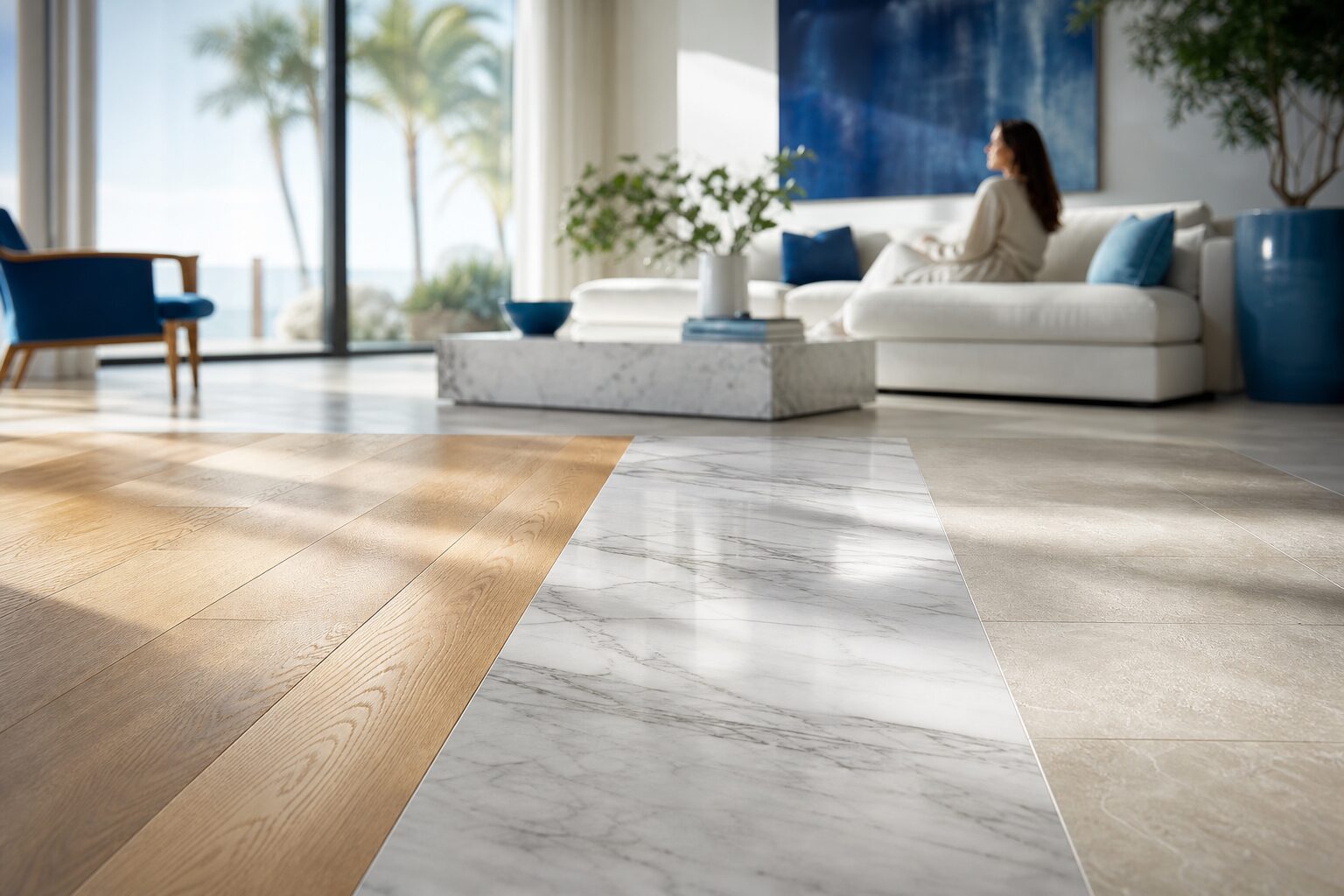
Both materials are well-suited for modern and open-concept layouts. Wide-plank LVP in light, natural tones is perfect for achieving a clean, Scandinavian, or coastal aesthetic. Similarly, dark-stained or light-washed wide-plank hardwood can create a stunning foundation for a minimalist or contemporary space. The seamless look of a single flooring material running through an open-concept living, dining, and kitchen area elevates the sense of space and flow.
Installation and Maintenance: What to Expect from Your New Floors
The renovation process and long-term upkeep are practical considerations that can greatly influence your decision and overall satisfaction.
LVP Installation Processes
Most LVP floors are installed as a “floating floor” using a click-lock mechanism. This process is faster, cleaner, and less labor-intensive than traditional hardwood installation. It often allows the new flooring to be laid directly over an existing hard surface, saving time and demolition costs.
Hardwood Installation Methods
Hardwood installation is a more involved craft that requires professional expertise. Methods include nail-down, staple-down, or glue-down applications, all of which require a perfectly prepared and level subfloor. The process is typically slower and more disruptive to the home.
Routine Cleaning and Care for Each Material
LVP is exceptionally easy to maintain. Regular sweeping or vacuuming, followed by a damp mop with a pH-neutral cleaner, is all it takes. Hardwood requires more care. It should be cleaned with a microfiber mop and a cleaning solution specifically formulated for wood floors. Water should be used sparingly, as excess moisture can damage the finish and the wood itself.
