

Carpet feels softer underfoot. Luxury vinyl handles moisture better. Laminate costs less upfront. Pick the wrong one for your room, and you’re living with a choice that either wears poorly, feels wrong, or costs you money when you sell.
The honest answer isn’t which flooring wins across the board. It’s which one solves the specific problem in each space you’re remodeling. A bedroom has different demands than a kitchen-adjacent living room. Understanding those demands first saves you from regret later.
What Makes Each Flooring Different at Its Core
Carpet is a textile layer over padding and a backing. It absorbs sound, feels warm, and creates a sense of softness that resilient flooring cannot replicate. The trade-off is immediate: it traps dust, stains, and moisture. In a dry bedroom far from water sources, those downsides barely matter. In a living room where spills happen daily, they become a maintenance burden.
Carpet also compresses over time. High-traffic hallways show wear within five to seven years. Bedrooms, with their lower foot traffic, can maintain appearance for ten years or longer under the same conditions.
Luxury vinyl is a multi-layer engineered product designed to mimic the look of hardwood or stone while resisting water. The top wear layer is tough. The core is waterproof. It doesn’t swell or warp when exposed to moisture. Luxury vinyl sits somewhere between carpet and hardwood in comfort underfoot. It’s warmer than tile or laminate, but not as cushioned as carpet. Installation is straightforward, and repairs are simpler than carpet patching.
Laminate is a photographic layer fused to a high-density fiberboard core. It looks like wood or stone at a fraction of the cost. It’s harder than vinyl and resists scratches well. But the core is not waterproof. Moisture seeps into seams and causes swelling and buckling. Laminate works in dry spaces. It fails in bathrooms and kitchens where water exposure is routine.
Comfort: Which Feels Right Underfoot
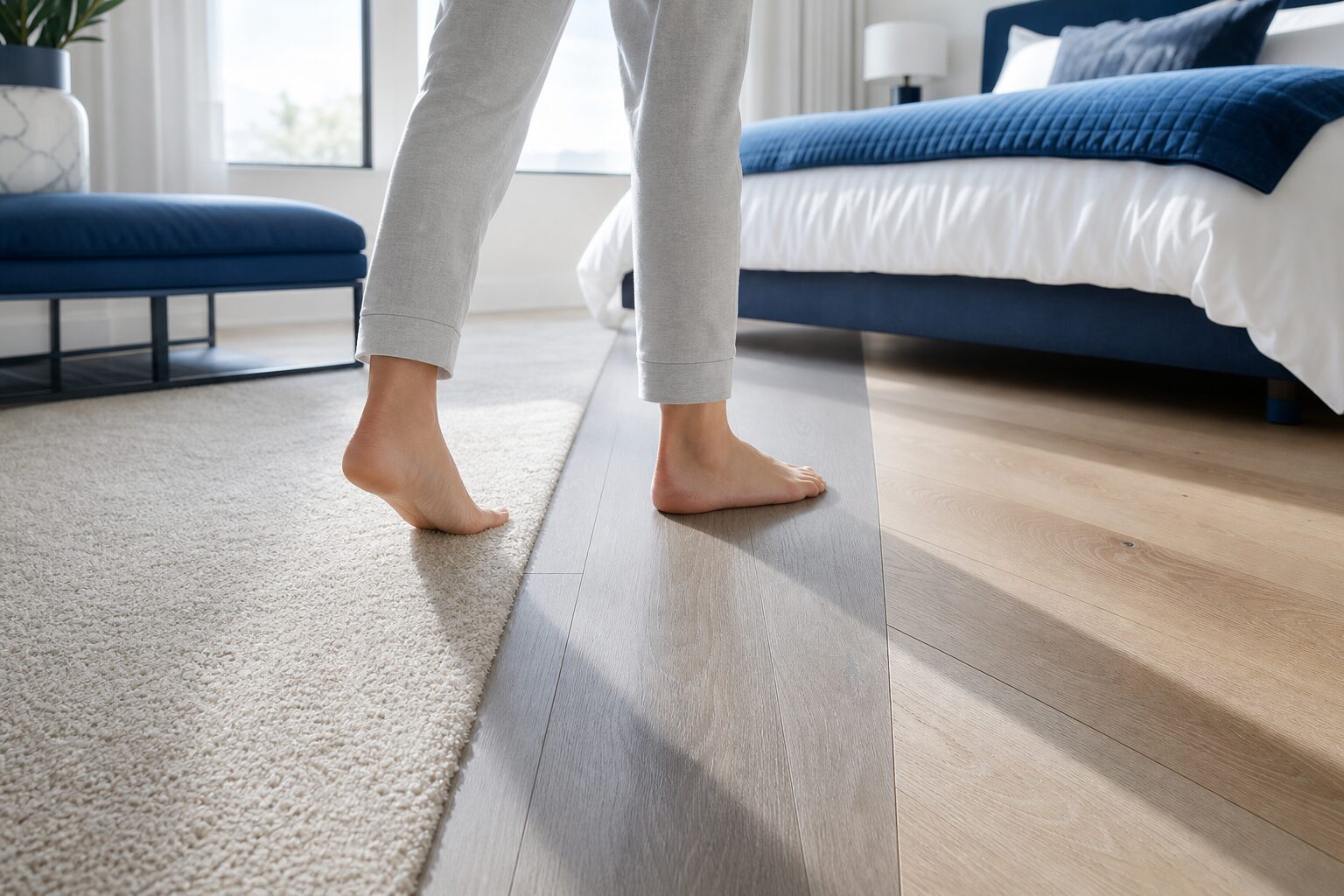
Carpet wins this category without argument. Padding underneath creates a cushioned, warm surface. Bare feet on carpet in a bedroom feel luxurious. That warmth and softness are why carpet remains the default choice for master bedrooms and secondary bedrooms in homes across Southern California.
Luxury vinyl is the middle ground. It’s warmer than laminate, and some premium vinyl products include attached underlayment that adds cushioning. It’s not carpet, but it’s not cold either. Laminate, by contrast, feels hard and can feel cold in winter months. If comfort is your priority, carpet is the right answer for bedrooms. For living spaces where you want durability without sacrificing all comfort, luxury vinyl bridges the gap.
Durability and Wear: Where Each Breaks Down
Carpet shows wear in high-traffic zones. Footprints become visible. Pile flattens. Stains set in if not addressed immediately. In a master bedroom used only by two people, carpet lasts a decade or more. In a living room where family moves through constantly, expect visible wear in five to seven years.
Luxury vinyl is built for durability in active spaces. The wear layer resists scratches, dents, and stains. Spill a glass of wine and wipe it up immediately, and vinyl shows no damage. Leave it for an hour, and it still won’t swell or warp. Vinyl holds up in living rooms, kitchens, and hallways. It’s the flooring that performs when life happens.
Laminate scratches more easily than vinyl and absorbs moisture, but it resists wear in dry, low-moisture environments. A bedroom with no water exposure sees laminate last fifteen years without significant damage. The same laminate in a living room adjacent to a kitchen starts showing edge swelling and buckling within three to five years if any moisture reaches the seams.
Moisture Tolerance: The Critical Dividing Line
This is where the choice becomes non-negotiable. Carpet absorbs water. Spill a full glass and it soaks in. Humidity in a bathroom or laundry room adjacent to a bedroom can cause mildew and odor. Carpet is not suitable for any space where moisture is present or likely.
Laminate swells when water enters the core through seams or edges. Once swelling starts, it doesn’t reverse. The floor buckles and becomes unusable. Laminate belongs in dry bedrooms and dry living rooms only. Never install it in kitchens, bathrooms, laundry rooms, or any space with humidity or water exposure.
Luxury vinyl is waterproof by design. The core doesn’t absorb water. Seams are sealed. Moisture sits on the surface and evaporates or wipes away. This is why vinyl is the only choice for kitchens, bathrooms, laundry rooms, and living spaces adjacent to water sources. It’s also why vinyl works in bedrooms where moisture might be a concern, such as coastal properties or homes in humid climates.
Cost: Initial Price and Long-Term Value
Laminate is the cheapest option per square foot. Expect to pay roughly half the cost of luxury vinyl and a third the cost of quality carpet with installation. If budget is the only constraint, laminate is the answer. But budget alone isn’t the right constraint. Total cost of ownership matters more.
Carpet sits in the middle range. Quality carpet with padding and installation costs more than laminate but less than premium vinyl. The hidden cost is replacement. Carpet stains, wears, and eventually needs replacement. In a master bedroom, that’s ten years away. In a living room, it’s five to seven years. Plan for that replacement cost when budgeting.
Luxury vinyl costs more upfront than laminate but often costs less over time. It lasts longer, requires less maintenance, and resists damage that would require replacement in other materials. In a kitchen or living room, vinyl’s durability and moisture resistance justify the higher initial investment.
| Flooring Type | Comfort | Moisture Tolerance | Durability in High Traffic | Best For |
|---|---|---|---|---|
| Carpet | Excellent | Poor | Fair (5-7 years) | Dry bedrooms, low-traffic spaces |
| Luxury Vinyl | Good | Excellent | Excellent (10+ years) | Living rooms, kitchens, all wet areas |
| Laminate | Fair | Poor | Good in dry spaces (10+ years) | Dry bedrooms only |
Resale Impact: What Buyers Actually Care About
Worn carpet in a living room signals deferred maintenance. Buyers notice it immediately and factor replacement cost into their offer. New carpet or luxury vinyl in living spaces adds perceived value and closes faster.
Luxury vinyl has crossed a threshold in the Southern California market. Five years ago, buyers preferred hardwood and viewed vinyl as a budget compromise. Today, high-quality vinyl that mimics natural materials is viewed as a practical, durable upgrade. Buyers see it as a feature, not a downgrade, especially in kitchens and active living areas.
Laminate in a bedroom doesn’t hurt resale, but it doesn’t add value either. It’s neutral. Buyers accept it as a cost-effective choice. Hardwood or luxury vinyl would be preferred, but laminate doesn’t create friction in an otherwise well-maintained home.
Pro tip: If you’re remodeling before selling, invest in luxury vinyl in high-traffic areas and living spaces. It signals durability and low maintenance to buyers and justifies a higher asking price more than worn carpet or budget laminate ever will.
Which Flooring Belongs in Which Room
Master bedroom: Carpet for comfort and warmth, or luxury vinyl if moisture is a concern. Laminate works if budget is tight and the room stays dry.
Secondary bedrooms: Carpet for comfort, or laminate if budget is the priority and the space is dry.
Living room: Luxury vinyl if the space connects to a kitchen or sees active use. Carpet if the room is separate, formal, and low-traffic.
Kitchen-adjacent living areas: Luxury vinyl only. Moisture and spills make this non-negotiable.
Hallways and transitions: Luxury vinyl for durability and ease of cleaning, or carpet if the home is primarily dry and hallways are low-traffic.
Frequently Asked Questions
Can I install carpet over luxury vinyl or laminate?
Technically yes, but it’s wasteful. Carpet over vinyl or laminate creates an unnecessary layer and complicates future removal. If you want carpet, install it directly over the subfloor with proper padding. If you want the durability of vinyl or laminate, stick with that choice.
How long does luxury vinyl actually last?
Quality luxury vinyl lasts ten to twenty years depending on traffic and maintenance. In a living room with moderate use, expect fifteen years or more. In a kitchen with heavy daily use, ten to twelve years is typical. The wear layer is the key factor. Premium vinyl with a thicker wear layer outlasts budget vinyl significantly.
Is laminate a good choice for a bedroom near a bathroom?
No. Even if the bedroom itself stays dry, humidity from the adjacent bathroom can seep into laminate seams and cause swelling. Use luxury vinyl in bedrooms adjacent to bathrooms or in homes in humid climates. Laminate works only in truly dry spaces.
Does luxury vinyl feel cold like tile?
Luxury vinyl is warmer than tile or concrete, but cooler than carpet. Some luxury vinyl products come with attached underlayment that adds warmth and cushioning. If warmth is important, ask your installer about vinyl options with built-in padding or consider adding a rug over the vinyl.
Can I repair carpet, vinyl, or laminate if it gets damaged?
Carpet can be patched, but the patch is often visible. Luxury vinyl planks can be replaced individually if one plank is damaged, making repairs seamless. Laminate is difficult to repair; damaged sections typically require replacement of multiple planks. Vinyl’s repairability is a practical advantage over both carpet and laminate.
Which flooring adds the most value when selling?
Hardwood is the gold standard, but luxury vinyl in living spaces and kitchens is the next best choice. It signals durability and low maintenance to buyers. Worn carpet detracts from value. Laminate is neutral. If you’re remodeling before sale, luxury vinyl in high-traffic areas delivers better return on investment than carpet or laminate.
