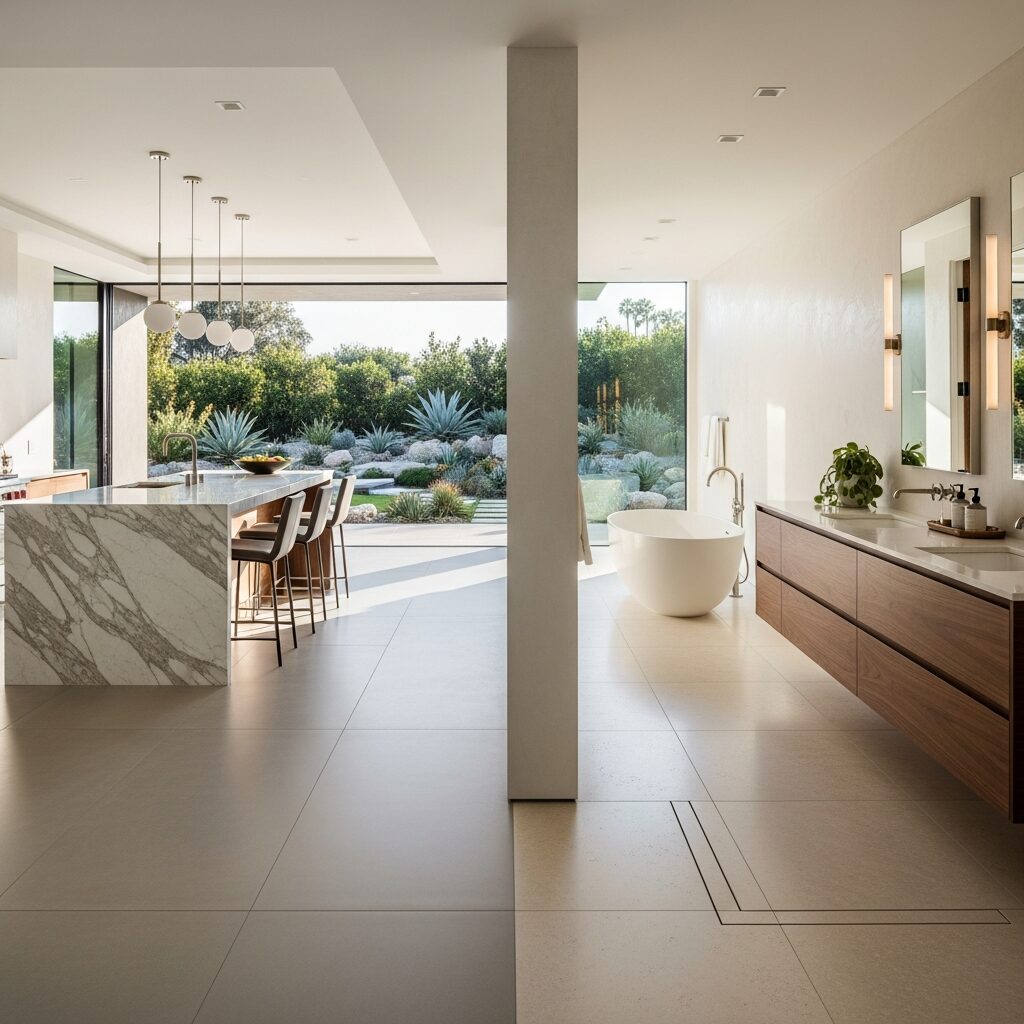
Transform Your Kitchen & Bathroom: Strategic Flooring Remodeling
In any kitchen or bathroom renovation, the most transformative element isn’t the cabinetry, the countertops, or even the fixtures. It’s the surface beneath your feet. Flooring is the architectural foundation of interior design—the horizontal plane that dictates the room’s entire visual language. It sets the horizon line from which every other element rises. A strategic kitchen bathroom flooring remodeling project does more than update a look; it fundamentally reshapes perception of space, light, and flow, turning an ordinary room into an extraordinary experience. Understanding this principle is what separates a simple update from a masterful renovation.
As seasoned remodeling professionals with decades of experience, we’ve seen firsthand how the right flooring choice can amplify natural light, create the illusion of a larger room, and establish a seamless visual narrative throughout a home. It’s about leveraging material science, plank dimensions, and reflective properties to create a cohesive and impactful design. This guide explores how to approach flooring not as a finishing touch, but as the cornerstone of your kitchen and bathroom’s aesthetic.
Why Flooring is the Foundation of Your Kitchen & Bathroom’s Horizon Line
Think of your room as a canvas. The floor is the first, most expansive brushstroke that sets the tone for the entire composition. This foundational layer, or “horizon line,” anchors the design and influences how every other component—from the height of the cabinets to the color of the walls—is perceived. Choosing your flooring first isn’t just a practical step; it’s an essential design strategy.
Defining the Architectural Base of Interior Design
The floor is the largest single surface in any room. Its color, texture, and pattern establish the room’s base palette and structural feel. A dark, wide-plank floor can ground a bright, airy kitchen, adding a sense of stability and richness. Conversely, a light, large-format tile can make a compact bathroom feel open and expansive. This architectural base dictates whether a space feels intimate and cozy or grand and minimalist.
Setting the Tone: Color, Texture, and Pattern
Flooring communicates a room’s personality instantly. The warm, organic grains of wood-look vinyl evoke comfort and tradition, while the clean, monolithic surface of polished porcelain speaks to modern elegance. Subtle textures can add depth and hide minor imperfections, while bold patterns like herringbone or chevron introduce dynamic energy. The right choice creates an immediate emotional response and sets the stage for the rest of your design narrative.
Beyond Aesthetics: Practicality and Longevity
In high-traffic, moisture-prone areas like kitchens and bathrooms, the foundation must be as durable as it is beautiful. A successful kitchen bathroom flooring remodeling project prioritizes materials that offer superior water resistance, scratch resilience, and ease of maintenance. Investing in a high-quality, properly installed floor is one of the smartest decisions you can make for your home’s long-term value and your own peace of mind. It’s a choice that pays dividends in both performance and ROI for years to come.
How Strategic Flooring Choices Elevate Aesthetic Appeal
Elevating a room’s aesthetic with flooring goes beyond simply selecting a popular material. It requires a nuanced understanding of how scale, light, and layout interact. The right flooring can solve design challenges, turning limitations into features and enhancing the overall architectural integrity of the space.
Transforming Small Spaces with Smart Selections
In smaller kitchens or bathrooms, flooring is a powerful tool for creating the illusion of space. Laying planks on a diagonal can draw the eye across the longest dimension of the room, making it feel wider. Using large-format tiles minimizes grout lines, resulting in a less cluttered, more expansive visual plane. Lighter colors are also key, as they reflect more light and contribute to an open, airy feeling, which is a common goal for homeowners looking for flooring for small bathrooms.
Creating Grandeur in Expansive Areas
In larger, open-concept homes, flooring unifies the space and prevents it from feeling cavernous or disconnected. Using a single, continuous flooring material from the kitchen into the living and dining areas creates a cohesive and luxurious flow. Here, you can embrace richer colors or more intricate patterns to add visual weight and warmth without overwhelming the senses. The goal is to create a sophisticated backdrop that complements the scale of the room.
Balancing Functionality with High-End Design
Today’s advanced materials mean you never have to sacrifice style for performance. Waterproof flooring for kitchen and bathroom applications is now the industry standard. High-end luxury vinyl plank offers photorealistic wood and stone visuals with near-indestructible wear layers. Similarly, modern porcelain tiles can mimic the look of delicate marble or rustic hardwood while providing superior durability and slip resistance, ensuring your high-design space is also a high-functioning one.
Unlocking Visual Continuity and Flow in Open Concepts
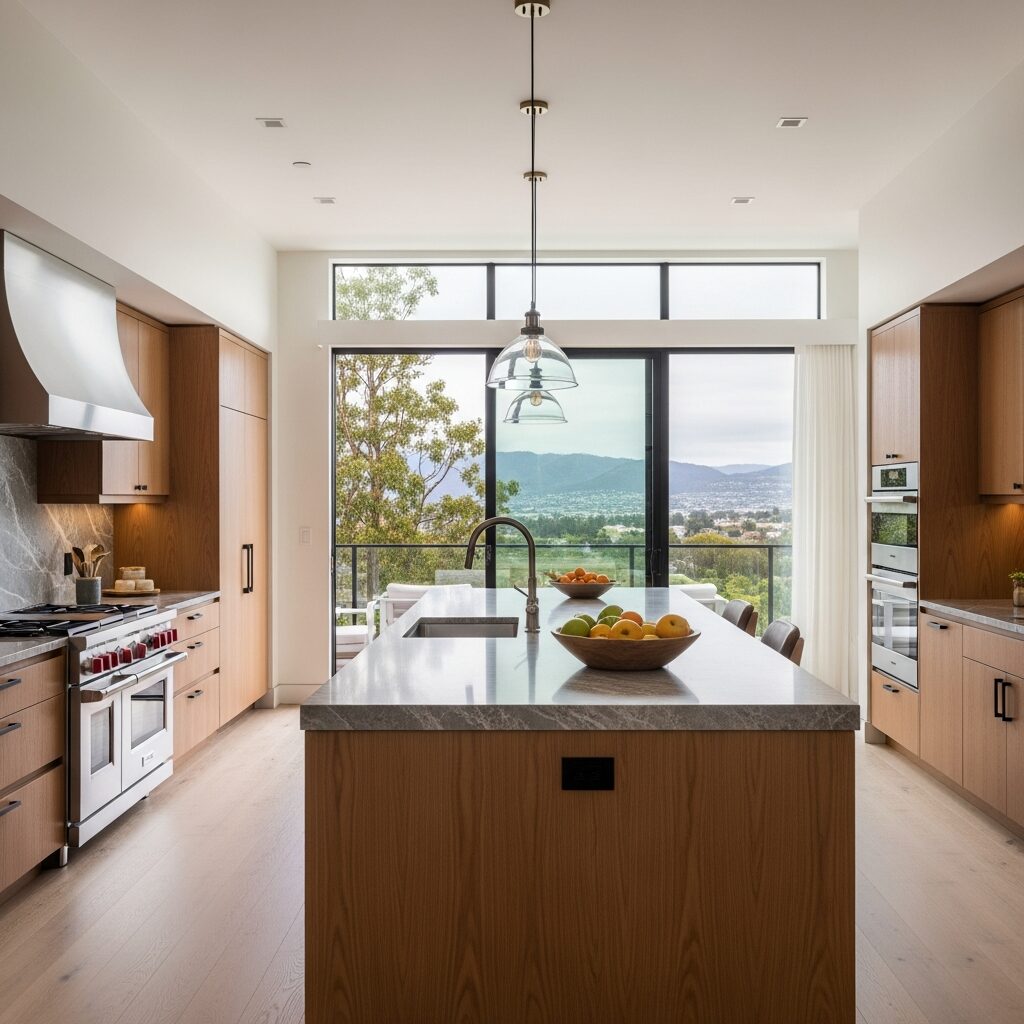
The shift towards open-concept living has made flooring one of the most critical elements in home design. As walls come down, the floor becomes the primary element that connects disparate functional zones—kitchen, dining, and living—into a single, harmonious whole. This is a central theme in modern Southern California flooring renovation.
Seamless Transitions Between Kitchen and Living Spaces
One of the biggest mistakes in an open-concept remodel is creating jarring transitions between flooring materials. A sudden switch from tile in the kitchen to hardwood in the living room can act as a visual “wall,” breaking the flow and making the overall space feel smaller and more disjointed. Using a single flooring material throughout is the most effective strategy for creating open concept flooring solutions that feel intentional and expansive.
Consistent Flooring for Cohesive Home Design
When the same flooring runs continuously, it establishes a powerful visual rhythm that guides the eye through the home. This consistency makes the entire floor plan feel larger, more considered, and more luxurious. It allows furniture and architectural details to become the focal points, rather than the floor itself. This approach to flooring visual continuity is a hallmark of sophisticated interior design.
Minimizing Visual Breaks for Fluid Interiors
Even when a transition is necessary, a professional remodeler will minimize its impact. We use low-profile, color-matched transition strips or meticulously plan cuts to ensure the change is as subtle and seamless as possible. The objective is always to maintain a fluid, uninterrupted visual path that enhances the sense of openness.
The Role of Plank Dimensions and Tile Size in Space Perception
The scale of your flooring material has a direct and measurable impact on how the human eye perceives the size and proportion of a room. This is a technical aspect of design where expert guidance is invaluable.
Wide Plank Flooring: Expanding Perceived Space
Wider planks (7 inches or more) result in fewer seams across the floor. This reduction in visual lines tricks the eye into seeing a broader, more uncluttered surface, making any room feel larger and more serene. This effect is particularly potent in medium-sized rooms, where it can add a surprising sense of volume and scale.
Large Format Tiles: Modern Elegance and Fewer Grout Lines
Similar to wide planks, large format tiles (e.g., 24×24 inches or 24×48 inches) are a key trend in bathroom flooring design. The primary benefit is the dramatic reduction in grout lines. This creates a clean, monolithic look that exudes modern elegance and makes cleaning significantly easier. A floor with fewer visual interruptions feels more continuous and expansive.
Herringbone and Chevron: Adding Dynamic Visual Interest
Patterned installations like herringbone and chevron use standard-sized planks to create a sense of movement and direction. These V-shaped patterns naturally draw the eye forward, which can be used to elongate a hallway or add a bespoke, high-end feel to a kitchen floor. It’s a way to add sophisticated character without introducing a competing color or material.
Harnessing Reflective Properties for Enhanced Light and Ambiance
The way your flooring interacts with light is a critical, yet often overlooked, factor. The finish and color of your floor can either absorb or reflect light, fundamentally changing the brightness and ambiance of your kitchen and bathroom.
High-Gloss Finishes: Maximizing Natural Light
Flooring with a high-gloss or polished finish acts like a mirror for light. It bounces natural and artificial light around the room, making the entire space feel brighter, livelier, and more open. This is an excellent strategy for kitchens that may lack large windows or feel a bit dim.
Matte vs. Satin: Balancing Light and Slip Resistance
While glossy finishes are great for light reflection, matte and satin finishes offer a softer, more diffused light that can feel more calming and contemporary. They are also far more forgiving when it comes to showing footprints and dust. Critically, these less-reflective finishes often provide better slip resistance, making them a safer and highly practical choice for bathroom environments.
Light-Colored Flooring: Brightening Dark Rooms
It’s a classic design principle for a reason: it works. Light-colored flooring—think pale oaks, light grays, creams, or whites—serves as a massive reflector at the base of your room. It dramatically increases ambient brightness and can make a windowless powder room or a north-facing kitchen feel significantly more illuminated and welcoming.
Choosing the Right Materials for Durability and Design
Ultimately, the success of your kitchen bathroom flooring remodeling project hinges on selecting the right material. The ideal choice offers a perfect synthesis of your aesthetic vision and the functional demands of the space. As remodeling experts serving Orange County, Riverside, and San Bernardino, we guide homeowners to materials that perform well in our unique climate.
Luxury Vinyl Plank (LVP): Durability Meets Style
Modern luxury vinyl plank flooring is one of the most versatile and popular choices for both kitchens and bathrooms. Its multi-layer construction makes it 100% waterproof, highly resistant to scratches and dents, and comfortable underfoot. With hyper-realistic wood and stone visuals, LVP delivers high-end style without the maintenance concerns of natural materials, making it a perfect kitchen flooring idea.
Porcelain Tile: Versatility and Water Resistance
When it comes to wet areas, porcelain tile remains the undisputed champion. It has an extremely low water absorption rate, making it virtually impervious to moisture. This is a critical feature for a successful porcelain tile bathroom renovation. Thanks to advanced printing technology, porcelain is available in an endless array of styles, from concrete and stone looks to incredibly convincing wood grains, offering unmatched design flexibility.
Natural Stone (Marble, Travertine): Timeless Luxury
For a truly luxurious and timeless aesthetic, nothing compares to natural stone. Each piece of marble, travertine, or slate is unique, bringing an organic, one-of-a-kind elegance to a floor. While they offer unparalleled beauty, these materials are porous and require periodic sealing to protect against staining, making them a choice for homeowners committed to their upkeep.
Engineered Hardwood: Warmth and Stability
While solid hardwood is not recommended for bathrooms, high-quality engineered hardwood can be a stunning choice for kitchens. Its layered construction provides greater dimensional stability, making it more resistant to the temperature and humidity fluctuations common in a kitchen environment. It offers the authentic warmth and beauty of real wood with superior performance.
Your floor is more than just a surface; it’s the strategic element that defines your home’s character. By carefully considering continuity, scale, light, and material, you can create a foundation that elevates your entire kitchen and bathroom remodeling project from ordinary to exceptional. Get a Free in-home estimate
