

Strategic Planning Guide for Kitchen & Bathroom Remodeling
Embarking on a kitchen or bathroom renovation is one of the most exciting and value-enhancing projects a homeowner can undertake. But the difference between a stunning, functional space that adds significant equity to your home and a project plagued by delays, budget overruns, and disappointment lies in one critical phase: strategic planning. As a contracting professional with over two decades of experience, I’ve seen firsthand that meticulous kitchen bathroom renovation planning isn’t just a preliminary step—it’s the very foundation of a successful outcome.
This comprehensive guide moves beyond color swatches and appliance models. We will delve into the essential infrastructure assessments, functional design principles, and logistical preparations that seasoned professionals use to execute flawless remodeling projects. This is your blueprint for transforming a vision into a reality that is as durable and efficient as it is beautiful.
Why is Pre-Renovation Strategic Planning Critical for Success?
Many homeowners are eager to jump straight to demolition and see visible progress. However, the most crucial work happens before a single hammer is swung. Investing time in a detailed pre-renovation strategy is the single best way to protect your investment, your timeline, and your sanity.
Mitigating Risks and Ensuring Project Efficiency
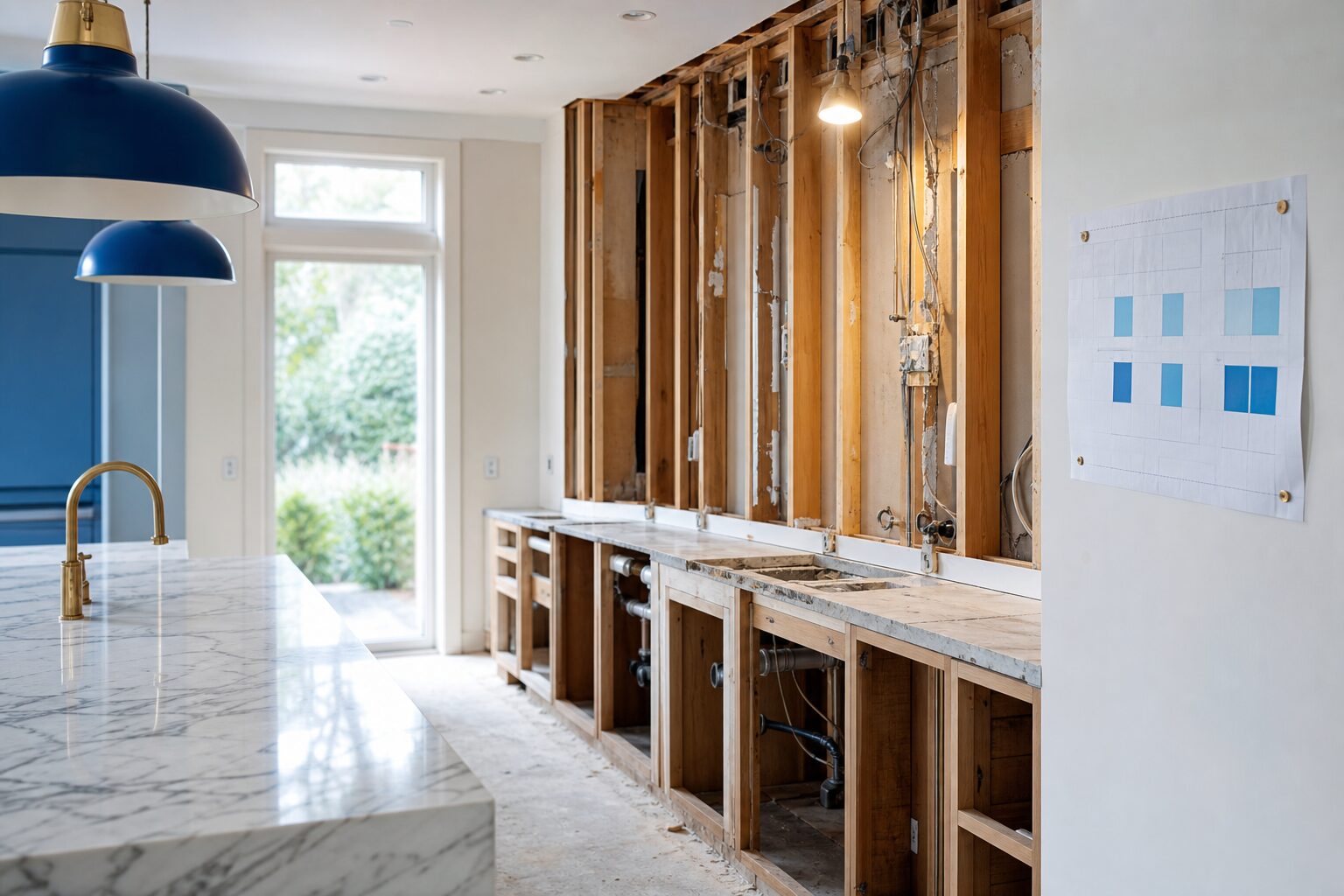
A well-structured plan acts as a diagnostic tool. Before we open up walls, we need to anticipate what lies behind them. A thorough initial assessment can identify potential hazards like outdated knob-and-tube wiring, corroded galvanized plumbing, or asbestos-containing materials. Discovering these issues during the planning phase allows us to incorporate their remediation into the budget and schedule proactively, rather than reacting to them as costly, time-consuming emergencies mid-project.
Setting Realistic Expectations and Timelines
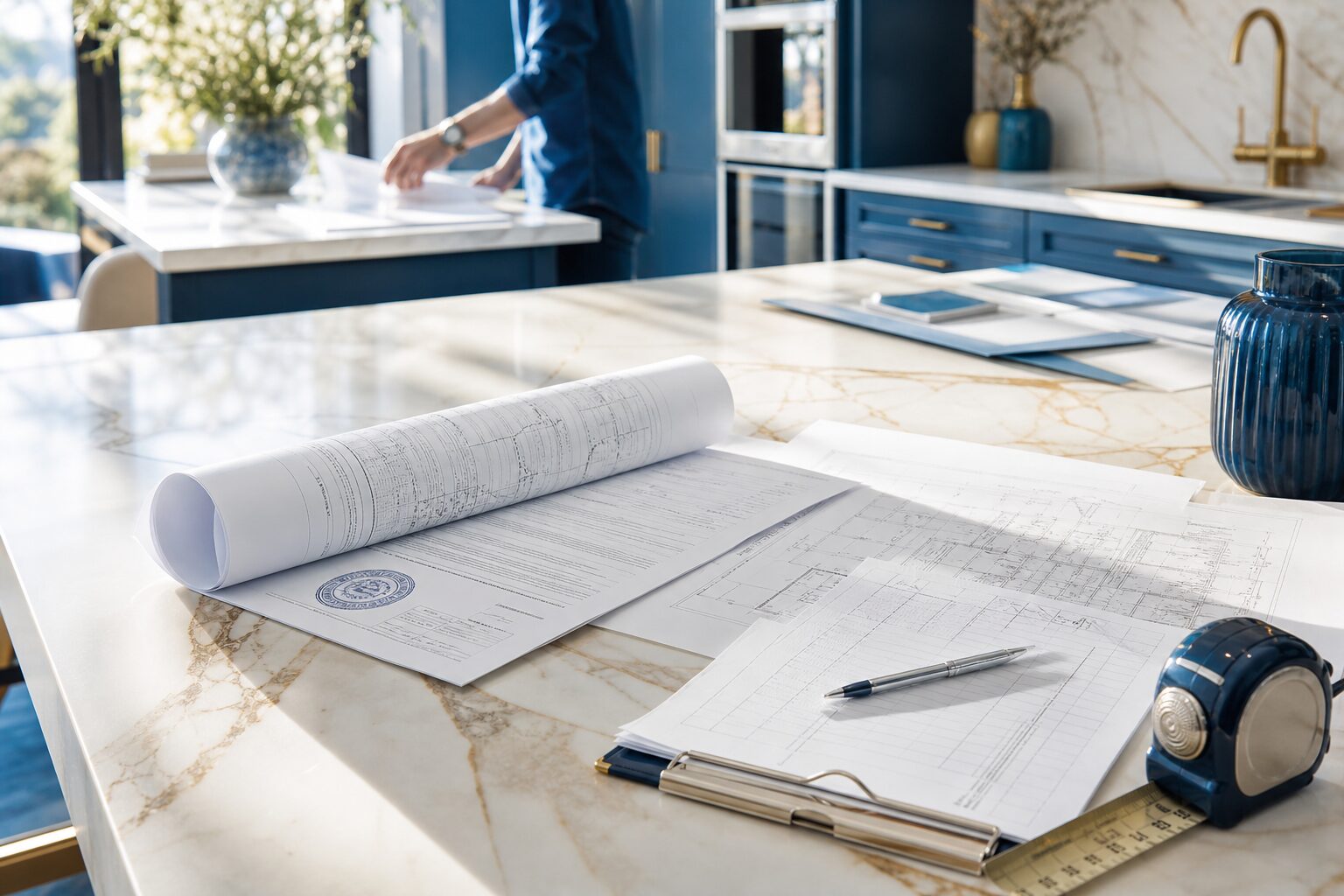
Vague plans lead to vague timelines. A detailed strategic plan outlines every phase of the renovation, from permit acquisition and material procurement to the final coat of paint. This detailed scope of work allows for the creation of a realistic project calendar. It clarifies dependencies—for example, countertops cannot be templated until the base cabinets are installed, and the tile backsplash can’t be installed until after the countertops. This transparency demystifies the process and prevents the common frustrations associated with project delays.
Maximizing Return on Your Remodeling Investment
A thoughtfully planned renovation is a powerful financial tool. Strategic decisions about layout, material quality, and functionality directly impact your home’s market value. By focusing on classic design principles and durable materials, you create a space that will appeal to future buyers for years to come. Planning also helps you avoid costly design mistakes and issues like functional obsolescence, ensuring every dollar spent contributes directly to the long-term value and enjoyment of your home.
What Infrastructure Assessments are Essential Before Any Renovation?
The high-end finishes you see are only as reliable as the hidden infrastructure that supports them. A successful renovation addresses the home’s core systems, ensuring safety, compliance, and longevity. Skipping this critical infrastructure assessment is a recipe for future problems that will be far more expensive to fix once the new walls and floors are in place.
Plumbing and Electrical System Evaluations
Behind your walls lie the veins and nerves of your home. We must assess the condition and capacity of these systems. Are the pipes galvanized steel, prone to corrosion and low water pressure? Is the electrical panel maxed out, unable to support new appliances or dedicated circuits for a microwave or heated floors? Modern codes require Ground Fault Circuit Interrupter (GFCI) outlets near water sources for safety. A proper renovation brings these vital systems up to current standards, safeguarding your family and your investment.
Structural Integrity and Load-Bearing Considerations
The desire for open-concept living spaces often involves removing walls. This is a significant structural change that requires expert analysis. We must determine which walls are load-bearing—meaning they support the weight of the floor or roof above—and engineer a proper solution, such as a laminated veneer lumber (LVL) beam, to redistribute that load safely. Ignoring these considerations can lead to catastrophic structural failure.
HVAC Integration and Ventilation Needs
Proper air quality is paramount. In bathrooms, inadequate ventilation leads to moisture buildup, fostering mold and mildew that can damage drywall and cabinetry. In kitchens, a high-CFM (cubic feet per minute) range hood is essential for venting smoke, grease, and odors. A renovation plan must account for the necessary ductwork, ensuring it integrates seamlessly with the home’s existing HVAC system without compromising its efficiency.
Subfloor and Foundation Condition for Flooring Projects
The performance of your beautiful new flooring is entirely dependent on the condition of the subfloor beneath it. As part of flooring project planning, we inspect the subfloor for water damage, rot, or inconsistencies. An uneven subfloor will cause luxury vinyl planks to separate and large-format porcelain tiles to crack. We must ensure the subfloor is level, clean, and structurally sound before a single piece of new flooring is installed.
How Can Functional Design Elevate Your Kitchen and Bathroom Spaces?
With the home’s infrastructure addressed, we can focus on creating a space that is a joy to use. Great design is the marriage of aesthetics and ergonomics. A beautiful kitchen that is frustrating to cook in or a stunning bathroom with no storage is a design failure. Functional design ensures your new space supports and enhances your daily routines.
Optimizing Layout for Workflow and Ergonomics
In the kitchen, we analyze workflow using principles like the “work triangle” or more modern “work zones” (prep, cooking, cleaning). This ensures an efficient and intuitive path between the sink, refrigerator, and cooktop. In the bathroom, we consider vanity height, clearance around the toilet, and the accessibility of the shower. The goal is to create a space that feels natural and effortless, minimizing unnecessary steps and awkward movements.
Material Selection for Durability and Aesthetics
Material selection for renovation involves balancing beauty, budget, and long-term performance. For instance, the durability and non-porous nature of quartz make it a superior choice for busy family kitchen countertops compared to more delicate natural stones that require regular sealing. For flooring, porcelain tile offers unmatched water resistance for bathrooms, while high-quality Luxury Vinyl Plank (LVP) provides a warm, durable, and waterproof option for kitchens.
Lighting Design for Ambiance and Task Performance
A sophisticated lighting plan can transform a room. We design using three essential layers.
- Ambient Lighting: This is the overall illumination, typically from recessed ceiling lights, that fills the space.
- Task Lighting: Focused light for specific activities, such as under-cabinet lighting for food prep or vanity lights for grooming.
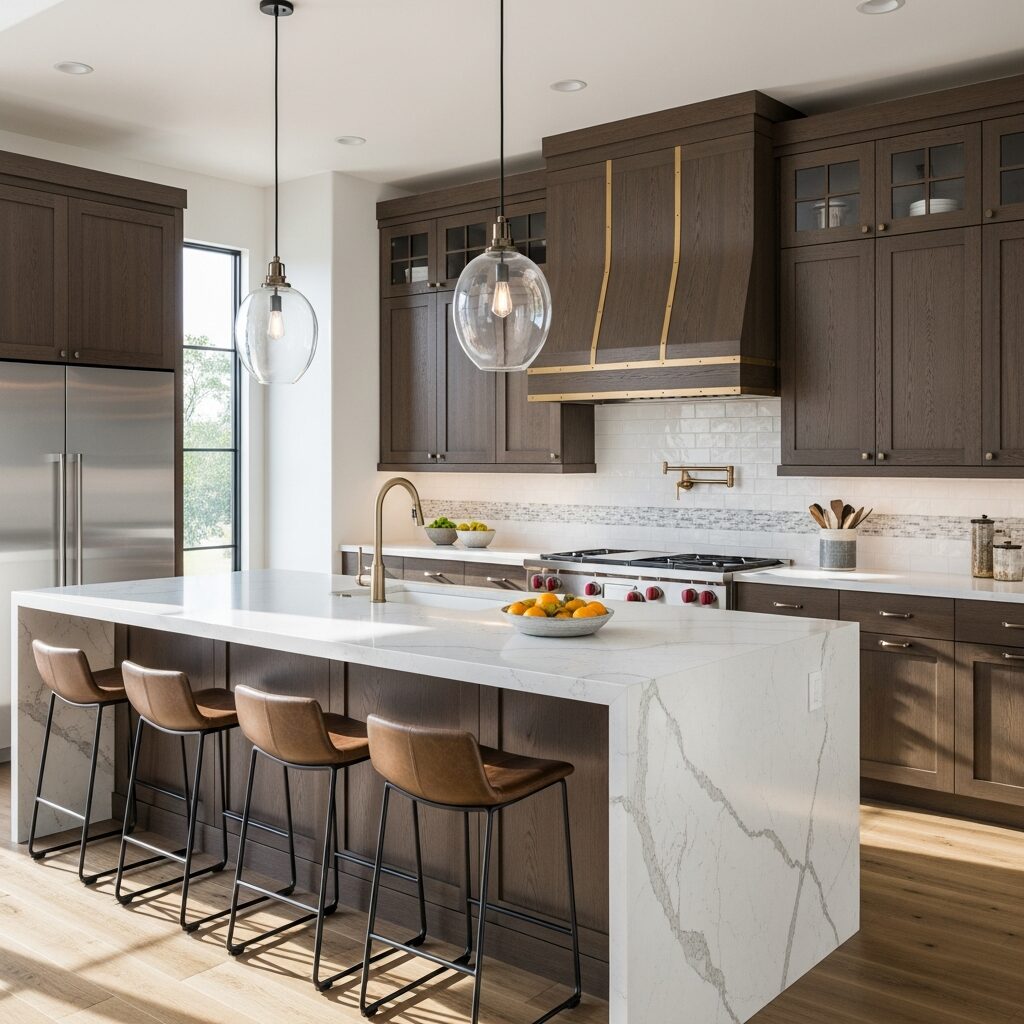
- Accent Lighting: This adds a decorative touch, like elegant pendant lights over an island or a small spotlight on a piece of art.
Combining these layers creates a space that is both highly functional and visually dynamic.
Storage Solutions and Space Utilization Strategies
Clutter is the enemy of a peaceful space. A well-designed kitchen renovation integrates intelligent storage solutions. This goes beyond standard cabinets to include full-extension drawers, pull-out pantry shelves, dedicated spice racks, and vertical dividers for baking sheets. In bathrooms, recessed medicine cabinets, shower niches, and vanity organizers can dramatically increase usable storage in a small footprint.
