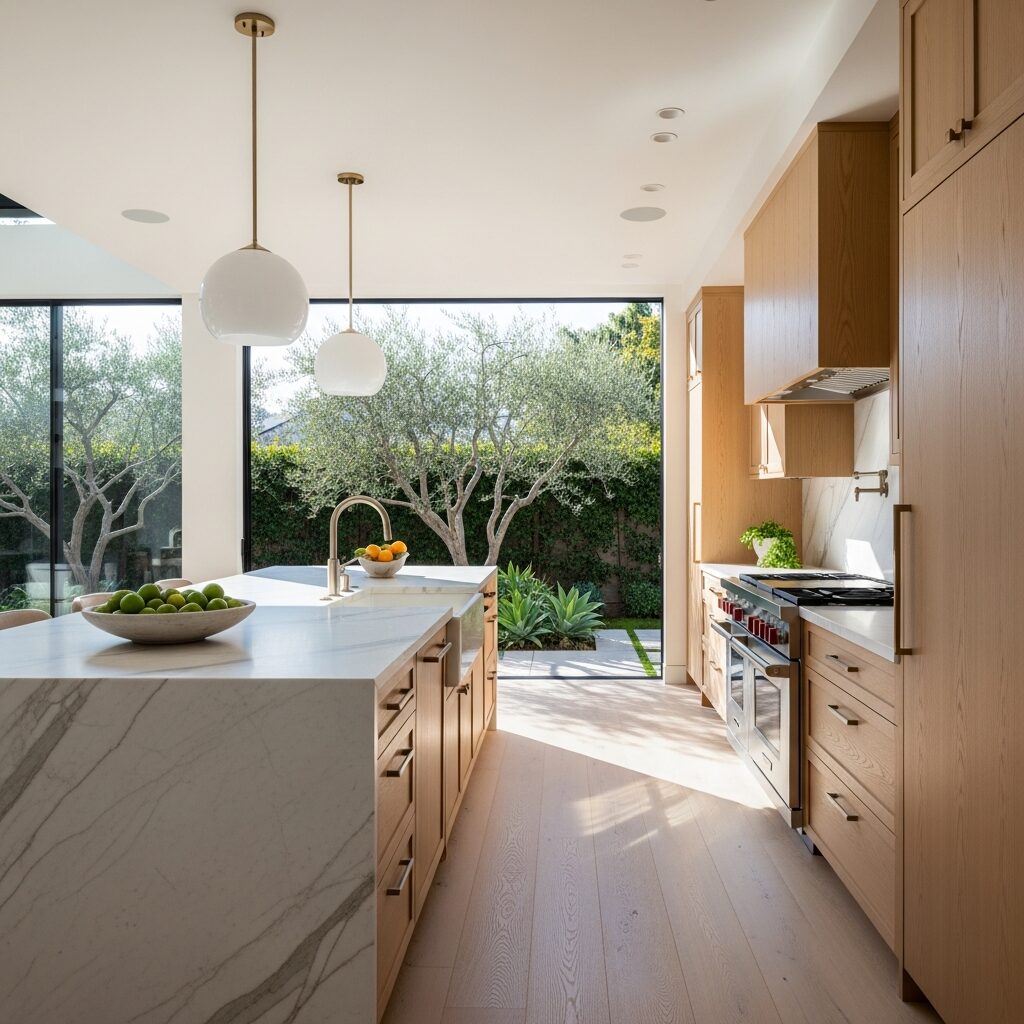
Optimize Your Kitchen Layout: A Guide for Orange County Homeowners
The success of a kitchen renovation isn’t just measured by the gleam of new quartz countertops or the soft-close feature of custom cabinets. The true foundation of a transformative kitchen remodel lies in its layout. As a contractor with over two decades of experience, I’ve seen firsthand how a well-executed layout can enhance daily life, while a poorly planned one becomes a source of constant frustration. For discerning Orange County homeowners, achieving a perfect balance between stunning aesthetics and flawless functionality is paramount. This guide provides an in-depth look at kitchen layout optimization, exploring how strategic design can create a space that is efficient, inviting, and a powerful asset to your home’s value.
Why is Your Kitchen Layout Critical for Modern Living?
In today’s homes, the kitchen is no longer a secluded utility space. It’s the central hub for family life, entertaining, and daily routines. The layout dictates the flow of activity, influencing everything from the ease of preparing a meal to the way guests interact during a gathering. A thoughtful kitchen layout design is an investment in your lifestyle.
Understanding the Impact on Daily Life and Home Value
A kitchen with poor workflow—where the refrigerator is a long walk from the primary prep counter, or the dishwasher door blocks a main thoroughfare when open—creates subtle, daily inefficiencies that compound over time. Conversely, a layout optimized for kitchen functionality reduces unnecessary steps, minimizes clutter, and creates a more harmonious environment. This functional excellence translates directly to home value. Potential buyers recognize and are willing to pay a premium for a kitchen that is not only beautiful but intelligently designed for real-world use.
The Principles of Ergonomics in Kitchen Design
Ergonomics is the science of designing an environment to fit the people who use it, not the other way around. In kitchen layout optimization, this means creating a space that is comfortable, safe, and efficient. We consider factors like standard counter heights (typically 36 inches), ensuring adequate “landing zones” next to ovens and microwaves for hot dishes, and planning appliance placement to minimize bending and reaching. The goal is to design a kitchen that works with your body’s natural movements, making every task easier and more enjoyable.
Choosing the Ideal Kitchen Layout: A Deep Dive into Popular Styles
The shape of your kitchen is the blueprint for its functionality. While every home is unique, most layouts are variations of a few classic, time-tested configurations. Understanding the strengths and weaknesses of each is the first step toward finding the perfect fit for your space and lifestyle.
Galley Kitchens: Maximizing Space in Compact Areas
A Galley kitchen consists of two parallel walls of cabinetry and countertops with a single corridor in between. This is the epitome of efficiency, often found in smaller homes, condos, and apartments. Its primary strength is the tight, logical workflow it creates; everything is within a few steps. A Galley kitchen renovation can feel surprisingly spacious with clever design choices like light-colored cabinetry, reflective backsplashes, and strategic under-cabinet lighting to enhance the sense of openness.
L-Shape Kitchens: Versatility and Openness
An L-shape kitchen layout utilizes two adjacent walls, forming a natural “L”. This design is incredibly versatile and a popular choice for good reason. It opens up the kitchen to an adjacent dining or living area, making it ideal for entertaining and family interaction. An L-shape kitchen remodel effectively eliminates traffic bottlenecks and can easily accommodate a dining table or a central island, providing flexibility as your needs evolve.
U-Shape Kitchens: Enhancing Storage and Counter Space
For the serious home chef, U-shape kitchen layouts are often the gold standard. Utilizing three walls, this design surrounds the user with countertops and storage, creating an efficient and contained workspace. It provides an abundance of surface area for prep work and can accommodate numerous appliances without feeling cluttered. The key to a successful U-shape design is ensuring the open end is wide enough (ideally 10 feet or more) to prevent the space from feeling cramped. The extensive cabinetry options make it a powerhouse of organization. We offer a wide range of custom and semi-custom cabinets to maximize the potential of a U-shaped design.
Open-Concept Kitchens: Blending Social and Culinary Zones
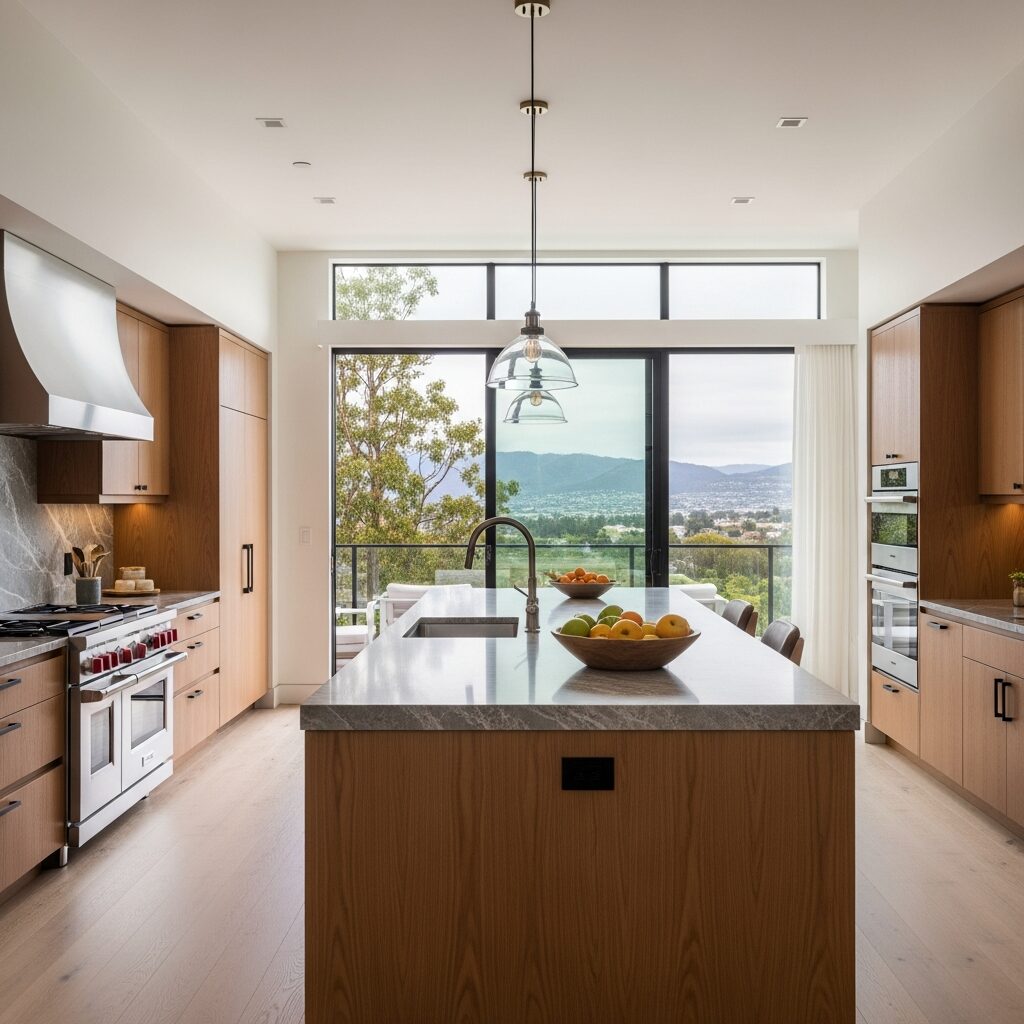
The open-concept kitchen design has dominated modern home renovation for its airy, inclusive feel. By removing walls between the kitchen and adjacent living areas, it creates one large, multi-functional space. This layout is perfect for homeowners who love to entertain while they cook. However, it requires meticulous kitchen zones design to visually separate the work areas from the relaxation zones and demands a powerful ventilation system to manage cooking odors. The structural work involved in removing walls underscores the need for professional expertise.
The Kitchen Island: A Central Feature in Modern Layouts
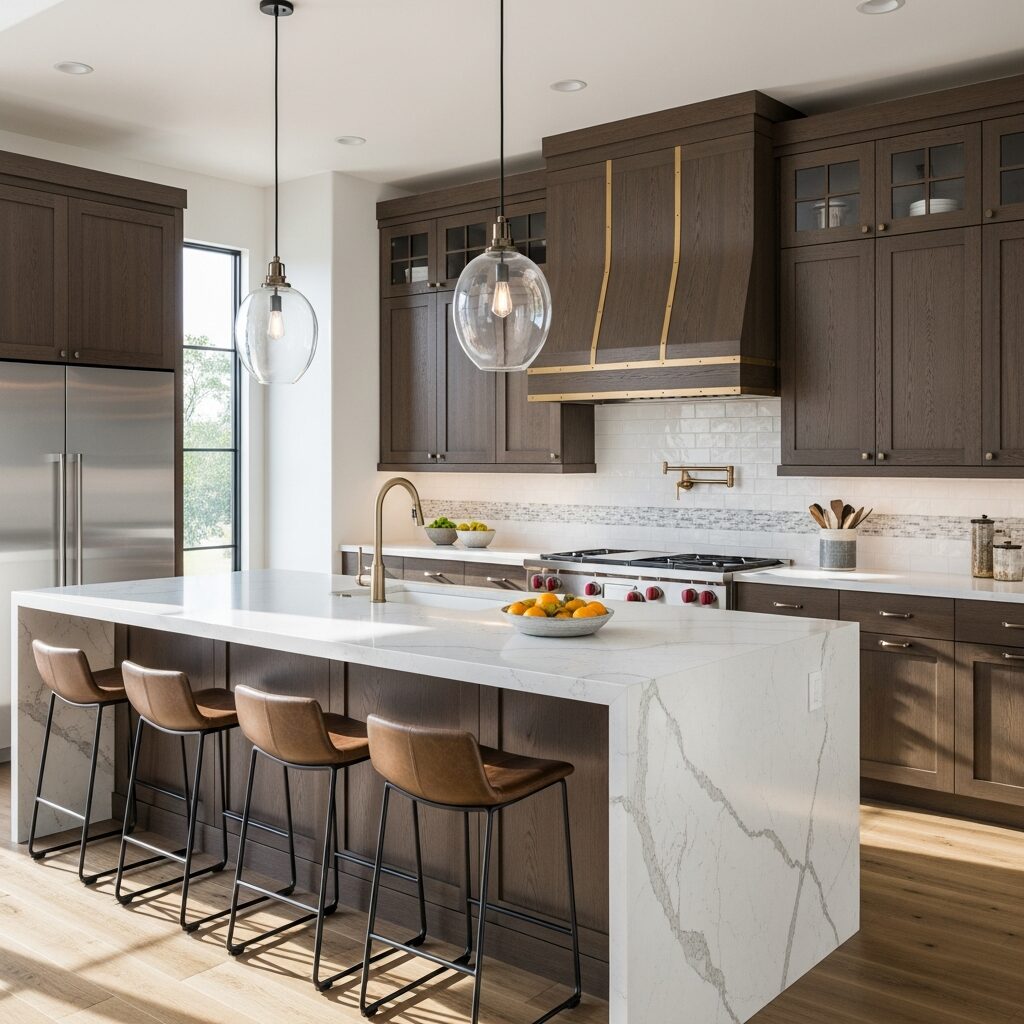
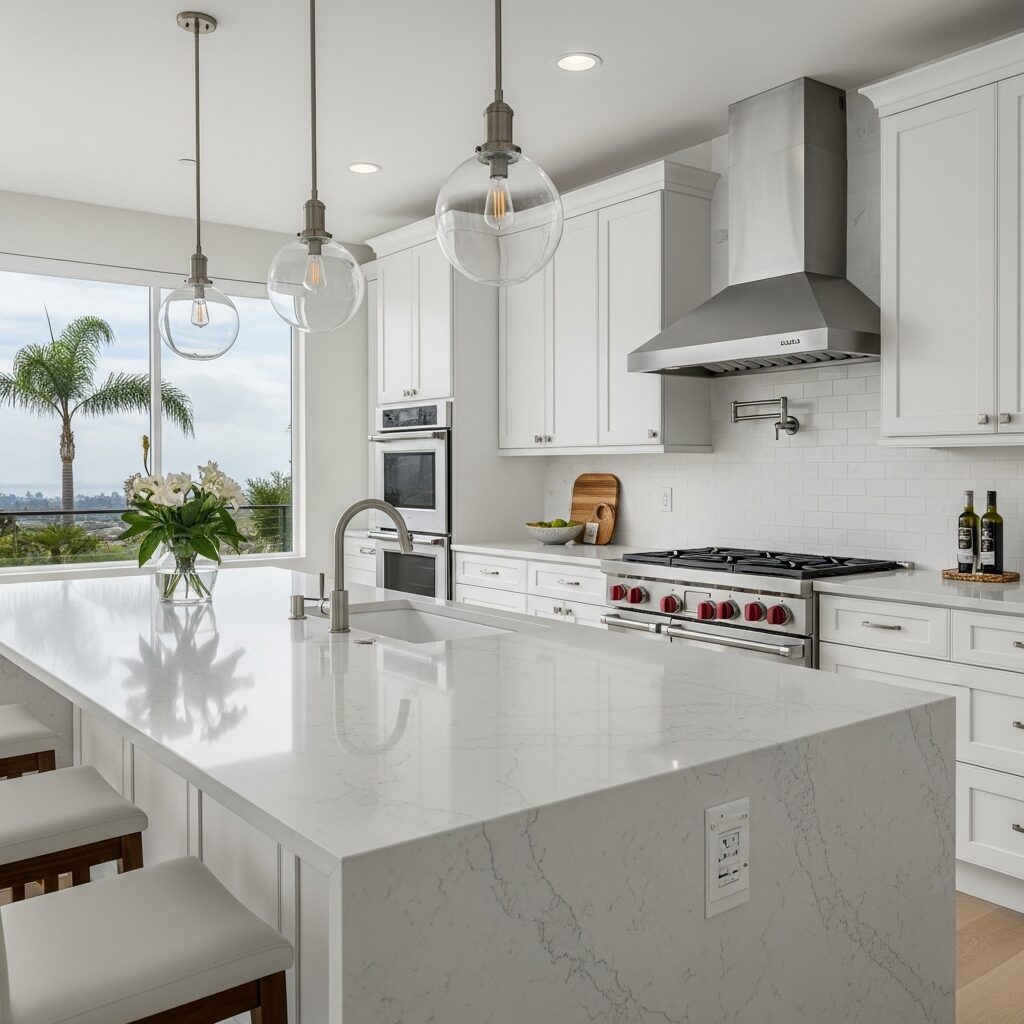
The kitchen island has evolved from a simple prep surface to a multi-functional centerpiece. It can define traffic patterns, provide casual seating, house a secondary sink or cooktop, and offer immense storage. When planning for an island, material selection is critical. Durable surfaces like granite or quartz are essential for withstanding the demands of a high-traffic area. Exploring different countertop materials can help you find the perfect balance of beauty and resilience for this kitchen workhorse.
Mastering Kitchen Flow: Designing for Efficiency and Enjoyment
Once you’ve chosen a base layout, the next layer of design focuses on kitchen workflow optimization. This is where we refine the placement of every element to create a seamless experience, whether you’re preparing a multi-course meal or just grabbing a quick snack.
The Work Triangle: Optimizing Appliance Placement
The classic “work triangle” connects the three primary work centers: the sink, the refrigerator, and the range/cooktop. The principle is to keep the paths between these three points unobstructed and the total distance between them manageable (ideally between 13 and 26 feet). While modern kitchens with multiple cooks and specialized appliances sometimes evolve this concept into “work zones,” the core principle of efficient movement remains the cornerstone of good kitchen layout design.
Creating Dedicated Zones: Prep, Cooking, and Social Areas
Thinking in zones elevates a good layout to a great one. We design distinct areas for specific tasks:
- Prep Zone: Ample counter space located between the sink and the refrigerator, with easy access to knives, cutting boards, and waste disposal.
- Cooking Zone: The area around the range and oven, with nearby storage for pots, pans, and spices, plus landing space for hot dishes.
- Cleaning Zone: Centered around the sink and dishwasher, with clear counter space for stacking dirty dishes and convenient access to the trash and recycling.
- Social Zone: Typically island seating or a nearby banquette, designed to be out of the primary work triangle to keep guests safe and comfortable without impeding the cook.
Integrating Storage Solutions Seamlessly
Effective storage is integral to good workflow. A cluttered countertop is an inefficient workspace. We integrate smart storage solutions directly into the layout, such as full-extension drawers for pots, vertical dividers for baking sheets, dedicated pantry cabinets, and appliance garages to keep smaller items off the counter. This approach ensures that everything has a place, making the kitchen easier to use and maintain.
Avoiding Common Kitchen Layout Mistakes: Professional Insights
Even the most beautiful materials can’t save a flawed layout. Over the years, we’ve been called in to correct numerous kitchen design pitfalls that could have been avoided with professional planning. These are some of the most common issues we see.
Overlooking Traffic Patterns and Bottlenecks
A primary function of kitchen layout optimization is managing traffic. We meticulously plan walkways to be at least 36 inches wide (42-48 inches in multi-cook kitchens) and ensure that appliance doors—especially the refrigerator and dishwasher—don’t block major pathways when opened. Placing an island too close to perimeter cabinets is a classic mistake that creates a frustrating pinch point.
Ignoring Cabinet and Appliance Clearance Requirements
Every appliance and cabinet has specific manufacturer-required clearances for safety and functionality. A refrigerator needs space to open its doors fully, a cooktop requires clearance from flammable surfaces, and a corner cabinet needs a filler strip to allow adjacent drawers to open without collision. These technical details are non-negotiable and are a key focus of our design process. For visual examples of well-planned spaces, browse our kitchen inspiration gallery.
Misjudging the Scale and Proportion of Elements
Visual balance is crucial. An enormous, oversized island can overwhelm a modest-sized kitchen, while a tiny vent hood over a professional-grade range looks awkward and performs poorly. We ensure that every element, from the size of the island to the height of the pendant lights, is proportional to the overall space, creating a cohesive and harmonious design.
Elevating Your Kitchen Remodel with Expert Design and Compliance
A luxury kitchen renovation is a complex undertaking that goes far beyond selecting finishes. It requires a deep understanding of structural engineering, building codes, and project management to ensure the final result is not only beautiful but also safe, durable, and compliant.
The Role of Professional Expertise in Structural Integration
Achieving an open-concept kitchen design often involves removing load-bearing walls. This is not a task for an amateur. It requires precise engineering calculations to specify the correct beam to carry the load, and expert execution to install it safely. Likewise, relocating plumbing for a new sink or running new electrical for an island requires a licensed professional who understands how to integrate these systems into the home’s existing infrastructure without compromising integrity.
Navigating Local Building Codes and Regulations in Southern California
Embarking on a major kitchen remodeling project requires permits and inspections to ensure the work meets strict safety standards. Navigating the specific building codes for municipalities across Orange County, Riverside, and San Bernardino can be complex. An experienced renovation firm handles this entire process, from submitting plans to scheduling inspections, ensuring your project is fully compliant and avoiding costly delays or penalties.
Ensuring Longevity and Value in Your Luxury Kitchen Renovation
Ultimately, a professional-led renovation is an investment in quality and peace of mind. A thoughtfully optimized layout, combined with quality materials and expert craftsmanship, results in a kitchen that will stand the test of time. This focus on quality is what separates a standard update from a true luxury kitchen remodeling Orange County project that adds significant, lasting value to your home. Understanding the financial aspect is key, and our kitchen remodeling budget guide can provide valuable insights into planning your investment.
The layout is the heart of your kitchen. By focusing on smart design principles, choosing the right configuration for your lifestyle, and partnering with experienced professionals, you can create a space that is a joy to live and work in for decades to come.
