


Kitchen remodeling in Southern California typically runs between $50,000 and $150,000, depending on scope, materials, and the finishes you choose. That range isn’t arbitrary. It reflects real differences in how you allocate your budget across cabinetry, countertops, labor, and the details that separate a functional kitchen from one that feels intentional.
The gap between a $50K remodel and a $150K one isn’t always obvious when you’re standing in the space. Sometimes it’s in the marble. Sometimes it’s in the hardware. Often it’s in what you can’t see: the structural work, the electrical upgrades, the precision of the installation itself.
How Much Does Kitchen Remodeling Actually Cost in Southern California?
Start here: Southern California kitchen remodels cluster into three distinct price bands, and each one tells you something different about what’s possible.
The $50K–$75K range covers mid-level remodels where you’re replacing cabinetry, countertops, and flooring without major structural changes. Labor is straightforward. Materials are solid but not rare. You get clean lines, good bones, and a kitchen that functions beautifully. Many homeowners in this tier choose semi-custom cabinets, quartz or granite countertops, and quality tile or luxury vinyl flooring. The aesthetic is contemporary and uncluttered, but you’re not sourcing Italian marble or bespoke hardware from Europe.
The $75K–$110K tier is where most luxury-focused remodels land. This is where you can afford premium cabinetry, natural stone countertops, high-end appliances, and custom lighting. You have room for structural adjustments: moving a wall, expanding the footprint, upgrading plumbing and electrical to support your vision. The finishes start to tell a story. Warm metallics appear in the hardware and fixtures. Materials feel curated, not just selected.
Beyond $110K, you’re in full custom territory. Premium kitchen designs at this level often include bespoke cabinetry, rare stone, integrated smart home systems, professional-grade appliances, and architectural elements like custom islands or breakfast nooks. Labor costs climb because the work demands precision and often specialized trades. Timeline extends. The kitchen becomes a statement.
What’s Included in Each Budget Tier?
Breaking down where your money actually goes matters more than the total number.
| Budget Tier | Typical Allocation | Material Focus |
|---|---|---|
| $50K–$75K | Cabinetry 30%, Labor 25%, Countertops 20%, Flooring 15%, Fixtures 10% | Semi-custom cabinets, quartz or granite, quality tile or LVP |
| $75K–$110K | Cabinetry 35%, Labor 28%, Countertops 18%, Flooring 12%, Fixtures 7% | Premium cabinetry, natural stone, hardwood or high-end tile |
| $110K+ | Cabinetry 40%, Labor 30%, Countertops 15%, Flooring 8%, Fixtures 7% | Bespoke cabinetry, rare stone, custom architectural elements |
Cabinetry is always your largest line item. That’s not accidental. Cabinets set the visual tone, define the workflow, and last the life of the kitchen. Semi-custom cabinets run $8,000 to $15,000 for a typical kitchen. Full custom runs $20,000 to $40,000 or more. The difference isn’t just price. It’s the ability to match your exact dimensions, choose your wood species, select your hardware, and control every detail of the finish.
Labor scales with complexity. A straightforward cabinet swap with new countertops and flooring in a standard layout might run $12,000 to $18,000 in labor. Add structural changes, plumbing relocation, or electrical upgrades, and you’re looking at $22,000 to $35,000 or higher. Southern California labor rates are higher than most markets, and that’s because the work quality and trade expertise here are genuinely better.
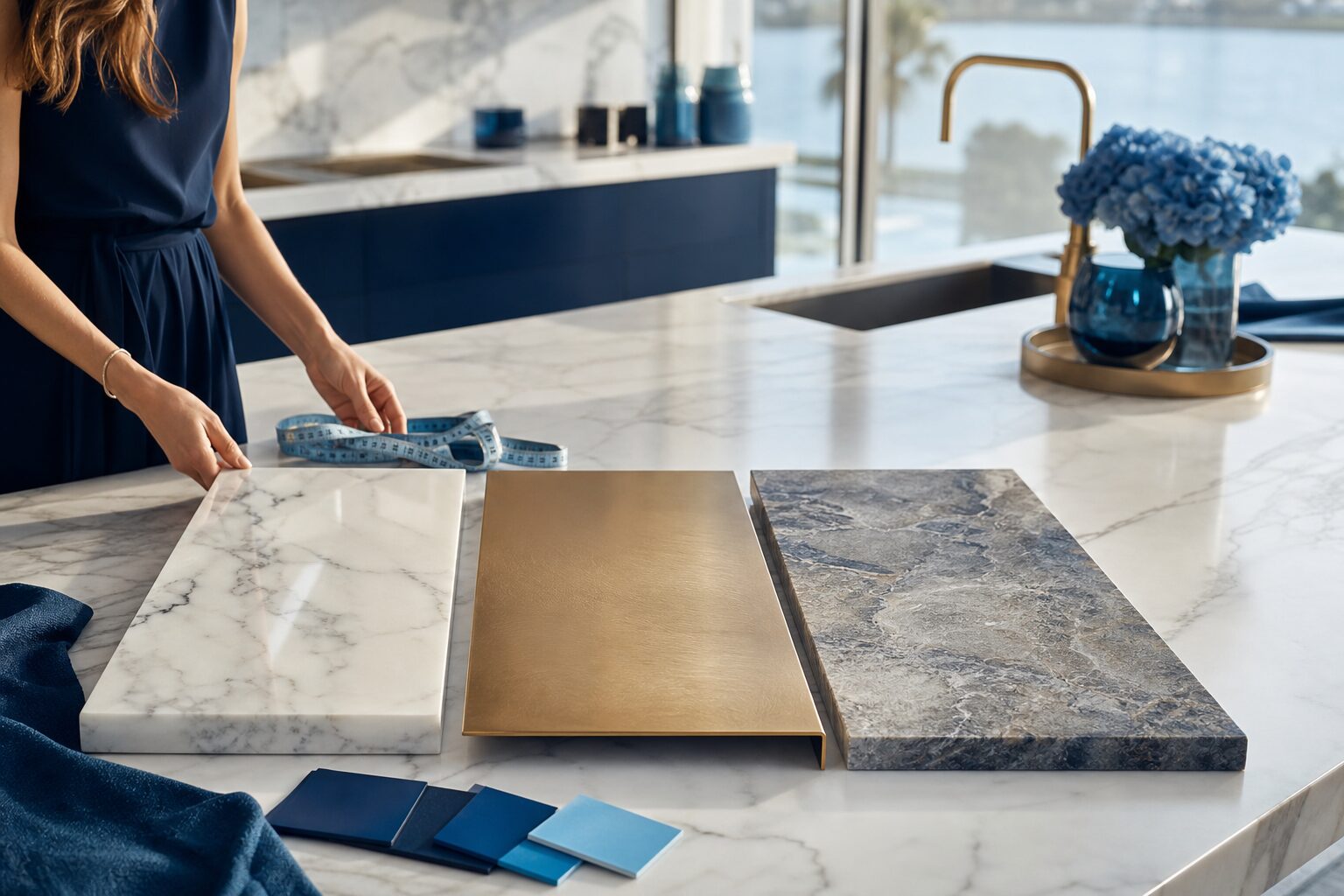
Countertops deserve their own line. Quartz runs $60 to $100 per linear foot installed. Granite is similar. Marble, which carries that sophisticated aesthetic many luxury kitchens pursue, runs $80 to $150 per linear foot and requires more care in sealing and maintenance. A typical kitchen island plus perimeter counters might be 40 linear feet. Do the math. Material choice alone can swing your total by $8,000 to $12,000.
How Do Luxury Finishes Affect Your Total Cost?
Luxury isn’t about spending more on everything. It’s about spending intentionally on what matters to you.
Marble and natural stone are the signature luxury move, and they carry real cost and real maintenance. Honed marble feels softer and more refined than polished, but it stains easier. Calacatta marble is brighter and more dramatic than Carrara. Each choice shifts the aesthetic and the price. But if marble is your priority, you can offset cost elsewhere: choose semi-custom cabinets instead of full bespoke, select quality tile instead of rare hardwood, keep the layout efficient.
Warm metallic hardware and fixtures are the detail that most people underestimate. Brushed brass, champagne bronze, and warm gold accents cost 20 to 40 percent more than standard stainless steel, but they’re what make a kitchen feel curated rather than assembled. A single faucet might be $400 versus $1,200. Multiply that across cabinet pulls, light fixtures, and appliance handles, and you’re looking at $3,000 to $6,000 in finishes alone. That’s also where the luxury feeling lives.
Lighting design is invisible until it’s not. Recessed lighting, pendant lights over an island, under-cabinet task lighting, and dimmer controls add $2,500 to $5,000 to your budget but transform how the kitchen functions and feels at different times of day. Bright, airy minimalism requires thoughtful lighting to work.
Appliance choice matters less for total cost than you’d think, but it matters for the story. A $3,000 refrigerator and a $6,000 refrigerator both keep food cold. The difference is in finish, control systems, and brand heritage. If appliances matter to your vision, budget for them. If they don’t, spend that money on stone or cabinetry instead.
Check out our premium kitchen renovation materials guide for deeper dives into specific finishes and sourcing options across Southern California.
What Drives Price Variation Within the Same Budget Tier?
Two kitchens at $85,000 can look completely different based on where the money goes. One might prioritize cabinetry and countertops with simpler finishes. Another might invest heavily in structural changes and custom architectural elements. A third might focus on premium materials and finishes with a more modest cabinet investment.
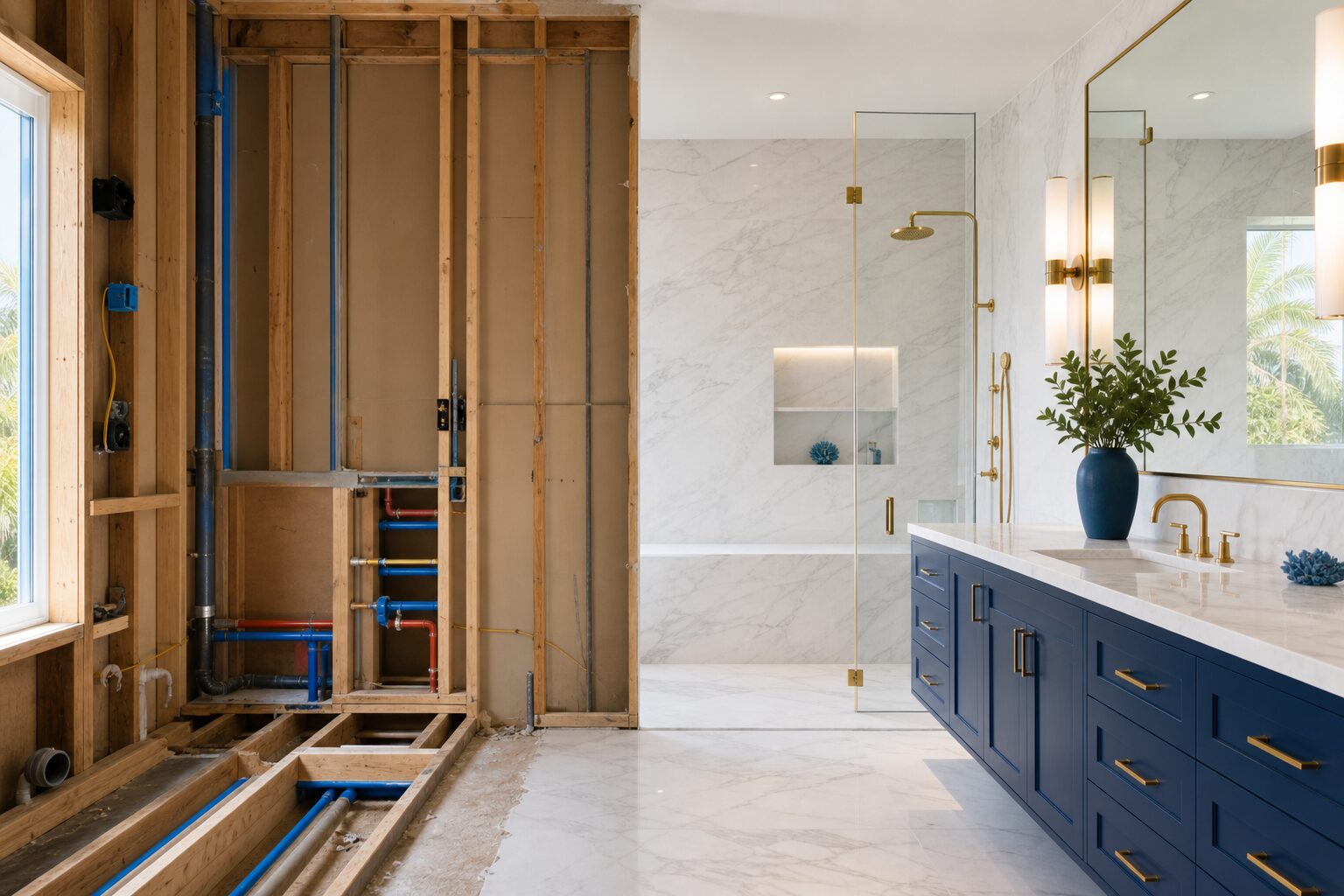
Structural work is the hidden cost driver. Removing a wall, relocating plumbing, upgrading electrical to support new appliances, or addressing foundation or moisture issues can add $10,000 to $25,000 to your project. These costs don’t show up in the finished kitchen, but they’re often essential.
Flooring choice creates another fork in the road. Luxury vinyl plank flooring runs $3 to $8 per square foot installed. Quality tile runs $5 to $12 per square foot. Hardwood runs $8 to $15 per square foot. For a 200-square-foot kitchen, that’s a $1,000 to $3,000 difference. Hardwood feels warmer and more premium, but it requires maintenance and isn’t ideal in kitchens with high moisture risk.
Timeline and season matter too. Summer is peak season in Southern California. Contractors charge more and book out further. If you can schedule for late fall or winter, you might negotiate a 5 to 10 percent discount. Permits and inspections add 4 to 8 weeks to your timeline and $1,500 to $3,000 to your budget, depending on your local jurisdiction and the scope of work.
When you’re budgeting for your home projects, build in a 10 to 15 percent contingency. Kitchen remodels almost always surface something unexpected once walls come down: outdated wiring, plumbing that needs replacement, structural issues that demand attention. That buffer keeps you from derailing the project or compromising on finishes.
Frequently Asked Questions
Is $50,000 enough for a quality kitchen remodel in Southern California?
Yes. $50,000 gets you semi-custom cabinetry, solid countertops like quartz or granite, quality flooring, and new fixtures. You won’t have rare marble or bespoke everything, but you’ll have a kitchen that functions beautifully and looks intentional. The key is prioritizing what matters most to you and being disciplined about the rest.
What’s the most expensive part of a kitchen remodel?
Cabinetry is almost always the largest line item, typically 30 to 40 percent of your total budget. After that, labor and countertops compete for second place. If you’re doing structural work, that can rival or exceed cabinetry costs.
Should I choose marble countertops if I’m on a tighter budget?
Marble is beautiful but requires sealing and maintenance. If marble is important to your vision, you can use it selectively: marble on the island, quartz on the perimeter, for example. That gives you the luxury aesthetic without the full cost or maintenance burden. Alternatively, honed marble costs less than polished and has a more contemporary feel.
How long does a kitchen remodel typically take?
A straightforward $50K to $75K remodel usually takes 6 to 8 weeks from start to finish. Add structural work, custom cabinetry, or permit delays, and you’re looking at 10 to 14 weeks or longer. Permits and inspections alone can add 4 to 8 weeks depending on your local jurisdiction.
What’s included in labor costs?
Labor covers demolition, installation of cabinetry and countertops, flooring installation, plumbing and electrical work, painting, and finishing details. It does not typically include permits, appliances, or structural engineering. Some contractors bundle these differently, so clarify with your remodeler upfront.
Can I remodel my kitchen in phases to spread costs?
You can, but it’s usually more expensive and disruptive than doing it all at once. Phasing means mobilizing crews multiple times, potentially paying for temporary solutions, and living with a partially functional kitchen longer. Most remodelers recommend doing it in one project if possible.
