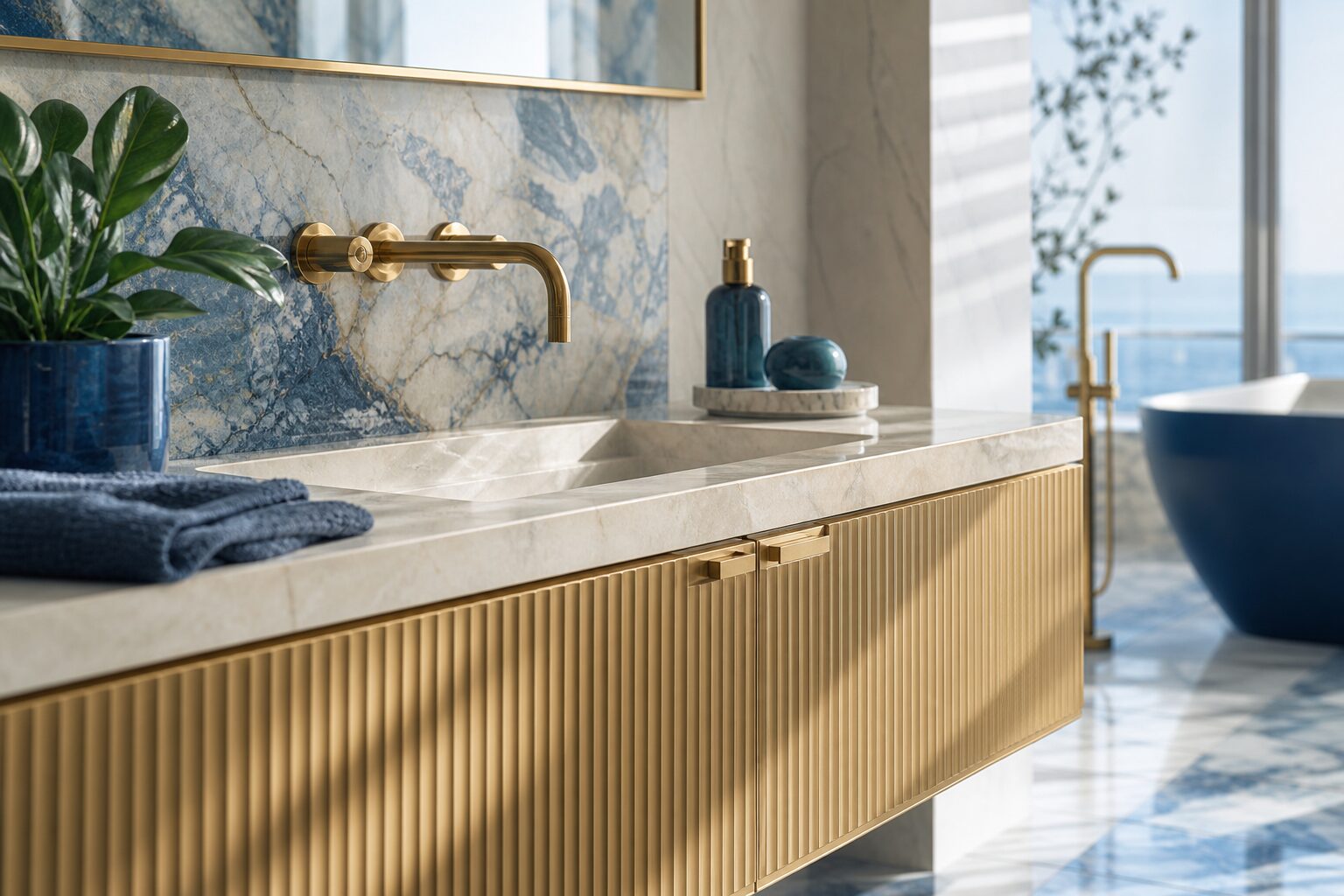
The luxury remodel market in Southern California has moved decisively away from stark, cold minimalism. Warm minimalism, layered neutrals with tactile natural materials, soft metallics, and breathing room, is now the aesthetic that commands the highest budgets and the most discerning clients. This shift reflects a broader maturation in design thinking: sophistication no longer means stripping everything down to white walls and steel. It means knowing what to keep, and making every material sing.
What Exactly Is Warm Minimalism, and Why Is It Winning?
Warm minimalism holds onto the clarity and restraint of minimalist design but infuses it with texture, warmth, and the kind of materials that feel good to live with. Think cream and taupe cabinetry paired with natural stone countertops, brass or brushed gold hardware, and plenty of breathing room. The kitchen doesn’t feel sparse. It feels intentional.
The defining feature is that every element earns its place through material quality and subtle refinement, not visual noise. A single statement light fixture. Marble or limestone surfaces. Warm wood tones in cabinetry. Soft, diffused lighting. No clutter, no competing patterns, no shortcuts on finish.
For bathroom design, this translates to large-format tiles in soft stone tones, integrated vanities that float cleanly, and hardware that whispers rather than shouts. Clients are spending more on materials and less on decoration. That’s the move.
We’ve written more on the warm minimalism revolution moving beyond all white kitchens if you want to dig deeper into how to position this with your own clients.
Why Are Large-Format Tiles Becoming the Standard in High-End Bathrooms?
Seams are the enemy of luxury. Large-format tiles, think 48-inch by 24-inch or even larger, reduce visual interruption and create the illusion of seamless, continuous surfaces. In a bathroom, that reads as refined. Uncluttered. Expensive.
The practical advantage is real too. Fewer grout lines mean easier cleaning and a more durable finish over time. But the aesthetic win is what drives the demand. A shower wall clad in one or two large limestone-look porcelain slabs feels like a spa. A wall covered in 12-by-12 tiles, no matter how high-end, reads as standard.
Limestone-look porcelain is particularly hot right now because it gives you the warmth and texture of natural stone without the maintenance headaches. We’ve seen strong uptake across Southern California for limestone-look porcelain slabs in Southern California specifically because the material performs beautifully in our climate and the aesthetic aligns perfectly with the warm, coastal luxury aesthetic clients are after.
What’s Driving the Move Toward Integrated Stone in Kitchen Design?
Integrated stone means your countertops, backsplash, and sometimes even the island surfaces are all the same material, creating one unified visual plane. No transition line. No material clash. Just continuous elegance.
This approach works because it simplifies the visual landscape and makes the kitchen feel larger and more cohesive. It also eliminates one of the biggest design decisions homeowners struggle with: what backsplash material complements the countertops? When it’s all the same, that problem vanishes.
Marble, limestone, and high-quality porcelain slabs are the materials of choice. The investment is higher, but the payoff in perceived luxury is immediate. Clients notice. They feel it the moment they walk in.
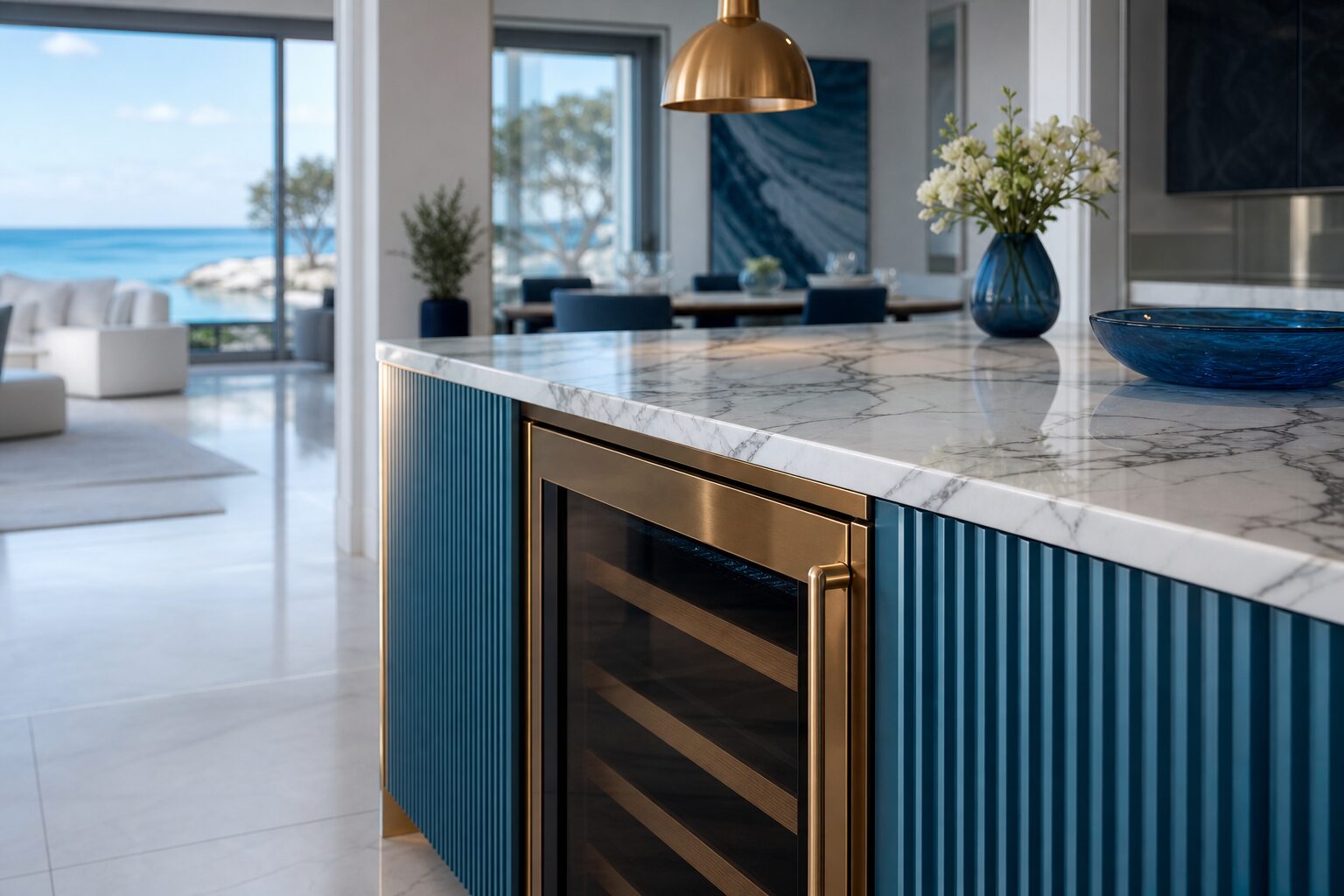
If you’re positioning kitchen remodels to high-net-worth clients, integrated stone is a conversation starter. It’s also where fluted cabinetry integrated stone kitchen remodels really shine, because the textured cabinet fronts play beautifully against the smooth, continuous stone surfaces.
Why Is Fluted Cabinetry Becoming a Signature of Luxury Kitchens?
Fluted cabinet doors have vertical grooves that catch light and create subtle shadow play. They’re not new, but they’ve become the calling card of contemporary luxury kitchens because they add visual interest and tactile warmth without sacrificing the clean lines that define sophisticated design.
Fluting transforms a flat cabinet front into something that feels handcrafted and refined. Paired with warm neutrals, cream, soft grey, warm white, and integrated stone surfaces, fluted cabinetry elevates the entire kitchen from nice to noteworthy.
The detail also works across both kitchen and bathroom vanities, which is why you’re seeing it used more broadly in high-end residential remodels. It’s a material-forward way to add personality without pattern or color.
How Should You Think About Hardware and Finishes in 2026?
Brushed gold, warm brass, and matte bronze are dominating over polished chrome or stainless steel. The shift reflects the broader move toward warmth and tactile luxury. Hardware should feel like a natural extension of the material palette, not a afterthought or a contrast element.
In bathrooms, this means faucets and fixtures in warm metals that echo the tone of your stone and cabinetry. In kitchens, cabinet pulls and knobs should whisper, not announce. A single cohesive metal finish throughout the space is the luxury move. Mixing finishes reads as indecisive.
What About Lighting Design in Luxury Remodels?
Layered, diffused lighting is non-negotiable. Recessed lighting that’s warm-toned (2700K color temperature), under-cabinet task lighting, and a statement pendant or two create depth and atmosphere. Harsh, bright overhead lighting has no place in a luxury space.
In bathrooms, soft lighting around the vanity mirror combined with ambient recessed lighting creates a spa-like quality. That’s what clients are paying for: a space that feels like a retreat, not a utility room.
Are Open Shelving and Display Still Part of High-End Design?
Open shelving is still used, but sparingly and only when the objects on display are genuinely beautiful. A single floating shelf with a curated collection of cookbooks or decorative objects works. Walls of open shelving read as trendy and dated. Closed cabinetry with interior lighting is the more sophisticated choice, especially for kitchens where you want the visual focus on the countertops and backsplash, not on stored items.
How Are Flooring Choices Evolving in Luxury Spaces?
Wide-plank hardwood in warm tones, large-format porcelain tiles that mimic natural stone, and polished concrete are the top choices. The common thread is scale and continuity. Small tiles, busy patterns, and high-contrast colors are out. Warm, unified, understated surfaces are in.
For bathrooms, the same large-format tile logic applies. For kitchens, hardwood or large-format tile that flows into adjacent living spaces creates a sense of openness and intentional design.
What’s the Role of Color in 2026 Luxury Design?
Neutrality is still the foundation, but it’s a warm neutrality. Creams, soft taupes, warm whites, soft greys, and muted sage are the palette. Bold color is used as an accent, usually in a single element like a statement wall or a piece of art, not in cabinetry or major surfaces.
The logic is simple: neutral spaces feel timeless and allow the material quality to be the star. A cream kitchen with marble countertops and fluted cabinetry will feel elegant in five years. A trendy sage-green kitchen with matching backsplash will feel dated in two.
How Should You Price and Position These Trends With Clients?
These materials and design moves cost more upfront. Integrated stone, large-format tiles, fluted cabinetry, and quality hardware are not budget options. But they’re also not niche luxuries anymore. They’re becoming the baseline expectation for clients investing $50,000 or more in a kitchen or bathroom remodel.
Position these trends as longevity and refinement, not as trendy upgrades. A kitchen built on warm minimalism principles will feel sophisticated and relevant for a decade. That’s the conversation that justifies the investment.
Frequently Asked Questions
What’s the difference between warm minimalism and maximalism?
Warm minimalism is restrained and material-focused. Every element serves a purpose and is made from high-quality materials. Maximalism layers pattern, color, and objects for visual richness. Warm minimalism feels like a curated gallery. Maximalism feels like a collected home. Both can be beautiful, but warm minimalism is where the highest-end residential market is moving.
Can I use bold color in a warm minimalist kitchen?
Yes, but strategically. A single accent wall, a statement light fixture, or a piece of art can introduce color without breaking the aesthetic. The cabinetry, countertops, and major surfaces should stay neutral. Think of color as a supporting player, not the lead.
Are large-format tiles difficult to install?
They require more precision and skill than standard tiles, which means you need an experienced installer. The payoff in visual impact is worth the care in installation. A poorly installed large-format tile job will show every mistake, so quality labor is non-negotiable.
What’s the maintenance like for integrated stone surfaces?
Limestone and marble require sealing and regular care. Porcelain is more durable and lower-maintenance. If a client wants the look of stone with minimal upkeep, limestone-look porcelain is the practical choice. Have that conversation early so expectations are clear.
Is warm minimalism going to feel dated in five years?
Unlikely. The aesthetic is rooted in timeless design principles: quality materials, restraint, and functionality. Trends come and go, but a well-executed warm minimalist space will age gracefully. That’s the whole point of the approach.
How do I know if a client is right for this aesthetic?
Listen for language around calm, timelessness, and quality. If they’re chasing trends or want lots of color and pattern, warm minimalism isn’t the fit. If they talk about wanting a space that feels like a retreat or mention liking natural materials and clean lines, you’ve found your client.
