



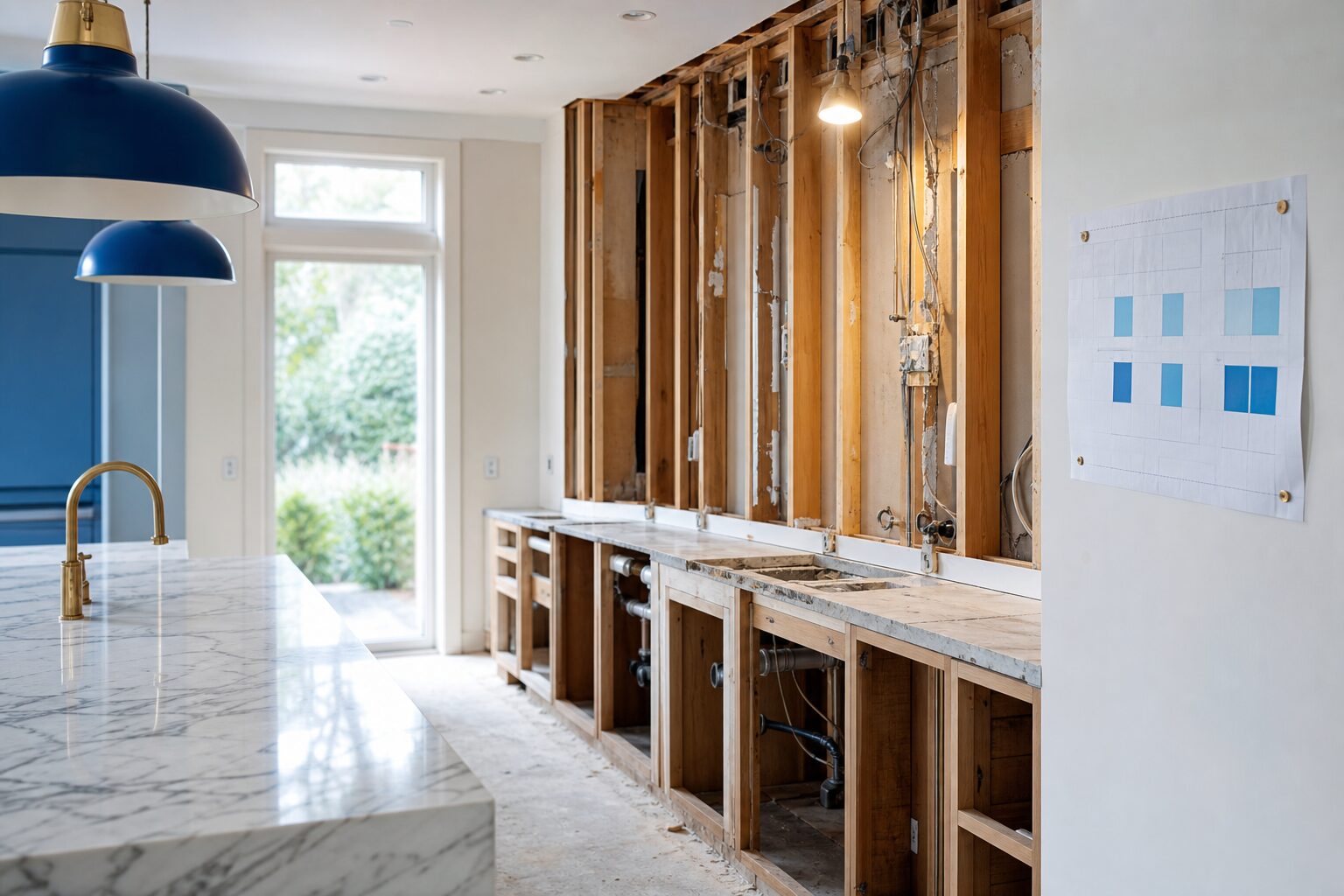
A cabinet refresh runs four to eight weeks. A full gut renovation of your kitchen or bathroom stretches twelve to twenty weeks, sometimes longer. The difference between those two numbers is not just scope, it’s the gap between a surface-level refresh and the kind of work that touches your bones.
Most homeowners ask this question because they need to know when they can use their space again. That’s the real question underneath. This breakdown walks you through what actually happens on your project, what slows things down, and how to plan your life around the work.
What’s the difference between a refresh and a full remodel?
A refresh keeps your existing layout and plumbing or electrical in place. You’re swapping cabinets, countertops, maybe flooring. Paint, new hardware, fresh tile on the walls. The structure stays put. That’s your four to eight week window.
A full remodel moves walls, relocates plumbing, rewires electrical, replaces structural elements. You’re starting from the studs. Full renovations take longer because every trade has to wait for the one before it to finish. Framing before plumbing. Plumbing before drywall. Drywall before tile. Tile before trim. Each phase has its own timeline, and they stack.
Breaking down the actual phases
Here’s what a typical full kitchen or bathroom remodel looks like in Southern California:
Demo and prep: one to two weeks. Removing old cabinets, fixtures, flooring, drywall. Hauling debris. If asbestos or mold shows up, add time. This is where surprises live.
Framing and structural work: one to three weeks. Moving walls, opening ceilings, reinforcing joists. Depends entirely on how much you’re changing. A simple layout stays quick. A major reconfiguration adds weeks.
Plumbing and electrical: two to three weeks. New lines, new outlets, new fixtures rough-in. Inspections happen here. Failed inspections mean rework and delays.
HVAC and insulation: one to two weeks. Not always needed if you’re keeping the same footprint, but if you’re opening walls or adding ventilation, it matters.
Drywall and finishing: two to three weeks. Hanging, mudding, sanding, primer. This phase is deceptively long because drywall compound needs time to dry between coats.
Tile, flooring, and finish work: two to four weeks. Tile takes time because grout needs to cure. Hardwood, luxury vinyl, laminate, or carpet each have their own pace. This is where your space starts to feel real again.
Trim, hardware, and final details: one to two weeks. Cabinet doors, drawer pulls, light fixtures, caulk lines, paint touch-ups. The work that makes it feel complete.
Add them up and you’re looking at twelve to twenty weeks for a full gut job, sometimes longer. A bathroom remodeling timeline in Southern California tends to run tighter because bathrooms are smaller, but the phases are identical.
What actually makes projects run late?
Permits and inspections. California requires permits for nearly everything, structural changes, electrical, plumbing, tile work. Inspections happen at each phase. If an inspector flags something, you stop work until it’s fixed. That’s not a contractor problem. That’s the cost of doing it right.
Hidden damage. You demo a wall and find rot. You open a ceiling and discover old wiring that needs to be replaced to code. You pull up flooring and find water damage underneath. These aren’t mistakes. They’re what happens when you open up a house that’s been closed for decades. Budget for discovery.
Material delays. Countertops, custom cabinets, specialty tile, high-end fixtures. Lead times vary wildly. Some materials ship in three weeks. Others take eight. If you’re choosing a premium material, that’s built into your timeline from the start.
Scheduling conflicts between trades. Your plumber finishes on Friday. Your electrician can’t start until Tuesday because they’re booked elsewhere. Your drywall crew has another job running long. Coordinating five to eight different trades across twelve to twenty weeks is a puzzle. Good contractors plan for this. Bad ones let it surprise them.
Weather. Rain, heat waves, supply chain hiccups tied to seasonal demand. Southern California weather is generally cooperative, but summer heat can slow concrete curing and paint drying. Winter rain can delay exterior work or material deliveries.
The single biggest variable is scope creep. You start with a cabinet refresh. Halfway through, you decide to move the sink. That’s a new plumbing line, new electrical, new framing. What was eight weeks becomes fourteen. This happens on nearly every project because you don’t see the bones until the walls come down.
How to actually plan around your remodel
Get a detailed timeline in writing before work starts. Not a guess. A week-by-week breakdown that accounts for permitting, material lead times, and trade scheduling. If your contractor can’t give you that, they’re not thinking clearly about your project.
Plan to be out of that space for the full duration. If it’s your kitchen, you’re eating out or using a temporary setup for three to five months. If it’s your bathroom, you’re sharing one bathroom with your household for the same window. This is not optional. Dust, noise, and lack of access are part of the deal.
Build a contingency buffer into your timeline. Not into your budget only, but into your actual life plan. If your contractor says twelve weeks, plan for fourteen. If they say sixteen, plan for eighteen. The projects that finish on time are the ones where you expected them to run long.
Choose your materials early. The longer you wait to select your kitchen cabinets, countertops, and tile, the longer your timeline stretches. Material selection is not a detail you handle during construction. It’s a decision you make before demo starts.
Stay in communication weekly. Weekly check-ins with your contractor keep you aligned on what’s happening, what’s coming next, and what decisions need to be made. Most delays happen because homeowners and contractors are not on the same page about what week they’re in or what needs to happen next.
Pro tip: Ask your contractor for a detailed project schedule that includes permit timelines, material delivery dates, and inspection windows. This is not standard practice, but it should be. It’s the difference between knowing your timeline and guessing at it.
Refresh vs. full remodel: a side-by-side look
| Project Type | Typical Duration | What Changes | Biggest Variables |
|---|---|---|---|
| Cabinet and countertop refresh | 4–8 weeks | Cabinets, countertops, hardware, paint, flooring | Material lead times, cabinet customization |
| Full gut renovation | 12–20 weeks | Layout, plumbing, electrical, framing, all finishes | Permits, inspections, hidden damage, trade scheduling |
Frequently Asked Questions
Can a kitchen remodel really be done in 4 weeks?
Only if you’re not moving plumbing or electrical and your materials are in stock. A four-week timeline assumes no surprises, no custom orders, and trades available back-to-back with no gaps. It’s possible but rare. Most contractors who promise four weeks are either understaffed or overselling. A realistic refresh is six to eight weeks.
What’s the fastest way to speed up a remodel?
Make all decisions before work starts. Every decision you make during construction adds time because it stops the trades. Material selection, layout changes, fixture upgrades, decide these upfront. Also, hire a contractor who coordinates trades tightly and has reliable subcontractors. Scheduling efficiency saves weeks.
Do I need to move out during a remodel?
For a kitchen, yes, practically speaking. You won’t have cooking facilities for months. For a bathroom, only if it’s your only bathroom. If you have a second bathroom, you can stay. But expect noise, dust, and restricted access during business hours. Most homeowners find it easier to stay elsewhere or arrange temporary kitchen and bathroom setups.
How much does a delay typically cost?
That depends on your contract. Most contractors charge a daily rate for extended timelines caused by homeowner decisions or delays outside their control. Delays caused by the contractor are their responsibility. This is why a detailed contract and clear timeline matter. Get an estimate that spells out what happens if the project runs long and who bears the cost.
Should I choose cheaper materials to speed things up?
No. Material choice affects timeline, but cheaper doesn’t mean faster. A stock cabinet ships in three weeks. A custom cabinet ships in six. The cost difference is real, but so is the lead time. Choose materials based on what you want your space to look like, then let that choice inform your timeline. Don’t let timeline pressure you into materials you’ll regret.
What happens if permits take longer than expected?
Your timeline extends. Permit approval in Southern California typically takes two to four weeks, but some jurisdictions are slower. This is baked into a realistic timeline from the start. If your contractor isn’t accounting for permit time, they’re not being honest about when you’ll be done.
