

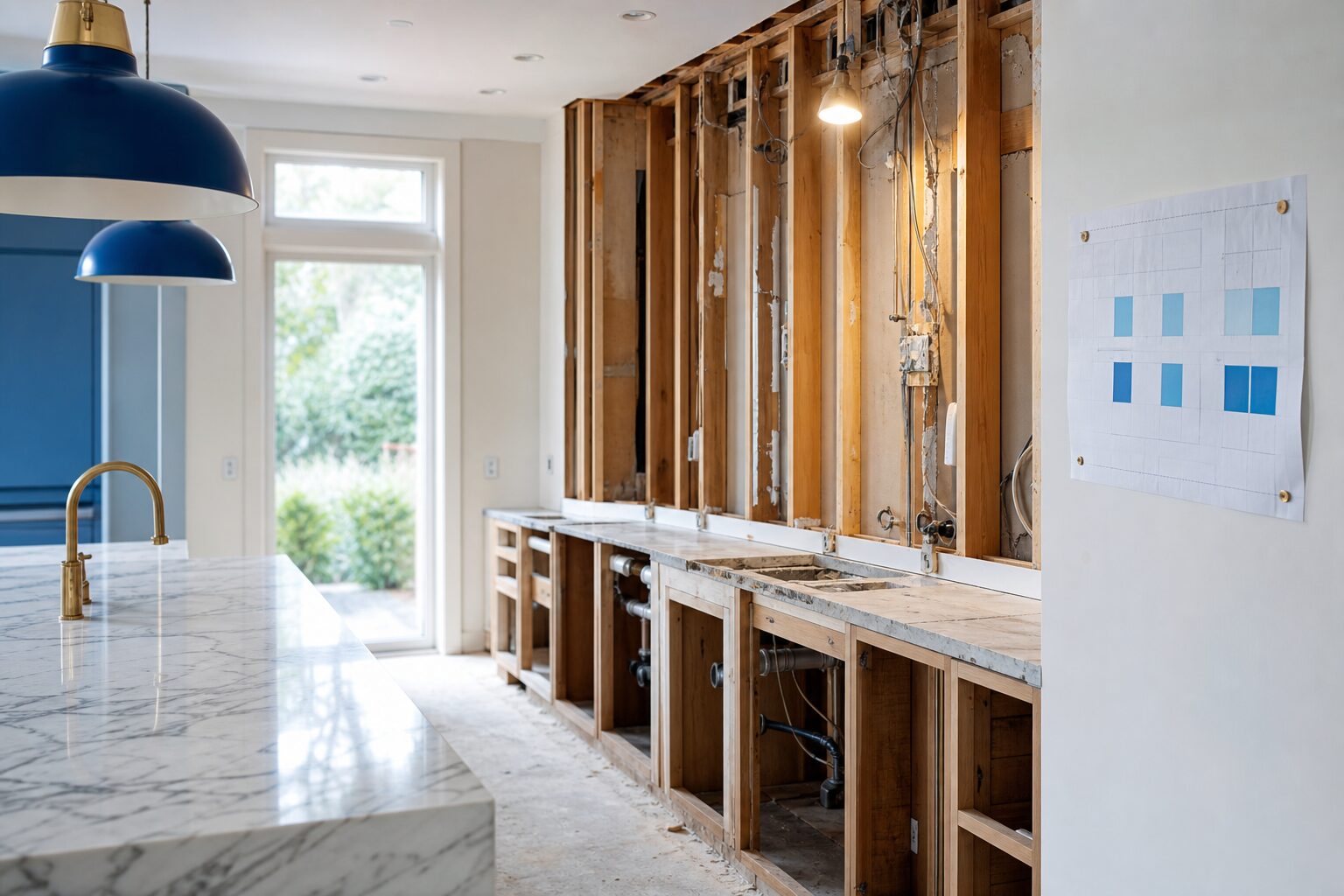


Most kitchen and bathroom remodels in California require permits if you’re touching plumbing, electrical, structural elements, or changing the footprint of the space. Minor cosmetic work like painting or replacing fixtures doesn’t. The permit requirement isn’t optional negotiation, it’s tied to building code compliance and your county’s inspection authority.
Here’s what actually matters: getting this wrong costs you more than getting it right. Unpermitted work creates liability, blocks future sales, and can force you to tear out finished work and start over. We’ve seen it happen. The permit process takes time, yes, but it’s time spent protecting your investment and your home’s resale value.
Which Kitchen Remodels Require Permits?
Any kitchen project that involves plumbing relocation, new electrical circuits, gas line work, or structural changes needs a permit. That includes moving sink locations, adding an island with plumbing, upgrading your electrical panel for new appliances, or removing a wall.
Cabinet replacement alone doesn’t require a permit. Neither does countertop installation, unless you’re moving plumbing or gas lines underneath. Backsplash tile, new appliances, lighting fixture swaps, all clear without permits.
The line is simple: if you’re changing where utilities run or altering the structure, you need a permit. If you’re replacing surfaces or fixtures in their existing locations, you typically don’t.
What About Bathroom Remodeling?
Bathroom permits are more frequent than kitchen permits because bathrooms involve plumbing and moisture barriers constantly. Any shower or bathtub installation, toilet relocation, new or moved fixtures, ventilation work, or waterproofing in wet areas triggers the requirement. Tile work in a shower or tub surround needs a permit because it’s part of the waterproofing system.
Vanity replacement in place doesn’t require a permit. Painting, new mirrors, lighting fixture swaps in existing locations, no permit needed. The moment you move a drain, add a fixture, or touch the shower enclosure, you’re in permit territory.
California takes bathroom moisture and mold seriously. Inspectors verify that your waterproofing meets code before drywall goes up. This isn’t bureaucratic theater. It protects the home’s structure and your liability.
Flooring: When Do You Need a Permit?
Flooring installation itself doesn’t require a permit in most California counties. Luxury vinyl, tile, hardwood, laminate, carpet, you can install these without pulling paperwork, as long as you’re not removing asbestos-containing materials or altering the subfloor structure.
The exception: if your flooring work involves removing old material that contains asbestos (common in homes built before the 1980s), you need abatement permits and licensed contractors. Some counties also require permits if you’re raising floor height significantly or addressing structural issues underneath.
When in doubt, ask your local building department. A five-minute call beats a surprise stop-work order.
How Long Does the Permit Process Actually Take?
California permit timelines vary by county, but you’re typically looking at 2 to 4 weeks for initial approval, assuming your plans are complete and correct. Orange County, Los Angeles, and San Diego each have slightly different processing speeds and requirements.
The real timeline isn’t the permit issuance. It’s the inspections. Once work begins, you’ll need rough inspections (framing, plumbing, electrical before drywall) and a final inspection. Each inspection can take a few days to schedule. Plan for 1 to 2 weeks of inspection time spread across your project timeline.
Incomplete or incorrect plans slow everything down. Missing details, unclear electrical layouts, or vague plumbing diagrams send your application back for revisions. This is where working with an experienced contractor matters. We’ve built relationships with local building departments and know exactly what each county requires before submission.
What Do Permits Cost?
Permit fees are based on the estimated project cost, not a flat rate. A small bathroom remodel might cost $300 to $800 in permits. A full kitchen remodel can run $1,000 to $3,000 or more. The fee is typically 1 to 2 percent of the project’s estimated value, though this varies by county.
Plan for additional costs if your contractor needs to hire a plan checker or expediter to move things faster, or if inspections reveal code violations that require rework. These aren’t common, but they happen.
The cost of permits is always less than the cost of unpermitted work discovered during a home sale inspection or when you need to remove and redo work that doesn’t meet code.
Do You Need Different Permits for Different Trades?
Yes. A single remodel often requires multiple permits: a general building permit, a plumbing permit, and an electrical permit. Some projects need mechanical permits (HVAC), gas permits, or structural permits. Your contractor coordinates these. You don’t pull them individually.
The general building permit is the umbrella. Plumbing and electrical are separate because they’re regulated by different code sections and inspected by different departments. This isn’t redundancy. It’s the system ensuring each trade meets its specific standards.
What Happens If You Skip the Permit?
Unpermitted work creates a chain of problems. When you sell, a thorough home inspection will flag it. Your buyer’s lender may refuse to finance the purchase until the work is permitted retroactively or removed entirely. Removing finished work is expensive and destructive.
Insurance doesn’t cover damage from unpermitted work. If something fails, a plumbing leak, an electrical fire, and it traces back to unpermitted work, you’re liable and uninsured.
Some counties are more aggressive than others about enforcement, but the risk isn’t worth the time saved. We always pull permits. Always.
How to Start the Permit Process
Contact your local building department and describe your project. They’ll tell you which permits you need and what documentation is required. Most departments have online portals now where you can check requirements and submit applications.
Your contractor should handle this. If they’re hesitant to pull permits or suggest ways to avoid them, that’s a red flag. Legitimate contractors build permit costs and timelines into their estimates.
For detailed guidance on California’s specific requirements, review the California Home Remodeling Permits Guide. And if you want to understand how permit timelines affect your project schedule, the Bathroom Remodeling Permits Timeline California resource walks through a realistic timeline from start to final inspection.
Pro tip: Start the permit conversation with your contractor before you finalize the design. Some design choices affect permit complexity and cost. Knowing this upfront prevents surprises and keeps your project on track.
Frequently Asked Questions
Do I need a permit to replace kitchen cabinets?
No, cabinet replacement alone doesn’t require a permit. However, if you’re relocating plumbing or electrical connections as part of the cabinet installation, or if you’re removing a wall to accommodate new cabinetry, then you need permits for those specific changes.
What’s the difference between a building permit and a plumbing permit?
A building permit covers the overall structural and general construction aspects of your remodel. A plumbing permit specifically authorizes and inspects all plumbing work, new drains, supply lines, fixture installations. Both are required for projects that involve plumbing changes. Your contractor typically coordinates both.
Can I get a permit after work is already done?
Technically yes, but it’s called a retroactive permit and it’s complicated. The building department will inspect completed work against current code standards. If it doesn’t meet code, you’ll be required to bring it into compliance, which often means tearing out and redoing work. It’s far more expensive and disruptive than getting the permit upfront.
How often do inspectors actually fail an inspection?
Failures are uncommon if the work is done correctly by licensed contractors. Most inspections pass on the first visit. When there are issues, they’re usually minor, a detail that needs adjustment or clarification. Your contractor knows what inspectors are looking for and builds work to pass the first time.
Does permit cost vary between California counties?
Yes. Orange County, Los Angeles, San Diego, and other counties each have different fee structures and processing timelines. Some counties are faster than others. Your contractor knows the local requirements and can give you accurate cost and timeline estimates for your specific county.
What if my project spans multiple counties?
Each jurisdiction has its own building department and permit requirements. If your project involves work in two counties, you’ll need permits from both. This is rare for residential remodels but can happen with larger properties. Your contractor will handle the coordination.
Are there any kitchen or bathroom projects that definitely don’t need permits?
Yes. Painting, replacing cabinet hardware, installing new cabinet doors on existing frames, backsplash tile (if no plumbing changes), vanity replacement in place, new mirrors, lighting fixture swaps in existing locations, and countertop replacement (if no plumbing or structural changes) typically don’t require permits. When in doubt, ask your building department.
