

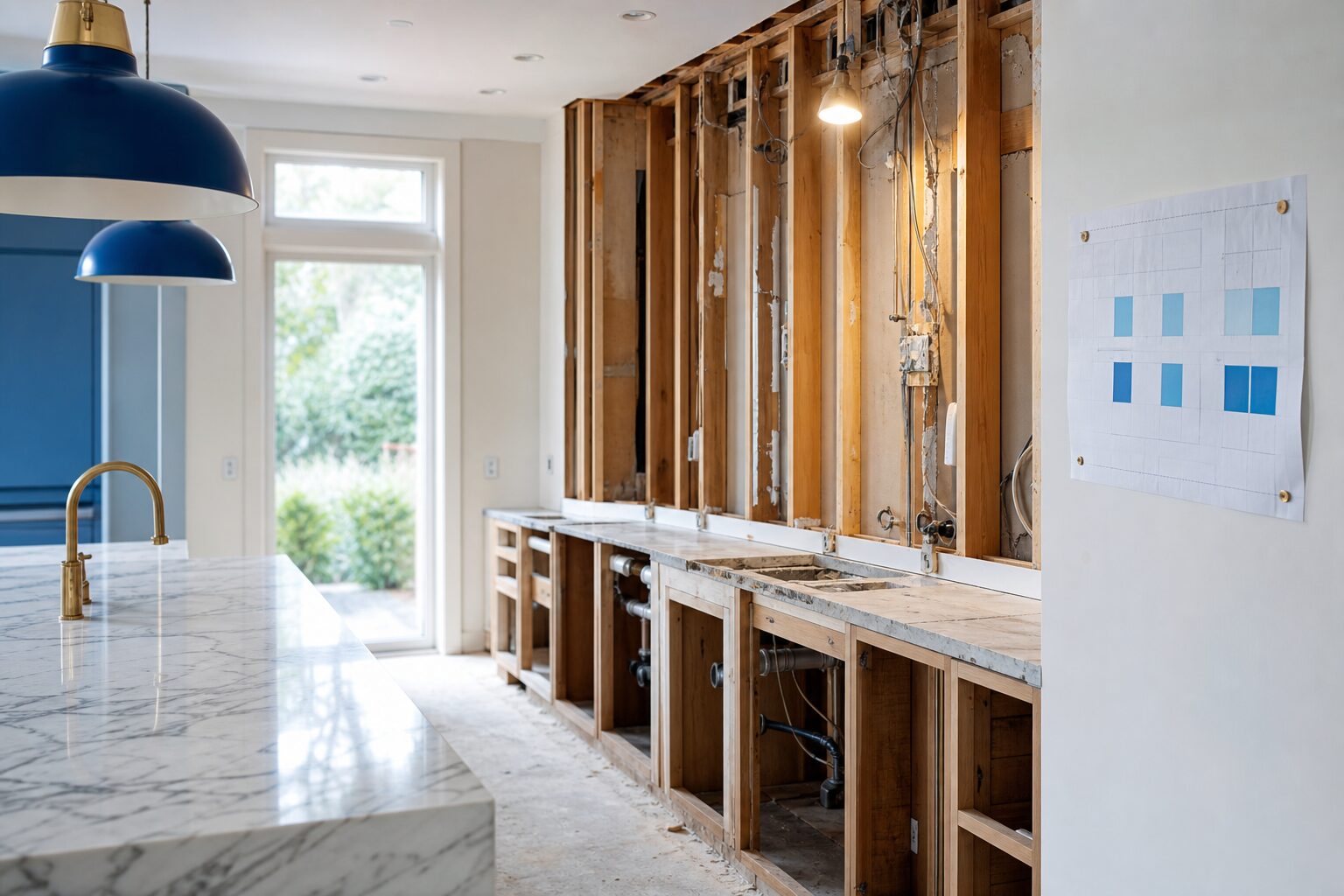


Bathroom permits in Southern California are non-negotiable. You need them. Most bathroom remodels require at least a building permit, often a plumbing permit, and sometimes electrical and mechanical permits depending on scope. Skip this step and you’re exposing yourself to code violations, failed inspections, insurance gaps, and resale complications that cost far more than the permit itself.
The real question isn’t whether to get permits. It’s understanding which permits apply to your specific project, how long the approval process actually takes, and how that timeline shapes your entire remodel schedule.
Which Permits Do You Actually Need for a Bathroom Remodel?
A building permit is the foundation. Every bathroom remodel in Southern California requires one. This covers structural changes, wall removal, fixture relocation, ventilation upgrades, and any work affecting the home’s envelope or safety systems.
Beyond the building permit, scope determines the rest. If you’re moving plumbing lines, installing a new shower, or replacing the toilet, you need a plumbing permit. Rewiring lighting, adding outlets, or upgrading ventilation fans triggers an electrical permit. Some jurisdictions require a separate mechanical permit for HVAC or ventilation work. A few municipalities bundle these into a single permit; others issue them separately. This varies by city and county in Southern California.
The permit application itself requires detailed plans. Architectural drawings, plumbing schematics, electrical layouts, and sometimes structural calculations. This is not a sketch on a napkin. Professional plans cost money upfront, but they’re what the building department actually reviews. Incomplete applications get rejected and resubmitted, adding weeks to the timeline.
Coastal properties in Orange County, San Diego, and Los Angeles sometimes trigger additional coastal development permits if you’re within the coastal zone. Check your specific address with your local coastal commission before assuming a standard permit path.
How Long Does the Permit Process Actually Take?
Permit timelines vary wildly by jurisdiction. Los Angeles typically takes 2 to 4 weeks for initial review and approval on a straightforward bathroom remodel. Orange County jurisdictions like Irvine or Newport Beach often run 3 to 6 weeks. San Diego can stretch to 4 to 8 weeks depending on the specific city and current workload at the building department.
These are approval timelines only. They don’t include the time to prepare plans, submit the application, or address any comments or corrections the building department requests. A single round of corrections can add another 2 to 3 weeks.
Plan for this reality: the permit process is not a bottleneck you can speed through with money or urgency. Building departments process applications in order. Expedited review exists in some jurisdictions but costs extra and often buys you only a week or two of acceleration. It’s not worth chasing unless your timeline is genuinely critical.
Pro tip: Submit complete, professional plans the first time. Incomplete applications get rejected immediately. One rejection costs you a full resubmission cycle, easily 2 to 3 additional weeks.
What Does the Full Bathroom Remodel Timeline Look Like?
Most bathroom remodels in Southern California follow this rough sequence:
Pre-permit phase (1 to 3 weeks): Design finalization, plan preparation, permit application assembly. This happens before you submit anything to the building department.
Permit approval (2 to 8 weeks): Depends entirely on your jurisdiction and application completeness. Plan for the upper end of that range and you’ll rarely be surprised.
Construction (3 to 8 weeks): Actual remodel work. A modest bathroom refresh with new fixtures and finishes runs 3 to 4 weeks. A full gut remodel with plumbing relocation, structural changes, and high-end finishes stretches to 6 to 8 weeks. Unexpected conditions (hidden water damage, outdated framing, asbestos tile) add time and cost.
Final inspection and sign-off (1 to 2 weeks): After construction, the building department schedules a final inspection. Passing on the first inspection is ideal. Corrections and re-inspection add another week or two.
Total realistic timeline from design to completion: 3 to 6 months for a straightforward remodel. A complex project with structural work or multiple permit revisions can stretch to 6 to 9 months.
This is why the bathroom remodeling process timeline in Orange County matters. Understanding your specific jurisdiction’s pace helps you set realistic expectations with your contractor and your household.
California Code Requirements That Shape Your Remodel
California Title 24 energy code applies to all bathroom remodels. This means ventilation fans must meet specific CFM (cubic feet per minute) requirements based on bathroom size. A standard 5-by-8-foot bathroom typically needs 50 CFM minimum. Undersize your exhaust fan and the building department will fail your inspection.
Accessibility codes are increasingly relevant. California adopted universal design principles that affect grab bar placement, door swing clearance, and fixture height. Even if you’re not specifically designing for accessibility, new construction and significant remodels must comply with minimum standards. This isn’t optional; it’s code.
Plumbing code requires specific water pressure, trap sizing, and vent stack placement. Shower valves must have anti-scald protection. Toilets must meet low-flow requirements. These aren’t suggestions. They’re what the plumbing inspector verifies.
Electrical code mandates GFCI protection on all outlets within 6 feet of a sink or shower. Lighting must be on a dedicated circuit in some jurisdictions. Ventilation fans require proper wiring and dampers. Again, the electrical inspector confirms all of this.
Understanding these requirements upfront prevents costly corrections mid-project. A contractor familiar with Southern California code knows these rules and builds them into the design and bid. A contractor who doesn’t will create delays and added costs.
What Happens If You Skip Permits?
Unpermitted work creates real liability. Insurance may not cover damage from unpermitted work. Resale complications arise when a home inspector or title company discovers unpermitted bathroom remodels. You may be forced to bring the work into compliance or disclose the violation, both of which cost money and time. Building departments conduct inspections and issue citations. Fines escalate quickly.
The permit cost is typically 0.5% to 1.5% of the total remodel budget. For a $25,000 bathroom remodel, permits run $150 to $400. The risk of skipping permits is not worth saving that money.
How to Move Through the Permit Process Efficiently
Hire a contractor or designer experienced with your specific jurisdiction. They know the local building department’s preferences, common rejection reasons, and the fastest path through review. This expertise saves weeks.
Prepare complete, professional plans before submitting. Incomplete applications get rejected. One rejection costs you a full resubmission cycle.
Submit early in the week, not Friday. Early submission gives the building department time to review and request clarifications before the weekend, keeping momentum.
Respond to any building department comments immediately. Don’t let corrections sit. The faster you resubmit, the faster you get approved.
Schedule your final inspection as soon as construction is substantially complete. Don’t wait. Building departments book inspections weeks out. Early scheduling means you’re not delayed at the finish line.
The bathroom remodeling success guide walks through the full process and common pitfalls. It’s worth reviewing before you start.
Universal Design and Accessibility in Your Remodel
California code increasingly emphasizes accessible design. Grab bars, clear floor space, accessible storage, and appropriate fixture heights aren’t just nice-to-have features. They’re code requirements in many jurisdictions. Incorporating universal design principles into your remodel ensures compliance while creating a bathroom that works for everyone in your household, regardless of age or mobility.
This isn’t about compromise. Modern universal design is clean, minimal, and elegant. Accessible bathrooms are beautiful bathrooms when designed thoughtfully.
Frequently Asked Questions
Do I need a permit for a simple bathroom refresh with new fixtures and paint?
If you’re only replacing fixtures without moving plumbing lines, you typically need a plumbing permit for the fixture replacement but may not need a full building permit. However, this varies by jurisdiction. Check with your local building department. Many contractors recommend getting a building permit anyway because it triggers a final inspection, which documents that the work meets current code. This protects you at resale.
How much do bathroom remodel permits cost in Southern California?
Permit costs are typically calculated as a percentage of the project value, usually 0.5% to 1.5%. For a $25,000 remodel, expect $150 to $400 in permit fees. Coastal areas and some jurisdictions charge higher fees. Plan-check fees and inspection fees may be separate. Your contractor can provide a more precise estimate based on your specific project and city.
Can I start construction before the permit is approved?
No. Starting work before permit approval is a code violation. The building department can issue a stop-work order, fine you, and require you to bring unpermitted work into compliance. The only work you can do before permit approval is demolition and site preparation in some jurisdictions, but confirm this with your building department first. It’s not worth the risk.
What if the building department rejects my permit application?
Rejections typically cite missing information, code conflicts, or plan clarity issues. Your contractor or designer addresses the comments and resubmits. Resubmission goes back into the review queue, adding 2 to 3 weeks to your timeline. This is why complete, professional plans submitted the first time matter so much.
How often do bathroom remodels fail final inspection?
Most pass on the first inspection if the contractor is experienced and the work was done to code. Minor corrections (a missing label, a slight measurement discrepancy) sometimes require a re-inspection, adding a week. Major code violations are rare if permits were followed throughout construction. The building inspector is checking that the work matches the approved plans and meets current code.
Do I need separate permits for plumbing, electrical, and mechanical work?
In most Southern California jurisdictions, yes. A building permit covers structural and general work. Plumbing, electrical, and mechanical work each require their own permits and inspections. Some cities bundle these into a single permit package, but most issue them separately. Your contractor manages the coordination and scheduling of all inspections.
