

Open-Concept vs. Broken-Plan Kitchen Layouts: Which Is Right?
For decades, the open-concept kitchen has been the undisputed champion of modern home design. It promised seamless entertaining, abundant natural light, and a feeling of expansive, connected living. However, as our homes have evolved into multi-functional spaces for work, school, and relaxation, a compelling alternative has emerged: the broken-plan layout. This nuanced approach reintroduces a degree of separation without sacrificing the visual flow we’ve come to love.
As seasoned renovation experts with over 20 years of experience, we’ve guided countless homeowners through this pivotal decision. The choice between these two powerful modern kitchen layouts is more than a matter of trend; it’s a fundamental decision about how you want to live in your home. This guide will dissect the structural, functional, and financial implications of each design, helping you determine which kitchen layout renovation is the perfect investment for your lifestyle and property value.
What Defines Open-Concept and Broken-Plan Kitchen Layouts?
Before weighing the pros and cons, it’s crucial to understand the core principles of each design philosophy. While they may seem like simple opposites, the reality is far more sophisticated, reflecting a significant shift in kitchen remodeling trends and our relationship with our homes.
Understanding Open-Concept: Seamless Flow and Connectivity
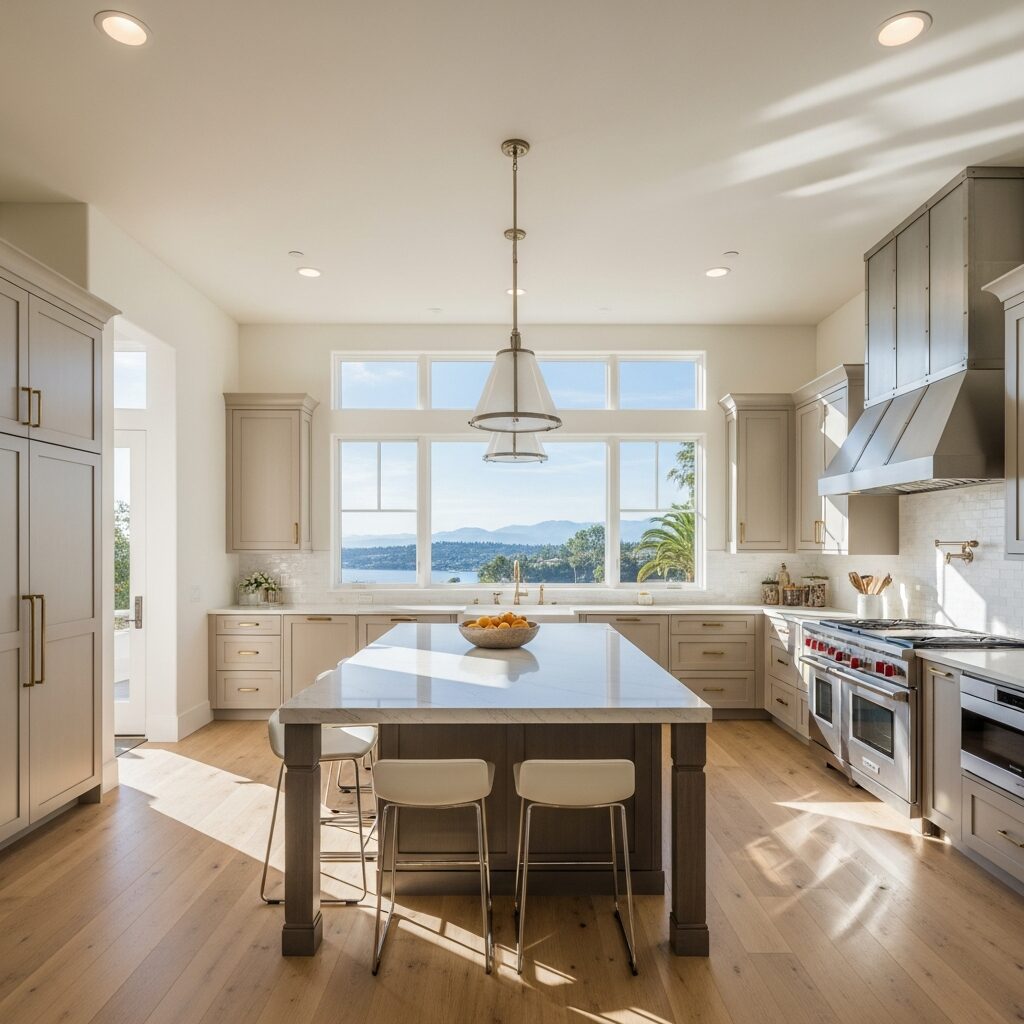
An open-concept layout eliminates interior walls, merging the kitchen, dining area, and living room into a single, cohesive “great room.” The primary goal is to create an uninterrupted visual and physical flow. This design is characterized by large kitchen islands that serve as both food prep areas and social hubs, consistent flooring materials that span the entire space, and a shared lighting scheme. The entire zone functions as one, promoting togetherness and a sense of boundless space.
Exploring Broken-Plan: Defined Zones with Visual Links
A broken-plan layout, by contrast, seeks to create distinct functional zones while maintaining a strong sense of connection. It’s not a return to the completely walled-off kitchens of the past. Instead, it uses clever architectural and design elements to delineate space. Think of features like half-walls, glass partitions, large cased openings without doors, split-level flooring, or strategically placed bookcases and cabinetry. These elements create physical and psychological boundaries that contain noise and clutter without causing isolation.
Historical Context of Kitchen Design Evolution
Historically, the kitchen was a purely utilitarian, enclosed space, hidden away from guests. The post-war boom and changing social dynamics brought the kitchen into the heart of the home, leading to the rise of the open-concept design. The broken-plan is the next stage in this evolution, a direct response to modern life where a single open space can sometimes feel chaotic. It acknowledges our need for both community and privacy, blending the best of both worlds into a highly functional design.
Unlocking the Benefits of an Open-Concept Kitchen Renovation
The enduring popularity of the open-concept kitchen is rooted in tangible, powerful benefits that cater to a social and family-oriented lifestyle. For many homeowners, this layout remains the ultimate expression of modern living.
Enhanced Social Interaction and Entertaining
This is the signature advantage of an open-concept design. It transforms cooking from a solitary activity into a communal experience. You can prepare a meal while conversing with guests in the living area or keeping an eye on children playing. The kitchen island often becomes the home’s central gathering point, perfect for casual dinners, homework sessions, or serving appetizers during a party. This makes it a premier choice for those who value kitchen design for entertaining.
Maximizing Natural Light and Spatial Perception
By removing interior walls, you allow natural light from windows in the living and dining areas to flood the entire space. This not only reduces the need for artificial lighting but also makes the home feel significantly larger, brighter, and more welcoming. This effect is particularly transformative in smaller homes or those with limited exterior windows, where every ray of light counts. You can see stunning examples of this principle in our gallery of kitchen renovations.
Streamlined Traffic Flow and Accessibility
An open layout eliminates narrow hallways and tight doorways, creating clear, wide pathways for movement. This improves everyday traffic flow, preventing bottlenecks when multiple family members are using the space. It also aligns with universal design principles, making the home more accessible for individuals with mobility challenges and easier for families to navigate with strollers.
Discovering the Advantages of Broken-Plan Kitchen Designs
While open-concept layouts excel at togetherness, the broken-plan design is gaining traction for its ability to address the practical challenges of modern life. It offers a sophisticated solution for those seeking balance, privacy, and order.
Creating Intimate Zones and Functional Separation
The primary appeal of broken-plan kitchen ideas is the creation of distinct, purposeful zones. You can have a cozy, quiet reading nook in the living area that isn’t disrupted by the clatter of pots and pans. The dining area can feel more formal and intimate for special occasions. This functional separation allows different activities to occur simultaneously without interfering with one another, a critical feature for busy families.
Controlling Noise and Visual Clutter
One of the biggest critiques of open-concept living is the unstoppable spread of noise and mess. The sounds from the dishwasher, range hood, and blender can easily dominate the entire living space. A broken-plan layout provides essential acoustic and visual buffering. A half-wall or a set of pocket doors can contain kitchen noises and keep the sight of dirty dishes hidden from relaxing guests, offering valuable kitchen privacy solutions.
Optimizing Storage and Dedicated Work Areas
While it may seem counterintuitive, adding partial walls or structural dividers can dramatically increase storage. These surfaces provide valuable real estate for additional upper and lower custom kitchen cabinetry, open shelving, or even a dedicated walk-in pantry. This approach allows for a more organized and efficient kitchen workflow, with everything in its designated place, separate from the main living areas.
How to Choose: Open-Concept or Broken-Plan for Your Home?
The right choice isn’t about following a trend; it’s about a deep analysis of your home’s structure, your family’s lifestyle, and your personal tolerance for noise and clutter. This is where professional guidance is invaluable.
Assessing Your Lifestyle and Family Needs
Be honest about your daily life. Are you a passionate home chef who needs a dedicated, focused workspace? Do you work from home and require a quiet environment? Or is your home the central hub for neighborhood gatherings and family events? A family with young children might prefer an open concept for easy supervision, while a couple who enjoys quiet evenings might lean toward the intimacy of a broken-plan design.
Evaluating Home Architecture and Structural Considerations
This is a critical, non-negotiable step. Your home’s existing layout dictates what’s possible. Removing a wall for an open-concept renovation might involve significant structural work if it’s load-bearing, requiring new beams and supports. Conversely, creating a broken-plan layout might be a simpler renovation. A thorough structural assessment is the first step in any kitchen remodeling project to understand the scope, cost, and feasibility of your vision.
Considering Privacy Requirements and Personal Preferences
Ultimately, your comfort is paramount. The “always-on” nature of an open kitchen can be draining for some. If the thought of your cooking mess being permanently on display causes you stress, a broken-plan layout will better serve your well-being. This design acknowledges the need for retreat and personal space within the home’s primary communal area.
Maximizing Resale Value with Your Kitchen Remodeling Choice
Any significant kitchen renovation is an investment, and understanding its impact on your home’s resale value is smart planning. Both modern kitchen layouts can offer a strong return, provided the execution is flawless.
Appealing to Diverse Buyer Preferences
For years, open-concept was the gold standard for resale value kitchen renovation. It remains highly desirable, especially for families. However, the market is becoming more sophisticated. A well-executed broken-plan kitchen can stand out, appealing to buyers who recognize its enhanced functionality and thoughtful design. The key is to create a space that feels intentional, not like a compromise.
Long-Term Investment: Durability and Timeless Design
The single most important factor for long-term value is not the layout itself, but the quality of the materials and craftsmanship. Buyers are looking for durability. Investing in high-quality elements like durable quartz or granite countertops, solid wood cabinetry, and professional-grade installation ensures your renovation will stand the test of time, regardless of the layout you choose.
The Role of Modern Finishes and Smart Appliances
To maximize ROI, pair your chosen layout with modern amenities. Energy-efficient, smart appliances, layered lighting schemes, and high-quality finishes will elevate either design. A cohesive design language that flows through the flooring, backsplash, and hardware demonstrates a high-end, thoughtful renovation that commands a premium price.
Achieving Your Dream Kitchen Layout in Southern California
Choosing and executing the perfect kitchen layout requires a blend of creative vision and technical expertise. A successful renovation harmonizes your personal needs with your home’s unique character.
Expert Guidance for Kitchen Remodeling in Southern California
Navigating the structural, budgetary, and design complexities of a full kitchen remodeling project is a significant undertaking. Partnering with an experienced design and renovation firm is crucial. We help homeowners in Orange County, Riverside, and San Bernardino analyze their space, develop a functional plan, and execute it with precision craftsmanship, ensuring a result that is both beautiful and built to last.
Integrating Local Architectural Styles with Modern Designs
Southern California is home to a rich tapestry of architectural styles. A key to a successful renovation is ensuring the new kitchen layout honors the home’s original character. An open-concept plan can beautifully modernize a Mid-Century Modern ranch, while a broken-plan layout with arched openings can complement the style of a Spanish Colonial home. The goal is to create a seamless integration of the new and the old.
Sustainable Materials and Energy-Efficient Solutions
Modern kitchen design principles increasingly emphasize sustainability. Whether you choose an open or broken plan, consider incorporating eco-friendly materials like reclaimed wood, recycled-content countertops, and low-VOC paints. In an open-concept space, upgrading to energy-efficient windows can maximize natural light without increasing cooling costs, a vital consideration in our sunny climate.
Ultimately, the debate between open-concept and broken-plan layouts is a personal one. By carefully considering your lifestyle, your home’s architecture, and your long-term goals, you can create a kitchen that not only looks stunning but also functions perfectly for you and your family for years to come. Get a Free in-home estimate.
