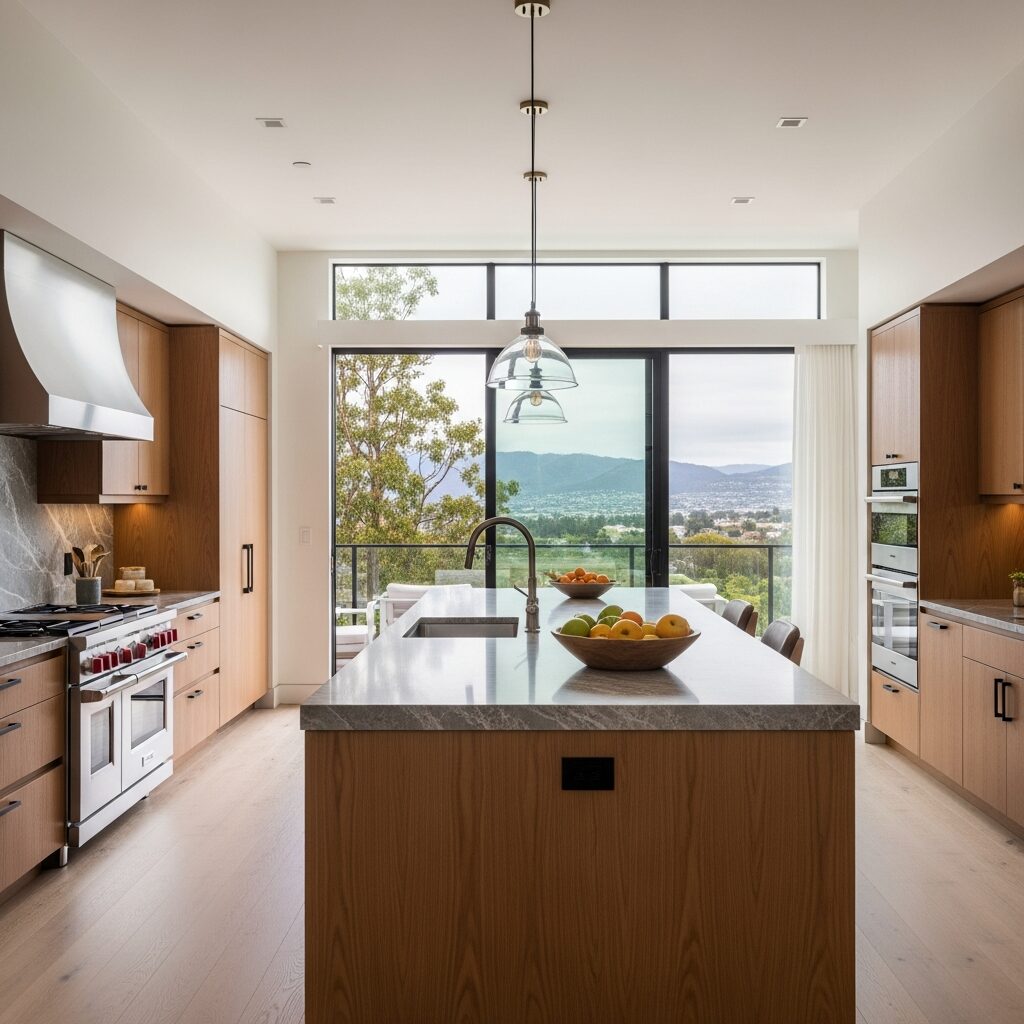
Shaker to Slim-Frame: Modern Kitchen Remodeling in Southern California
In Southern California, our homes are an extension of our lifestyle—open, airy, and seamlessly connected to the outdoors. The kitchen is no longer just a utilitarian space; it’s the heart of the home, where design and function converge. For years, the traditional Shaker cabinet has been the undisputed champion of kitchen design, prized for its timeless simplicity. But a new contender has emerged, perfectly suited to the modern Southern California aesthetic: the slim-frame cabinet. Also known as the “micro-shaker,” this refined style is redefining contemporary kitchen design by blending classic craftsmanship with a clean, minimalist edge.
This evolution from the robust, classic Shaker to the sleek slim-frame profile isn’t just a fleeting trend. It represents a fundamental shift towards a more sophisticated and understated luxury. As seasoned renovation professionals, we see firsthand how this design choice can elevate a space, making it feel larger, brighter, and more intentional. It’s about precision, subtlety, and creating a kitchen that is both a functional powerhouse and a serene retreat.
Why Are Slim-Frame Cabinets Redefining Southern California Kitchens?
The rise of slim-frame cabinetry is directly tied to the architectural styles prevalent in modern Southern California homes. Characterized by clean lines, an emphasis on natural light, and a connection between indoor and outdoor living, these homes demand a design language that is sophisticated yet uncluttered. Slim-frame cabinets answer this call perfectly, offering a subtle texture that avoids the starkness of a flat-panel door while maintaining a crisp, contemporary profile.
The Appeal of Reduced Frame Widths for Contemporary Homes
A traditional Shaker cabinet typically features a stile and rail (the vertical and horizontal frame pieces) width of 2.25 to 3 inches. A slim-frame design dramatically reduces this to as narrow as 0.75 to 1.5 inches. This seemingly small change has a profound visual impact. The reduced frame width reads as a precise, architectural detail rather than a heavy, traditional element. It speaks to a modern sensibility that values precision and refinement, lending a high-end, custom feel to the entire kitchen renovation.
How Slim-Frame Design Enhances Space and Light
The thinner frame of a micro-shaker cabinet door means the central recessed panel is larger. This creates a more open and less visually cluttered surface, which is crucial in any kitchen design. In Southern California homes, where maximizing natural light is a priority, this effect is amplified. The clean, simple lines of slim-frame cabinets don’t create heavy shadows or visual breaks, allowing light to move more freely across the room. This makes the kitchen feel more expansive, brighter, and integrated with the rest of the living space.
Visual Impact: A Cleaner Look for Open Concept Layouts
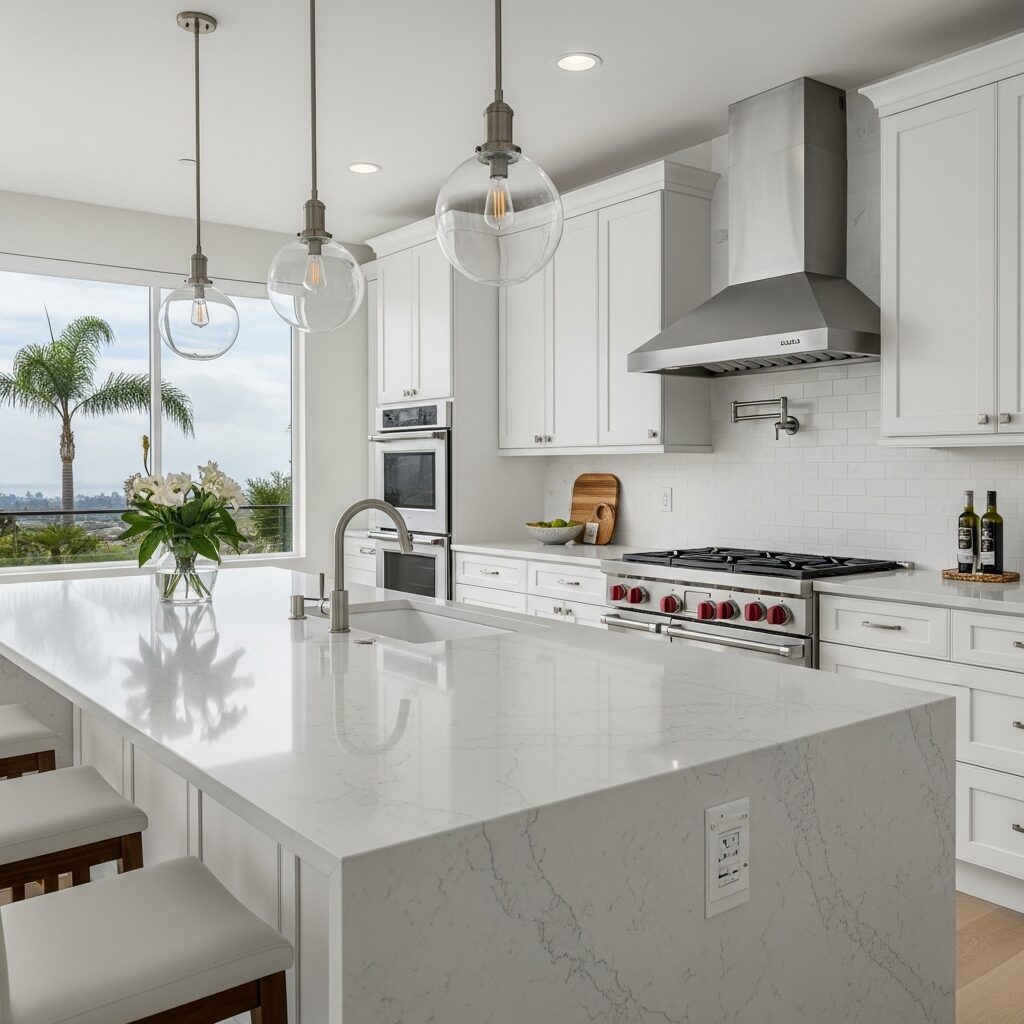
The open concept kitchen remodeling trend remains dominant, and for good reason. It fosters a sense of connection and flow. However, it also means the kitchen’s aesthetic must seamlessly blend with the dining and living areas. The bulky nature of traditional cabinetry can create a harsh visual separation. Slim-frame cabinets, with their minimalist aesthetic, serve as a perfect transitional element. Their clean geometry complements modern furniture and decor, creating a cohesive and harmonious living environment without sacrificing the subtle detail that gives a kitchen character.
Understanding the Evolution: From Traditional Shaker to Modern Minimalism
To fully appreciate the slim-frame cabinet, it’s helpful to understand its lineage. This design is not a rejection of the past but a thoughtful evolution of a classic style, adapted for the modern age. It carries forward the core principles of its predecessor while refining them for a new architectural context.
Tracing the Heritage of Shaker Cabinetry
The original Shaker design dates back to the 18th-century religious community known for its commitment to simplicity, utility, and honesty in craftsmanship. Shaker furniture and cabinetry were devoid of ornamentation, focusing instead on clean lines, balanced proportions, and durable construction. This focus on form and function is why the classic Shaker cabinet has remained a design staple for centuries—it is fundamentally a timeless and practical design.
The Rise of Micro-Shaker and Its Design Principles
The micro-shaker, or slim-frame, cabinet honors the Shaker principles of simplicity and quality while updating the proportions for a contemporary audience. It retains the five-piece door construction but refines the frame, creating a look that is both familiar and refreshingly new. This style is particularly well-suited for high-quality, modern kitchen cabinets because its construction demands incredible precision. Any imperfection in the joinery or finish is immediately apparent on such a narrow frame, making it a true testament to the skill of the cabinet maker.
Comparing Aesthetics: Classic vs. Contemporary Cabinet Profiles
When comparing a classic Shaker to a slim-frame profile, the differences become clear:
- Visual Weight: A classic Shaker has a more substantial, grounded presence, lending itself to farmhouse or transitional styles. The slim-frame feels lighter and more architectural, aligning perfectly with modern and minimalist kitchen aesthetics.
- Detail and Shadow: The wide stiles of a traditional Shaker create deeper shadow lines, adding a sense of depth and rustic charm. The micro-shaker’s narrow frame minimizes shadows, contributing to a flatter, more monolithic, and cleaner overall appearance.
- Versatility: While both are versatile, the slim-frame excels in contemporary settings. It can be dressed up with sleek hardware for a sophisticated look or integrated with handleless systems for ultimate minimalism.
Key Material & Finish Selections for Durability in California Climates
A beautiful kitchen is only successful if it’s built to last. In Southern California, our unique climate—from the humid coastal air to the dry inland heat—places specific demands on materials. Selecting the right combination of wood, engineered products, and finishes is non-negotiable for a long-lasting, high-value renovation. Our extensive experience has shown which premium materials for kitchen renovation offer the best performance and cabinet material durability.
Optimal Wood Species for Longevity and Style
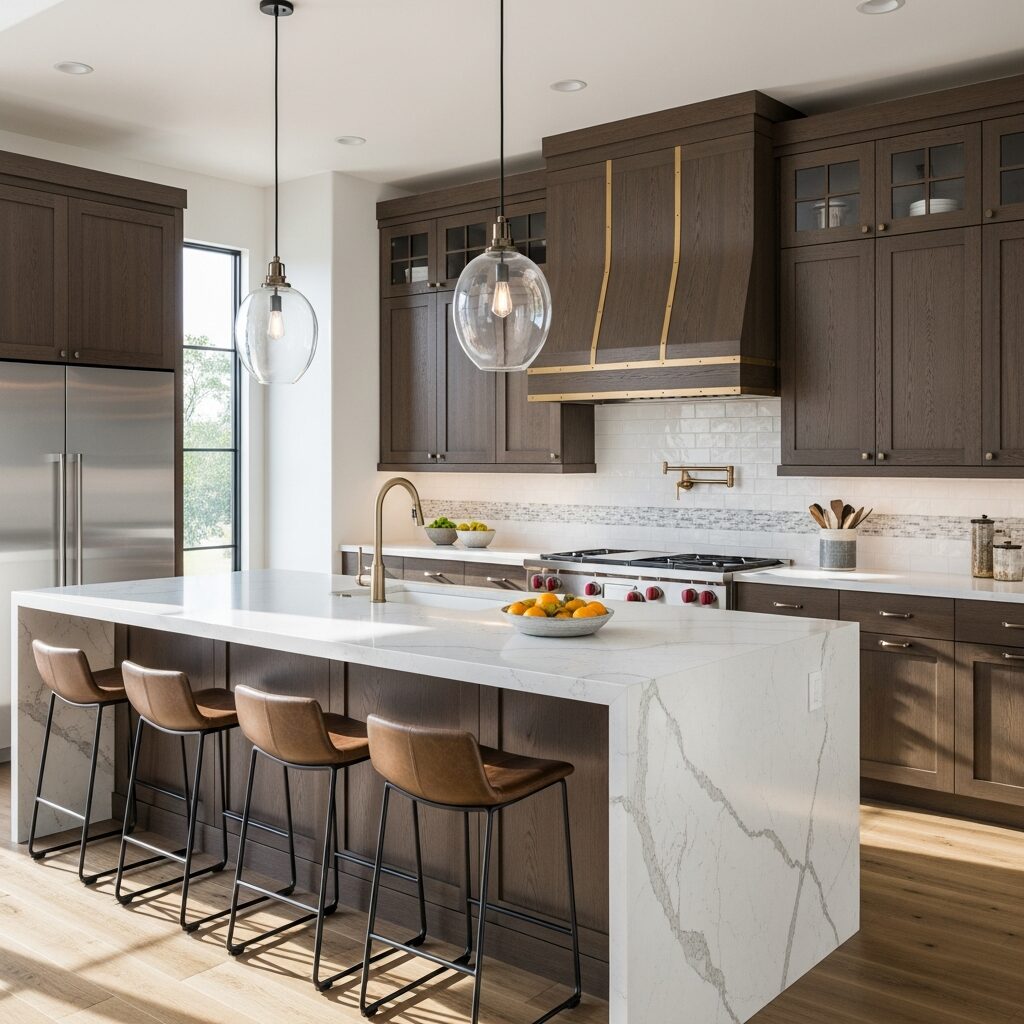
For painted slim-frame cabinets, stability is key. Hard Maple is an excellent choice due to its tight, uniform grain and resistance to dings and dents. It provides a flawless, smooth surface for paint. For homeowners desiring a natural wood look, Rift-Sawn White Oak is a superior option. Its straight grain pattern is visually stunning and incredibly stable, minimizing the potential for expansion and contraction with humidity changes.
Exploring Engineered Wood Options: MDF, Plywood, Particle Board
While the allure of solid wood is strong, high-quality engineered materials often outperform it, especially for cabinet doors. High-Density Fiberboard (HDF) is the preferred material for painted slim-frame doors. Because it is a single, stable piece, it will not develop the hairline cracks at the joints that can occur with painted solid wood doors over time. For the cabinet boxes themselves, we exclusively use furniture-grade plywood. Its layered construction provides exceptional structural strength, screw-holding power, and resistance to moisture—far superior to the particle board used in lower-quality cabinetry.
Durable Finishes: Lacquer, Melamine, and Thermofoil for Coastal Living
The finish is your cabinet’s first line of defense. For painted cabinets, a factory-applied, post-catalyzed conversion varnish or lacquer is the gold standard. This multi-step process creates a hard, non-porous surface that is highly resistant to moisture, chemicals, and UV fading—a critical factor in sun-drenched California kitchens. For textured or wood-grain flat-panel options that complement slim-frame styles, high-quality Textured Melamine and modern Thermofoil offer incredible durability and are exceptionally easy to clean, resisting the effects of salty coastal air.
Achieving a Cohesive Modern Aesthetic in Your Kitchen Renovation
Slim-frame cabinets are a powerful statement piece, but they are just one component of a successful modern kitchen design. Achieving a truly cohesive and high-end result requires careful consideration of how all the elements—countertops, flooring, and hardware—interact. The goal is to create a space that feels unified, intentional, and balanced.
Integrating Cabinetry with Countertops: Quartz, Marble, and Granite
The clean lines of micro-shaker cabinets call for equally clean countertop selections. Engineered quartz is often the top choice, offering a vast array of colors and patterns, from pure white to designs that mimic the subtle veining of marble without the maintenance. Pairing light-colored cabinets with a durable, low-maintenance quartz countertop creates a bright, airy feel. For those seeking natural stone, a honed quartzite or a durable granite can provide a beautiful organic contrast to the precise lines of the cabinetry. Our designers can help you explore the full range of quartz, marble, and granite countertops to find the perfect match.
Flooring Synergy: Luxury Vinyl, Tile, and Hardwood Considerations
Flooring grounds the entire design. Wide-plank European oak hardwood or a high-quality Luxury Vinyl Plank (LVP) in a natural wood tone can add warmth and organic texture to a minimalist kitchen. For a more seamless, monolithic look, large-format porcelain tiles in a concrete or stone finish can extend the contemporary aesthetic underfoot, and they offer exceptional durability and ease of maintenance.
Hardware Selection: Minimalist Pulls and Handleless Systems
Hardware is the jewelry of your cabinetry. For a slim-frame design, less is more. Sleek, minimal hardware like thin bar pulls in a matte black, brass, or stainless steel finish complements the cabinet’s profile without overwhelming it. Edge pulls that are routed into the top of the door or drawer offer an even more discreet look. For the ultimate in minimalism, push-to-open latch systems allow for a completely handleless design, creating an unbroken, ultra-clean surface.
