
In the world of kitchen remodeling, few decisions carry as much weight as selecting your cabinetry. It sets the tone for the entire space, influencing everything from countertops to hardware. While a single, uniform color has long been the default, a more nuanced and dynamic approach has proven its staying power: two-tone kitchen cabinets. This design strategy, far from being a fleeting trend, offers a sophisticated way to add depth, personality, and visual interest to the heart of your home.
For homeowners in Orange County, Riverside, and San Bernardino embarking on a kitchen renovation, understanding how to properly execute a dual-tone design is the key to achieving a high-end, cohesive result. It’s about more than just picking two colors you like; it’s a deliberate process of balancing light, space, material, and form. This guide provides an expert perspective on why two-tone cabinets are an enduring choice and how to master their application in your next project.
Are Two-Tone Kitchen Cabinets a Timeless Choice for Your Remodel?
The concept of using multiple colors or finishes in a kitchen is not new; it’s a classic design principle that has been reinterpreted for modern aesthetics. Its longevity stems from its versatility and its ability to solve common design challenges, making it a sound investment for your home’s value.
Evaluating the Longevity of Dual-Tone Cabinetry Trends
Unlike hyper-specific trends that can quickly date a kitchen, the two-tone approach is rooted in fundamental design theory. The contrast it creates is a timeless way to build visual structure. The most enduring combinations often involve a classic neutral paired with either a richer, deeper tone or a natural wood grain. This ensures the design remains relevant and appealing for decades, positively impacting your home’s ROI. The key is to choose colors and materials that complement your home’s overall architecture rather than chasing a short-lived fad.
Benefits of Incorporating Contrasting Cabinet Finishes
A two-tone scheme offers significant functional and aesthetic advantages. By using a darker color for lower cabinets and a lighter shade for uppers, you can make a kitchen feel larger and more open. The darker base grounds the space, while the lighter uppers draw the eye upward, creating an illusion of higher ceilings. This technique also allows you to introduce a bold color on a kitchen island, turning it into a stunning focal point without overwhelming the entire room. The contrast adds a layer of custom-designed sophistication that a single-color scheme can sometimes lack.
Identifying When Two Tones Enhance Kitchen Value
While versatile, a two-tone design is most effective in certain layouts. In kitchens with a defined island, using a contrasting color for the island base is a powerful way to add character. In galley kitchens, keeping upper cabinets light or even using glass-front doors can prevent the space from feeling narrow. For large, open-concept kitchen remodeling projects, a dual-color strategy helps to subtly delineate the kitchen area from the living and dining spaces, creating distinct “zones” without the need for walls.
Mastering Color Theory for Balanced Two-Tone Kitchen Design
Achieving a harmonious two-tone kitchen is an exercise in applied color theory. It requires a thoughtful understanding of contrast, light, and balance to create a space that feels both intentional and inviting.
Principles of Contrast and Harmony in Cabinet Selection
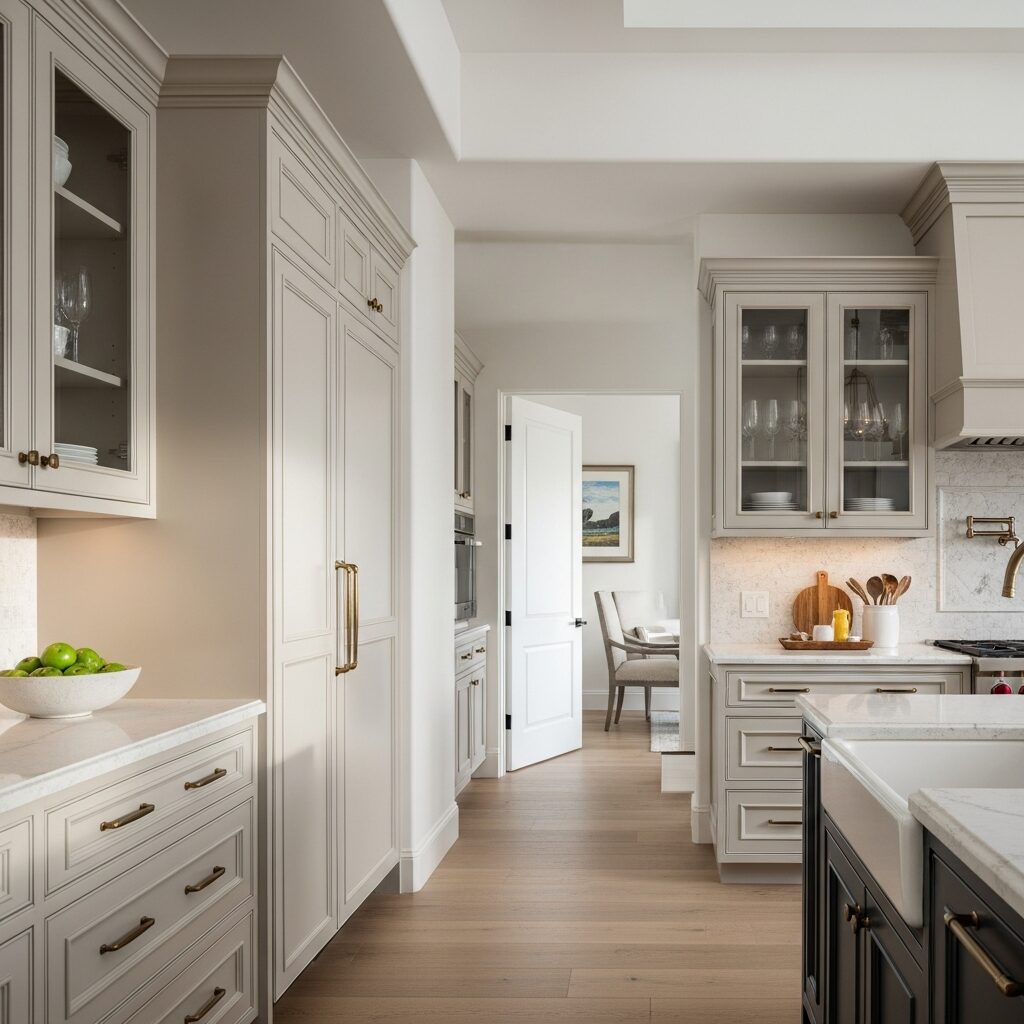
The goal is to create contrast that is interesting, not jarring. A common and effective strategy is to anchor the room with darker or more saturated lower cabinets and use lighter, airier tones for the uppers. This follows a natural order, mimicking landscapes where the ground is darker than the sky. Harmony is achieved when the undertones of the two colors are compatible. For example, a cool-toned gray pairs beautifully with a crisp white or a deep navy blue, while a warm, creamy off-white is better suited to a mushroom-toned beige or a warm wood finish.
Popular Color Pairings: Neutrals, Accents, and Bold Statements
The possibilities for kitchen cabinet color combinations are vast, but several pairings have proven to be consistently successful:
- Classic White & Navy: Crisp white uppers with deep navy lowers create a timeless, nautical-inspired look that feels both clean and sophisticated.
- Greys & Woods: Pairing warm, light wood tones like white oak on uppers or an island with charcoal or slate gray perimeter cabinets offers a perfect blend of natural texture and modern sleekness.
- Monochromatic Tones: Using two shades from the same color family, such as a light dove gray and a dark charcoal, provides subtle contrast for a refined, understated aesthetic.
- The Bold Island: Keeping perimeter cabinets a neutral white, beige, or gray allows the kitchen island to become a statement piece in a rich jewel tone like emerald green, deep burgundy, or even black.
The Role of Light and Space in Color Perception
A color swatch viewed in a showroom will look dramatically different in your home. The amount and direction of natural light are critical. North-facing rooms receive cooler, indirect light, which can wash out some colors, while south-facing rooms have bright, warm light that intensifies them. Always test large sample swatches in your kitchen at different times of day. Furthermore, consider your artificial lighting plan; LED lights with a warmer Kelvin temperature (2700K-3000K) create a cozy ambiance, while cooler temperatures (4000K-5000K) produce a brighter, more energizing light that will alter how your cabinet colors are perceived.
Strategic Material and Finish Combinations for Elegant Cabinetry
Beyond color, the interplay of materials and finishes is what elevates a two-tone kitchen from simply nice to truly stunning. Texture adds a tactile dimension that creates a rich, layered look.
Mixing Wood Tones with Painted Finishes
One of the most effective ways to achieve a high-end two-tone look is by combining the natural warmth of wood with the smooth, uniform appearance of a painted finish. For example, rift-cut white oak or rich walnut base cabinets for an island can be beautifully complemented by perimeter cabinets painted in a soft white or deep gray. This blend adds organic texture and prevents the design from feeling sterile, striking a perfect balance between contemporary and classic styles.
Exploring Different Textures: Matte, Gloss, and Textured Surfaces
The sheen of your cabinet finish has a significant impact on both aesthetics and maintenance.
- Matte/Satin Finishes: These are excellent for concealing fingerprints and smudges, offering a soft, velvety appearance that diffuses light. They lend a modern, sophisticated air to any color.
- Gloss Finishes: High-gloss surfaces reflect light, making a space feel brighter and larger. They are incredibly easy to wipe clean but will show fingerprints more readily, making them better suited for upper cabinets.
- Textured Surfaces: Materials like textured laminates or cerused wood finishes introduce physical depth and are exceptionally durable, making them a practical choice for high-traffic lower cabinets.
Integrating Cabinetry with Countertop and Backsplash Materials
Your countertops and backsplash are the bridge that connects your upper and lower cabinets. A successful design often uses these surfaces to tie the two cabinet colors together. For instance, if you have white uppers and navy lowers, a quartz countertop with subtle grey and navy veining can create a beautiful, cohesive link. Similarly, a backsplash tile can incorporate tones from both cabinet choices, ensuring the entire kitchen design feels harmonious and intentional.
Integrating Two-Tone Cabinets with Overall Kitchen Aesthetics
The cabinets are the foundation, but they must work in concert with every other element in the room to create a unified design vision. Flooring, hardware, and lighting all play a critical role in supporting your dual-tone cabinet choice.
Coordinating Cabinetry with Flooring and Wall Colors
To allow your two-tone cabinets to be the focal point, it’s often best to keep wall colors neutral and light. A soft white, light gray, or warm beige provides a clean backdrop that doesn’t compete for attention. Your flooring choice should complement the lower cabinets. A dark wood floor can look stunning with light-colored lower cabinets, while a lighter floor can provide a pleasing contrast to darker base cabinets, preventing the room from feeling too heavy.
Impact of Hardware and Lighting on Cabinet Appeal
Cabinet hardware is the jewelry of the kitchen. The finish you choose can dramatically alter the style. Warm brass or champagne bronze hardware can add a touch of luxury to navy or green cabinets, while matte black hardware provides a striking, modern contrast against white or wood-toned cabinets. Thoughtful lighting, including under-cabinet task lighting and statement pendant lights over an island, not only improves functionality but also highlights the different colors and textures of your cabinetry.
Designing for Open Concept Layouts with Dual-Tone Cabinets
In an open-concept home, a two-tone kitchen is a powerful design tool. Using a contrasting color for the kitchen island is the most popular and effective strategy. It acts as a visual anchor, clearly defining the kitchen’s footprint within the larger living space. This creates a functional and beautiful centerpiece that serves as a transition between the kitchen and the adjacent dining or living areas, enhancing the flow of the entire floor plan.
Planning Your Two-Tone Kitchen Cabinet Renovation: Expert Advice
A successful two-tone kitchen renovation requires careful planning and a clear vision. Partnering with experienced professionals can help you navigate the choices and avoid common mistakes, ensuring a final result that you will love for years to come.
Budgeting for Custom vs. Semi-Custom Two-Tone Options
Achieving a two-tone look is possible at different price points. Semi-custom cabinet lines offer a wide range of popular paint colors and wood finishes, allowing for many beautiful combinations at a more accessible cost. Full custom cabinetry opens up a world of limitless possibilities, allowing you to specify any paint color imaginable and choose from premium wood species and bespoke finishes. Understanding the cost-to-value ratio of each is an important first step in the planning process.
Avoiding Common Pitfalls in Two-Tone Cabinet Selection
Even with a solid plan, it’s easy to make a misstep. Common mistakes include:
- Ignoring Undertones: Pairing a cool gray with a warm, creamy beige can look discordant.
- Too Much Contrast: Extreme contrast in a small kitchen can feel chaotic and make the space seem smaller.
- Forgetting Cohesion: The two tones must relate to each other and to other fixed elements like flooring and countertops.
- Trend Chasing: Avoid color combinations that are too “of the moment” and may feel dated in five years. Instead, browse our kitchen inspiration gallery to see timeless examples.
Consulting with Design Professionals for Cohesive Results
Working with a professional kitchen design and remodeling team is the surest way to achieve a flawless two-tone kitchen. An experienced designer can provide photorealistic renderings, allowing you to visualize the final result before committing. They have access to a wide range of material samples and a deep understanding of how colors, textures, and light interact. This expertise is invaluable in creating a balanced, functional, and beautiful kitchen that perfectly reflects your personal style and enhances your home’s value.
