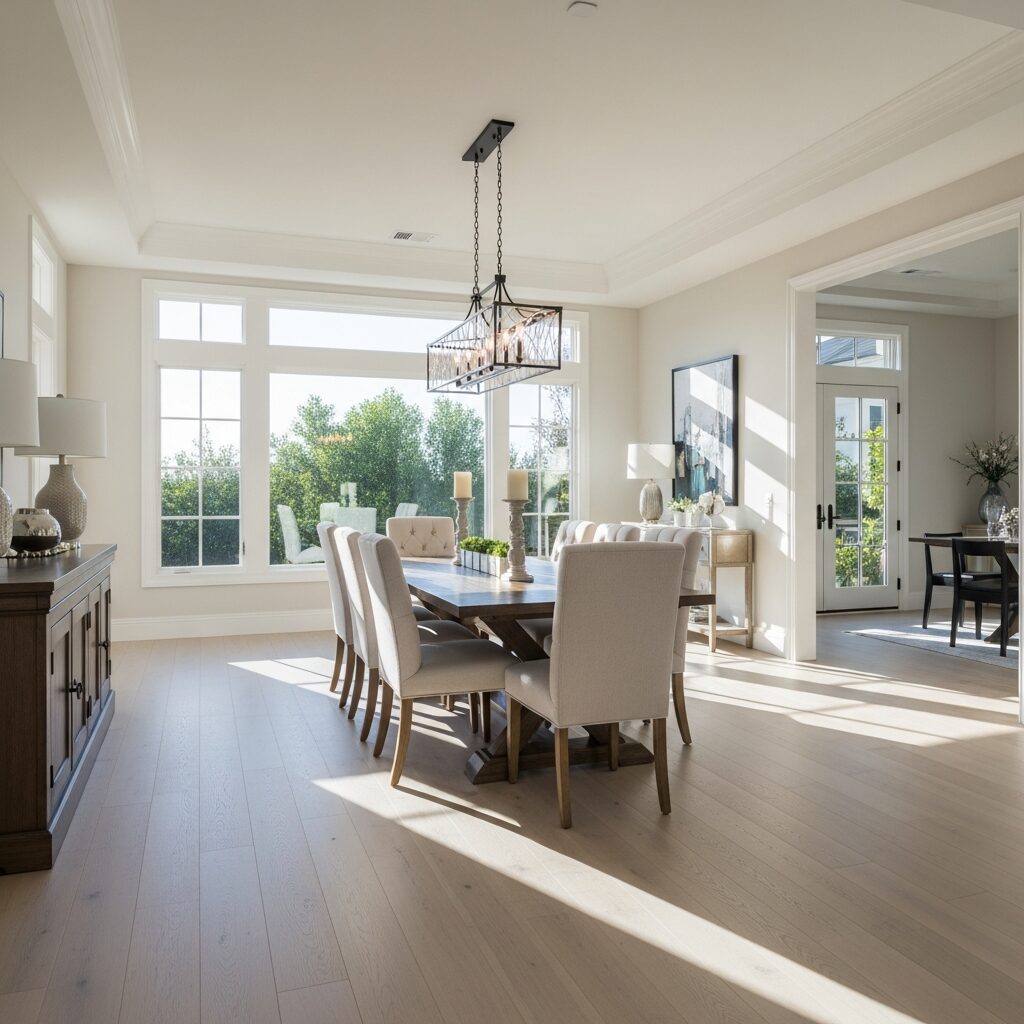
LVP vs. Hardwood: Ideal Flooring for Southern California Homes
As a seasoned flooring and remodeling professional with over two decades of experience, I’ve seen trends come and go. But one decision remains central to any significant home renovation: the choice of flooring. It’s the foundation of your home’s design, the surface that endures daily life, and a major factor in your property’s long-term value. For homeowners in Southern California, the debate often narrows down to two excellent contenders: the timeless elegance of hardwood and the modern resilience of Luxury Vinyl Plank (LVP). This isn’t just about looks; it’s a practical decision driven by our unique climate, lifestyle, and financial goals. Let’s break down the real-world performance of luxury vinyl plank vs. hardwood to help you make an informed investment in your home.
Choosing Your Ideal Flooring: LVP vs. Hardwood for Southern California Homes
The first step in any successful flooring renovation is to evaluate your environment and lifestyle. A floor that thrives in a dry, temperate climate might struggle with the specific demands of our region. From coastal humidity to intense sun exposure, your choice needs to be as resilient as it is beautiful.
Understanding Southern California Lifestyle Needs
Life in Southern California is defined by an indoor-outdoor flow. We track in sand from the beach, our kids run in from the pool, and our pets are a central part of the family. This means our floors are constantly exposed to UV rays, moisture, and high foot traffic. The ideal flooring solution must stand up to bright sun without fading, resist moisture from coastal air or wet feet, and handle the daily wear and tear of an active family. This is where the core differences between LVP and hardwood become critically important.
Key Differences at a Glance: LVP and Hardwood
At their core, these two materials are fundamentally different. Hardwood flooring is a natural product, milled directly from harvested timber like oak, maple, or walnut. Each plank is unique, showcasing organic grain patterns and natural imperfections that contribute to its character. Its value is rooted in this authenticity and its ability to be sanded and refinished multiple times over its lifespan.
In contrast, luxury vinyl plank is a multi-layered, engineered product. It typically consists of a rigid core for stability, a high-definition printed design layer that realistically mimics wood, and a transparent, highly durable wear layer on top. The quality of LVP is largely determined by the thickness of this wear layer and the realism of its visual layer, making it one of the most versatile and resilient flooring solutions on the market today.
Durability & Longevity: Which Material Best Withstands Daily Life?
A beautiful floor is only a good investment if it lasts. Durability isn’t just about how long a floor will exist; it’s about how well it will look while doing so. Here, modern technology gives LVP a distinct advantage in handling the rigors of an active household.
Scratch and Dent Resistance: LVP’s Modern Edge
For homes with pets and children, scratch resistance is paramount. Hardwood, being a natural material, is susceptible to scratches from pet claws, dragged furniture, and dropped objects. While harder woods like hickory are more resilient than softer ones like pine, no hardwood is scratch-proof. Dents are also a concern with heavy impacts.
LVP, on the other hand, is designed for impact. Its commercial-grade wear layer provides exceptional protection against scratches, scuffs, and scrapes. This makes it an incredibly durable flooring for pets and active kids. While not indestructible, high-quality LVP will maintain its original appearance far longer under heavy use than most hardwood species, making it a truly low maintenance flooring option.
Moisture Resilience: Ideal for Coastal Living
Water is the natural enemy of hardwood floors. Exposure to moisture, whether from a spill, a leak, or the persistent humidity of coastal air, can cause solid hardwood to warp, cup, and swell. This limits its use in areas like full bathrooms and basements. Even engineered hardwood, which offers more stability, still has a wood core that can be damaged by prolonged water exposure.
This is where LVP truly shines. As a completely synthetic material, it is 100% waterproof. This makes it one of the best waterproof flooring options available, perfect for kitchens, bathrooms, laundry rooms, and entryways. For Southern California homes near the coast, LVP’s resilience to moisture provides invaluable peace of mind.
Long-Term Performance: A Wise Flooring Investment
Authentic hardwood floors can last for a century or more. Their longevity is tied to their ability to be sanded and refinished every 10-15 years, removing surface damage and restoring their original luster. This process, however, comes with its own cost and disruption. The lifespan of LVP is determined by its wear layer, with high-quality planks often warrantied for 20-30 years in a residential setting. While it cannot be refinished, its initial durability means it won’t need it. It maintains its look for decades with minimal intervention.
Maintenance & Lifestyle: Keeping Your Floors Pristine with Ease
Your lifestyle should dictate your flooring choice, not the other way around. Consider how much time and effort you are willing to dedicate to floor care, as the requirements for LVP and hardwood are worlds apart.
Effortless Cleaning: The LVP Advantage
LVP is the definition of low maintenance flooring. Its non-porous, water-resistant surface can be cleaned with a simple routine of sweeping and mopping with a pH-neutral cleaner. Spills wipe up easily without the risk of staining or water damage. This simple care regimen is a major selling point for busy families who value convenience and practicality.
Hardwood Care: Preserving Your Premium Investment
Maintaining hardwood requires a more delicate approach. You must use specific hardwood floor cleaners, avoid excess water from mops, and address spills immediately to prevent staining or moisture damage. Over time, the finish will wear down, requiring a professional screening and recoating or a full refinishing to restore its protective layer and beauty. It’s a labor of love that preserves a premium asset.
Pet and Child-Friendly Flooring Solutions
When clients ask for the best flooring for a home full of life, I often point them toward high-quality LVP. Its combination of scratch resistance, waterproof properties, and easy cleanup makes it nearly worry-free. Accidents, spills, and the daily chaos of family life are far less stressful when you have a floor built to handle them. While a home with hardwood can certainly accommodate pets and kids, it requires more preventative measures like area rugs and diligent nail trimming for pets.
Aesthetics & Resale Value: Elevating Your Home’s Visual Appeal
Both LVP and hardwood can elevate your home’s interior, but they achieve this in different ways and have different implications for resale value. The best choice often depends on your home’s style and your long-term financial strategy.
Achieving Desired Aesthetics: Grain, Color, and Finish
Nothing can perfectly replicate the unique, one-of-a-kind beauty of a solid hardwood plank. The natural depth, texture, and variation are its signature appeal. It provides a warmth and authenticity that has been prized for centuries.
However, modern LVP technology is astonishingly realistic. High-end products feature “embossed-in-register” textures that align with the printed wood grain image, creating a convincing look and feel. This technology allows LVP to convincingly mimic any wood species, from rustic, wide-plank oak to sleek, modern maple, offering limitless home flooring ideas without the practical downsides of the real material. Many homeowners are now embracing seamless flooring trends, using a single LVP style throughout the main living areas, kitchen, and even bathrooms for a cohesive, expansive feel.
Impact on Home Resale Value: What Buyers Seek in Renovations
Historically, hardwood flooring has been a top feature for commanding a higher resale value. It is widely perceived by buyers as a premium, long-lasting upgrade. This still holds true, especially in luxury markets. However, the perception of LVP is rapidly changing. Buyers, particularly those with families, are increasingly educated about the practical benefits of LVP. A home with new, high-quality waterproof LVP can be a major selling point, signaling a durable, modern, and move-in-ready space.
Matching Flooring to Your Home’s Architectural Style
The versatility of both materials allows them to fit various home styles. Wide-plank, matte-finish oak hardwood is perfect for a Spanish or Craftsman-style home. A dark-stained, narrow-plank maple can complement a Mid-Century Modern interior. Similarly, LVP can be selected to match any aesthetic. A light, airy, bleached-wood-look LVP is ideal for a coastal cottage, while a deep espresso or gray-toned plank suits a contemporary design.
Budget & Installation: Understanding Your Flooring Renovation Investment
A flooring renovation is a significant investment, and the total cost involves both materials and labor. Understanding the financial differences between LVP and hardwood is crucial for planning your project.
Material Costs: LVP vs. Hardwood Pricing
When analyzing flooring renovation cost California, materials are the first consideration. Generally, LVP is more budget-friendly than solid or engineered hardwood. While high-end LVP can approach the cost of lower-end engineered hardwood, solid hardwood remains a premium material with a significantly higher price per square foot.
Installation Considerations and Labor Expenses
Installation complexity also impacts the final cost. LVP is often installed as a “floating floor” using a click-lock system, which is faster and less labor-intensive. Hardwood installation is a more meticulous craft, requiring either nailing, stapling, or gluing to the subfloor, followed by sanding and finishing in some cases. This specialized labor naturally comes at a higher cost. For any flooring project, proper subfloor preparation is non-negotiable to ensure a lasting, high-quality result.
Long-Term Value: A Strategic Renovation Perspective
Ultimately, the best value depends on your priorities. Hardwood offers incredible long-term asset value, but it comes with a higher initial cost and future maintenance expenses. LVP provides outstanding day-to-day value through its durability and ease of care, with a lower upfront investment. For many homeowners we work with across Orange County, Riverside, and San Bernardino, the practical, worry-free performance of LVP makes it the most strategic choice for their busy lives and beautiful homes.
The decision between LVP and hardwood is personal. It’s a balance of aesthetics, lifestyle, and budget. By weighing these critical factors, you can choose a floor that will not only look stunning but will serve your family well for years to come. When you’re ready to explore the options in your home, our team of experts is here to guide you through the selection and installation process. Get a Free in-home estimate.
