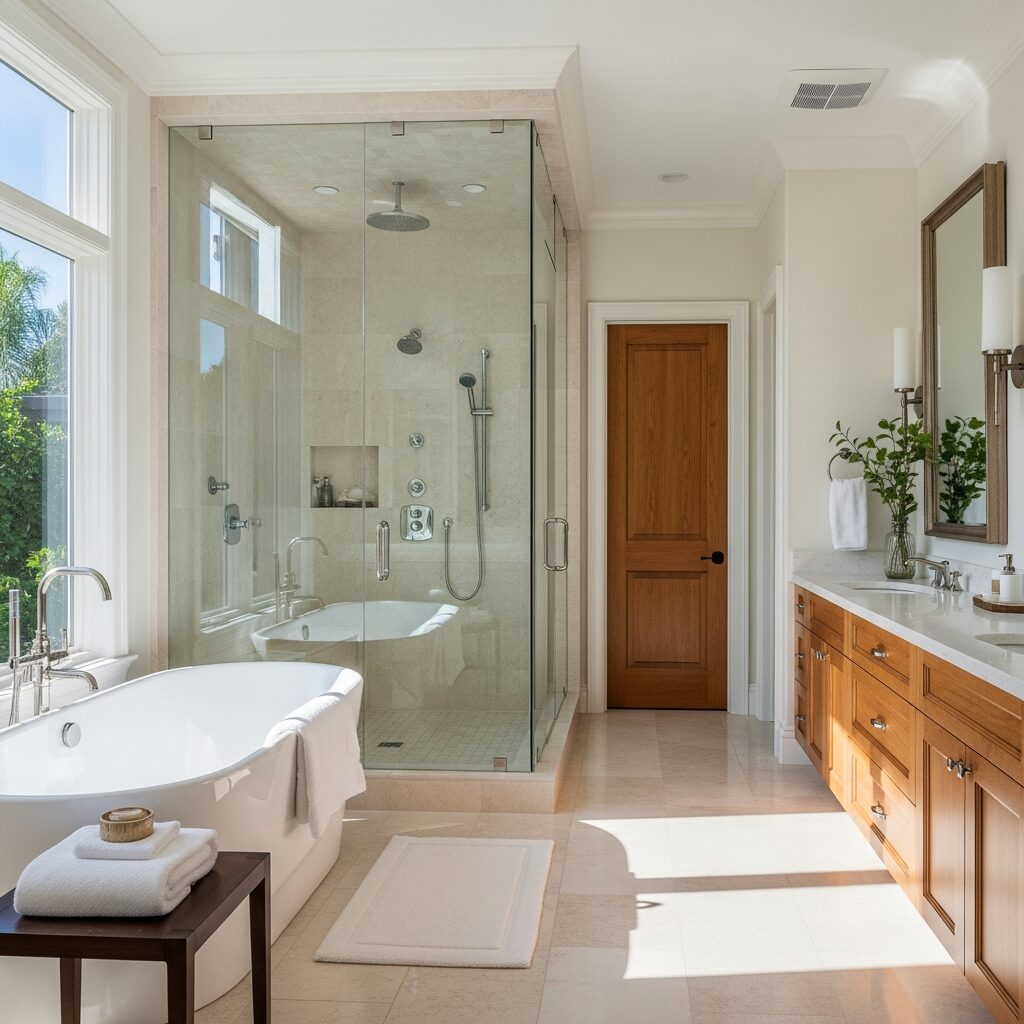
Walk-In Shower vs. Freestanding Tub: Remodeling Value Guide
The central decision in any significant bathroom renovation often comes down to a single, defining choice: will you install a sleek, modern walk-in shower or an elegant, sculptural freestanding tub? As a contractor with over two decades of experience, I’ve seen this decision shape not just the daily utility of a bathroom but its entire aesthetic and, most importantly, its long-term financial value. The debate isn’t merely about personal preference; it’s a strategic calculation of space, lifestyle, accessibility, and market trends. Understanding the true bathroom remodeling value of each option is critical to making an investment that pays dividends in both enjoyment and equity.
This guide offers an in-depth analysis, weighing the practical benefits and financial implications of walk-in showers against freestanding tubs. We’ll explore how each choice impacts your home’s functionality, appeal to future buyers, and overall return on investment (ROI), ensuring your renovation is a resounding success.
Which Offers Higher Remodeling Value: Walk-In Showers or Freestanding Tubs?
Determining which feature adds more value is not a one-size-fits-all answer. The value proposition is a blend of installation costs, market perception, and long-term durability. Both options can significantly elevate a home, but their ROI is tied to different factors.
Understanding the Market Appeal of Each Option
A walk-in shower communicates modernity, efficiency, and accessibility. Its clean lines and open feel are highly sought after in contemporary design. Potential homebuyers often perceive a large, well-appointed walk-in shower as a high-end, practical upgrade that simplifies daily routines. In contrast, a freestanding tub is a statement of luxury and indulgence. It acts as a stunning focal point, evoking a spa-like retreat. While not used daily by everyone, its presence signals a commitment to comfort and high-end living, which can be a powerful draw in the luxury market.
Cost Implications for Installation and Maintenance
Installation costs for both can vary dramatically. A custom walk-in shower requires meticulous waterproofing, precise tile work, a sloped floor for drainage, and potentially relocating plumbing. The materials, from the tile to the glass enclosure and fixtures, contribute significantly to the budget. Maintenance involves regular cleaning of tile, grout, and glass. A freestanding tub’s cost is driven by the unit itself—materials range from affordable acrylic to heavy cast iron or stone resin—and the specialized plumbing required, such as a floor-mounted tub filler, which can be expensive. Additionally, the subfloor may need reinforcement to support the weight of a full tub. Maintenance is generally simpler, involving cleaning the tub’s surface and the floor around it.
Long-Term Investment Returns
From a pure bathroom renovation ROI perspective, the walk-in shower often has a slight edge in broader market appeal. Its association with universal design and modern living makes it a safer bet for attracting a wider pool of buyers. The conventional wisdom of needing at least one bathtub in a house for resale is fading, especially in markets catering to young professionals or empty-nesters. However, in family-oriented neighborhoods, a home without any tub can be a disadvantage. A freestanding tub’s ROI is more nuanced; in a high-end primary suite, it can be the very feature that clinches a sale by creating a “wow” factor that other homes lack.
Lifestyle and Accessibility: Tailoring Your Bathroom Renovation
Beyond finances, the best choice is the one that enhances your daily life. Your bathroom should be a functional space tailored to your comfort, needs, and long-term plans.
Ergonomic Design for Everyday Comfort
Daily use is a primary consideration. A walk-in shower offers unmatched convenience for quick, everyday washing. Features like built-in benches, rainfall showerheads, and handheld wands enhance this comfort. A freestanding tub, on the other hand, is designed for immersive, relaxing soaks. The ergonomic design of a deep soaking tub can provide therapeutic benefits that a shower cannot replicate. The decision often comes down to whether your routine prioritizes speed and efficiency or leisurely relaxation.
Enhancing Universal Design Principles
This is where the walk-in shower truly excels. A zero-threshold or curbless walk-in shower is a cornerstone of accessible bathroom design and aging-in-place strategies. The absence of a curb to step over makes it safer and more accessible for individuals with mobility challenges. This forward-thinking design not only provides immediate safety benefits but also adds significant long-term value by future-proofing the home. Freestanding tubs, with their high walls, are inherently less accessible and can pose a challenge for some users.
Personalization for Unique Preferences
Both options offer extensive personalization. Walk-in showers can be customized with a vast array of tile patterns, integrated niches for storage, multiple showerheads, steam systems, and frameless glass doors. Freestanding tubs come in countless shapes, sizes, and materials, from classic clawfoot designs to sleek, modern ovals. This ability to tailor the feature to your specific aesthetic is a key part of any successful bathroom remodeling project.
Maximizing Space Efficiency in Your Bathroom Design
The physical footprint of your chosen feature will dictate the entire layout and flow of your bathroom. This is especially critical in compact spaces where every square inch matters.
Creative Layouts for Compact Bathrooms
For small bathroom renovation ideas, a walk-in shower is often the superior choice. A corner shower with a clear glass enclosure creates an illusion of spaciousness by not visually obstructing the room. A wet-room concept, where the shower area is not fully enclosed, can make a small bathroom feel dramatically larger. A freestanding tub, conversely, demands significant floor space. It requires “breathing room” on all sides to achieve its intended visual impact, making it a challenging fit for a smaller bathroom.
Open Concept Layout Advantages
The visual transparency of a glass-enclosed walk-in shower supports an open-concept feel. It allows light to flow freely and maintains continuous sightlines, which is a key principle of modern design. This integration makes the entire bathroom feel more cohesive and expansive. A freestanding tub, while a beautiful object, is a solid mass that can interrupt the visual flow of a room if not placed strategically.
Strategic Placement for Optimal Flow
Proper placement is crucial for functionality. A walk-in shower can be neatly tucked into a corner or along a wall, preserving a clear and efficient traffic path through the bathroom. A freestanding tub is best utilized as a dramatic centerpiece, often placed under a window or in a location where it can be admired. Poor placement can result in a cramped and awkward layout, diminishing both its aesthetic and practical value.
Resale Trends: What Southern California Homebuyers Prefer
In the competitive real estate markets of Southern California, bathroom design trends can directly influence a home’s saleability and final price. Understanding local preferences is key to maximizing your renovation’s impact.
Modern Aesthetics in Southern California
The trend in Southern California bathroom remodeling leans heavily toward bright, airy, spa-inspired spaces. Clean lines, natural materials, and a sense of seamlessness are highly valued. Walk-in showers, with their minimalist frames and expansive use of tile and glass, align perfectly with this aesthetic. While a freestanding tub can also serve this trend, its form must be carefully chosen to complement a modern design rather than a traditional one.
The Role of Luxury Features
Buyers in this region expect luxury bathroom features. A basic shower or tub-shower combo is no longer sufficient in a primary suite. The “luxury” is in the execution. A walk-in shower becomes luxurious with the addition of a stone bench, a multi-jet shower system, and floor-to-ceiling designer tile. A freestanding tub achieves luxury status through its material (e.g., volcanic limestone or copper) and its high-end, floor-mounted fixtures. For inspiration on how these features come to life, you can view examples in our bathroom gallery.
Factors Influencing Buyer Decisions
When our teams perform renovations in Orange County, Riverside, and San Bernardino, we see firsthand what resonates with buyers. A primary suite with a large, luxurious walk-in shower is almost universally appealing. The debate over the tub often depends on the home’s overall size and the number of bathrooms. If it’s the only full bathroom in the home, retaining a tub (or a high-quality shower-tub combo) might be wiser to appeal to families. If the home has other bathrooms with tubs, converting the primary bath to a shower-only oasis is often a value-enhancing move.
