



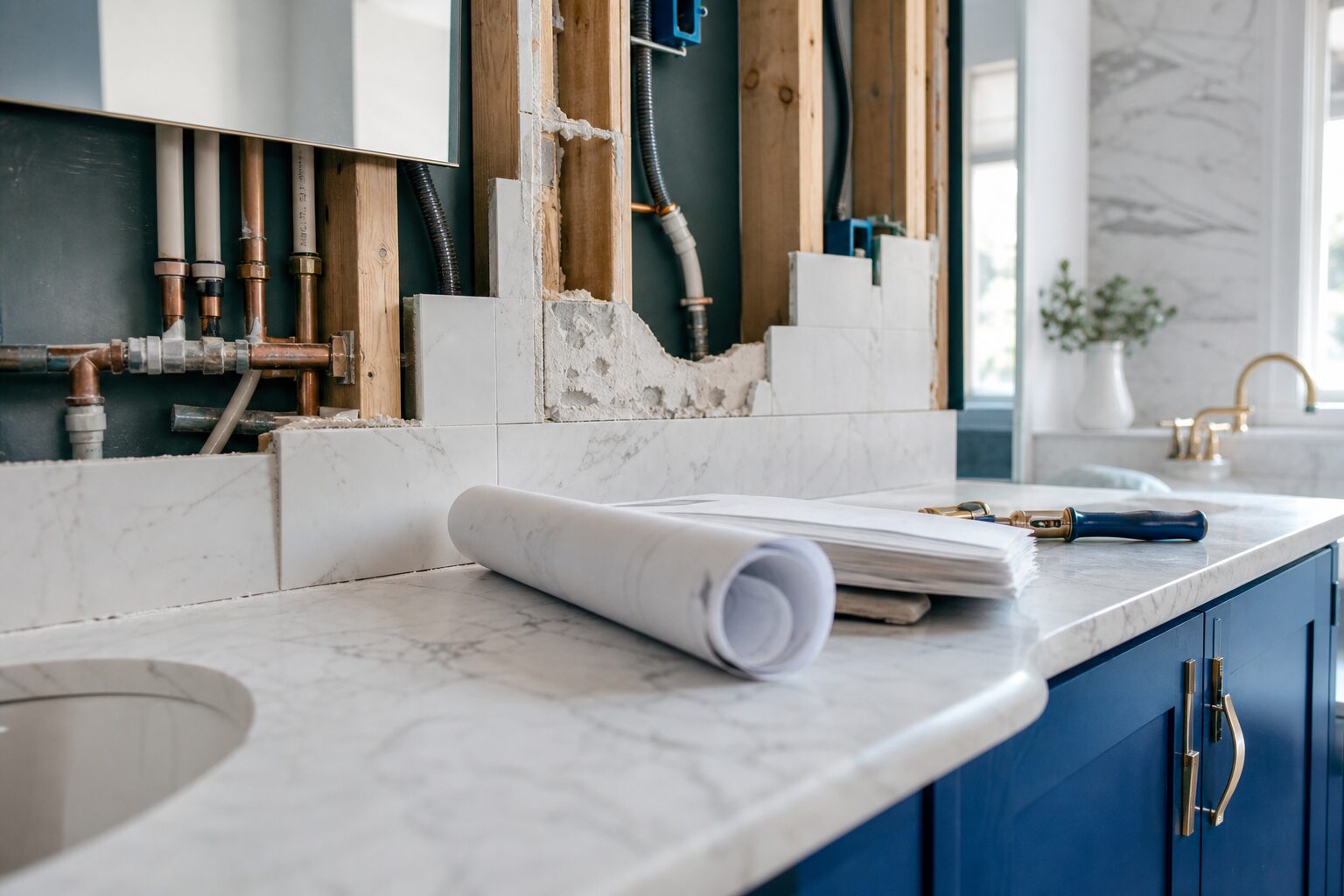
Most kitchen and bathroom remodels in Southern California require at least a building permit, and many require multiple permits depending on scope. Flooring alone might slip through without one if it’s purely cosmetic, but the moment you touch electrical, plumbing, or structural elements, you’re in permit territory. The specific permits you need depend on your jurisdiction, project type, and whether you’re working with a licensed contractor.
I’ve seen homeowners and contractors alike treat permits as a bureaucratic inconvenience to dodge. That’s a costly mistake. A permit protects you. It ensures inspections happen at the right stages, it protects resale value, and it keeps you from inheriting liability if something goes wrong. Beyond that, unpermitted work can void warranties, complicate insurance claims, and create a genuine headache when you sell.
Which Projects Actually Need Permits?
Not everything requires a permit, and that’s where the nuance lives. A simple tile flooring installation with no structural changes might not. A cabinet swap with no electrical or plumbing work might not. But the moment you’re moving walls, upgrading electrical panels, relocating plumbing, installing a new shower or bathtub, or replacing countertops with work that touches utilities, you need permits.
The rule of thumb: if it touches structure, utilities, or safety systems, it needs a permit. Cosmetic work like paint or simple flooring over existing substrate sometimes doesn’t. But ‘sometimes’ is not a strategy. When in doubt, call your local building department and ask. It costs nothing.
Luxury vinyl flooring, hardwood flooring, laminate, carpet, these are usually fine without permits if they’re going over existing substrate and you’re not removing asbestos tile or doing anything structural. Tile flooring, especially in bathrooms where you’re potentially dealing with moisture barriers and substrate prep, often does require a permit depending on the scope. Countertop installation that involves plumbing work absolutely does.
What Permits Do You Need for a Bathroom Renovation?
A full bathroom remodel in Southern California typically requires a building permit and often a plumbing permit. If there’s electrical work (new lighting, exhaust fans, heated mirrors), you’ll need an electrical permit. If you’re moving or installing a new shower or bathtub, plumbing and building permits are non-negotiable.
The bathroom remodeling permits timeline in California varies by jurisdiction, but you’re typically looking at 2 to 4 weeks from application to approval, assuming no red flags. Some jurisdictions are faster; others slower. Orange County and San Diego County tend to move quicker than Los Angeles County, but that’s a generalization. Your specific city matters more than the county.
A partial bathroom update, say, new vanity and tile without moving plumbing, might get away with just a building permit. But if you’re installing a new toilet, moving the sink line, or installing a custom shower enclosure, plumbing is required. Many jurisdictions now also require a separate permit for any work involving water-resistant barriers or moisture control in bathrooms, especially if you’re removing old tile and prepping new substrate.
Kitchen Remodels and the Permit Checklist
Kitchen permits are more complex because kitchens touch everything: structure, electrical, plumbing, gas (sometimes), and ventilation. A full kitchen remodel almost always requires a building permit. If you’re moving the sink or adding a new one, plumbing is required. New appliances that are hardwired (not just plugged in) need electrical permits. A new range hood or ventilation system needs permits. Removing or moving cabinets that are load-bearing (rare but possible) needs structural review.
The kitchen and bathroom remodeling permits guide for California breaks down the specifics by jurisdiction, but the baseline is this: assume you need a building permit, an electrical permit, and a plumbing permit for any kitchen remodel that involves more than cosmetic changes. Countertop work that involves sink relocation definitely requires plumbing permits.
Cabinet installation alone, if it’s just replacing existing cabinetry in the same footprint with no structural or utility changes, sometimes doesn’t require a permit. But if you’re removing cabinets and discovering that the wall needs reinforcement, or if you’re adding electrical outlets or lighting, permits become necessary. Again, call your building department first.
How the Permit Process Actually Works in Southern California
The process is similar across Southern California jurisdictions, but the timeline and strictness vary. You submit an application with plans (usually architectural drawings or detailed sketches), a description of the work, and contractor information. The building department reviews it for code compliance. If there are issues, they issue a correction notice. You revise and resubmit. Once approved, you get a permit and can begin work.
Inspections happen at key stages: after framing, after electrical and plumbing rough-in, after drywall, and at final completion. The inspector checks that work meets code. If something doesn’t pass, you fix it and request a re-inspection. This is not punishment; it’s assurance.
Timeline varies wildly by jurisdiction and project complexity. A straightforward bathroom remodel might take 3 to 4 weeks from application to approval. A complex kitchen with structural changes might take 6 to 8 weeks. Some jurisdictions have online portals and move quickly; others are slower. Los Angeles City, for example, has been known to take 8 to 12 weeks for more complex projects. Smaller cities often move faster.
Pro tip: Hire a permit expediter if you’re working in a jurisdiction known for slow processing. They know the local building department, understand what each inspector wants, and can often shave weeks off the timeline. It costs a few hundred dollars and saves you money and headaches.
Regional Differences You Should Know
Southern California is not monolithic. Los Angeles City has stricter seismic requirements and different standards than Orange County. San Diego has its own quirks. Smaller cities like Manhattan Beach, Torrance, or Irvine have their own building departments and timelines. Some jurisdictions require additional permits for energy efficiency (Title 24 compliance in California). Some have historic district overlays that add review layers.
The best move is to identify which city your project is in, then call that city’s building department directly. Ask what permits are required for your specific scope of work. They’ll tell you. It takes 10 minutes and saves you from guessing wrong.
Common Mistakes That Delay Permits
Incomplete applications are the biggest culprit. Missing dimensions, unclear scope descriptions, or plans that don’t match the written scope trigger correction notices and delays. Hiring an unlicensed contractor is another, many jurisdictions now verify contractor licensing before issuing permits. Using outdated plans or plans that don’t meet current code standards adds weeks.
Another mistake: assuming you don’t need permits because ‘the last guy didn’t get them.’ That’s how you inherit someone else’s problem. Unpermitted work can complicate future sales, insurance claims, and refinancing. It’s not worth it.
Flooring Permits: When They’re Required
Flooring is the gray area. Luxury vinyl flooring, laminate, and carpet installed over existing substrate typically don’t require permits. Tile flooring in bathrooms often does, especially if you’re dealing with substrate prep, waterproofing, or removing old tile that might contain asbestos. Hardwood flooring usually doesn’t require a permit unless you’re doing structural work underneath.
The rule: if flooring work is purely cosmetic and you’re not touching structure, utilities, or hazardous materials, you probably don’t need a permit. If you’re doing anything else, check with your building department. Some jurisdictions require permits for any flooring work; others don’t. Don’t assume.
How to Get Started
Step one: identify your project scope clearly. What exactly are you changing? Step two: find out which city you’re in and get that city’s building department contact information. Step three: call or visit their website and describe your project. Ask what permits are required. Step four: if you’re hiring a contractor, make sure they’re licensed and willing to pull permits. A contractor who wants to skip permits is a contractor you don’t want.
The comprehensive California home remodeling permits guide walks through the process step by step. Use it as a reference, but always verify with your local building department because requirements do vary.
Frequently Asked Questions
Do I need a permit for a simple bathroom vanity replacement?
If you’re replacing the vanity in the same location with no plumbing work, no electrical work, and no structural changes, many jurisdictions don’t require a permit. But if you’re moving the sink line, upgrading electrical outlets, or making any changes to utilities, you do. Call your building department to confirm for your specific city.
How long does a bathroom remodel permit take in California?
Typical timeline is 2 to 4 weeks from application to approval for straightforward projects. Complex remodels with structural changes can take 6 to 8 weeks or longer. Los Angeles City and larger jurisdictions tend to be slower than smaller cities. The timeline also depends on how quickly you respond to any correction notices.
Can a contractor work without a permit if I sign a waiver?
No. Permits are not optional, and waivers don’t make unpermitted work legal. Working without permits violates building code and can result in fines, stop-work orders, and complications with resale or insurance. It’s not a gray area.
What happens if I do work without a permit?
You risk fines, a stop-work order, having to tear out the work and redo it properly, complications with home insurance claims, and problems when you sell. Some jurisdictions require unpermitted work to be brought up to current code at the owner’s expense, which is often more costly than getting the permit in the first place.
Do I need separate permits for kitchen cabinets, countertops, and flooring?
Cabinet and countertop installation alone usually doesn’t require separate permits if there’s no plumbing or electrical work. They’re typically covered under the building permit for the kitchen remodel. Flooring usually doesn’t require its own permit unless it’s tile or involves structural work. But verify with your building department for your specific jurisdiction.
Is it cheaper to skip permits and do unpermitted work?
It might seem cheaper upfront, but it’s not. Fines, the cost of redoing work to code, complications with insurance, and resale issues make unpermitted work expensive in the long run. Getting permits costs a few hundred to a few thousand dollars depending on the project. That’s an investment in doing it right.
