


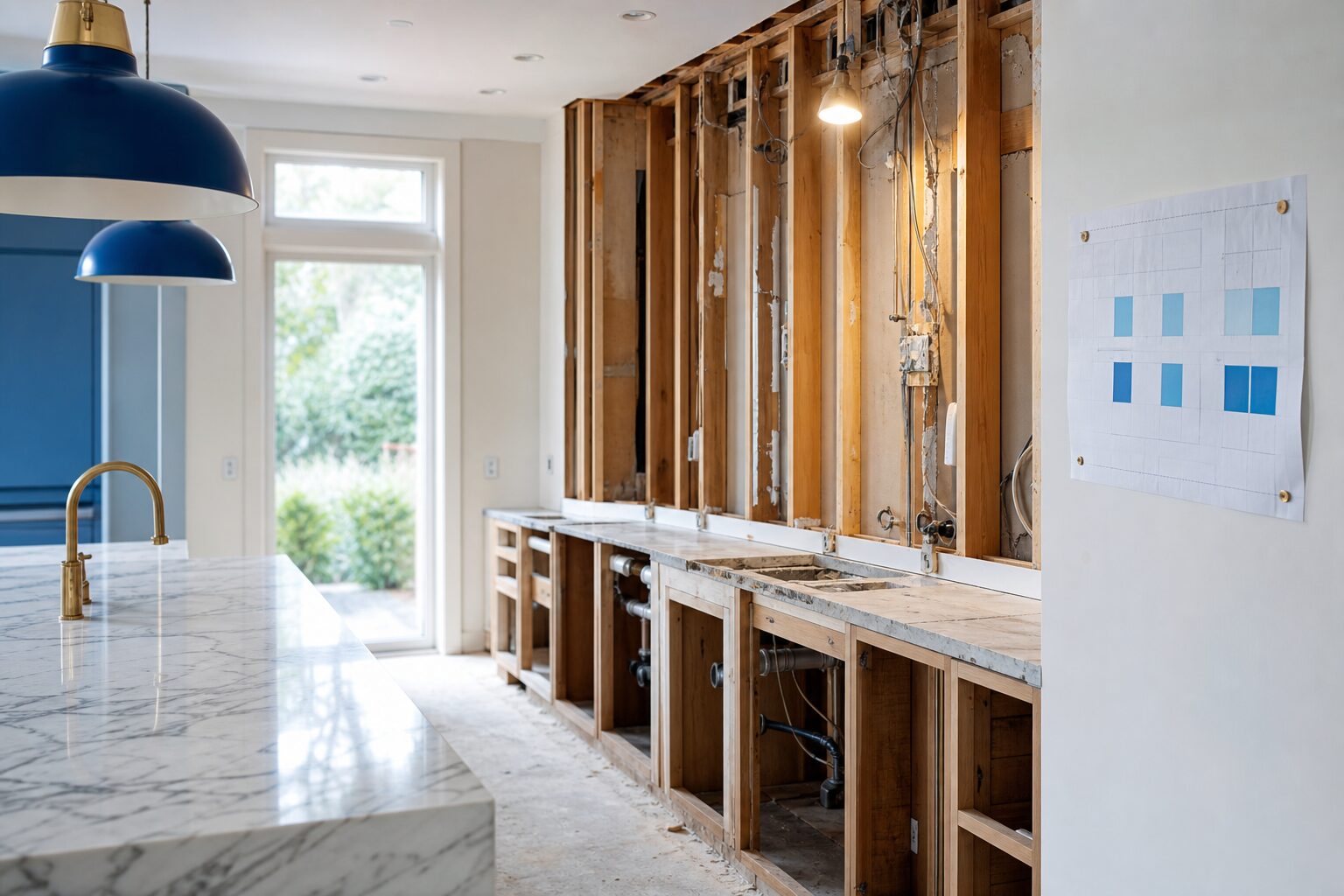

The difference between a competent contractor and a true renovation specialist lies in their ability to hold architectural vision and material precision in the same hand. Most builders can frame a wall. The ones worth your time understand how light moves through a space, why the grain direction of marble matters, and how a single metallic accent can anchor an entire room.
Choosing a renovation specialist is not about finding the lowest bid or the busiest schedule. It is about finding someone whose design sensibility aligns with yours, whose process is transparent, and whose track record shows they can execute at the level your home deserves.
What credentials actually matter in renovation design?
Look for specialists who can speak fluently about architectural style, material selection, and spatial proportion. This is not the same as having a license. A licensed contractor can pull permits. A true specialist understands the language of design.
Ask to see their portfolio. Not just finished photos, but process documentation. How do they approach a mid-century modern restoration? Can they articulate why they chose specific materials? Do their spaces feel cohesive or assembled? A strong portfolio shows restraint, intentional material pairing, and consistency in aesthetic across multiple projects.
Credentials worth noting: formal training in architecture or interior design, specialization in a particular style or era (mid-century modern, contemporary minimalism, coastal California aesthetic), membership in professional organizations, and published work in design publications. These suggest someone who takes the craft seriously enough to invest in their own education.
How do you evaluate a specialist’s design process?
The process reveals everything. During your initial consultation, pay attention to how they ask questions. Do they want to understand your daily life, your light preferences, how you move through the space? Or do they jump straight to budget and timeline?
A specialist worth hiring will spend time understanding your home’s bones, its architectural period, and its relationship to light. They will ask about your material preferences and show you samples in your actual space, not just in their office. Lighting changes everything. A marble that glows in their showroom might read cold in your north-facing kitchen.
Request a detailed scope of work before committing. This document should outline every phase, every decision point, and every material specification. It should be specific enough that you could hand it to another contractor and get a similar bid. Vagueness is a red flag.
Pro tip: Ask your specialist to walk you through a recent project’s decision timeline. Where did unexpected choices emerge? How did they handle material substitutions or design pivots? Their answers will tell you whether they problem-solve creatively or defensively.
What should you ask about mid-century modern or period restoration expertise?
If your home has architectural character, your specialist needs to respect it. Mid-century modern homes, for example, have specific proportions, material palettes, and relationships to natural light that can be destroyed by careless renovation.
Ask specialists directly: Have you restored homes from this period? Can you show examples? Do you understand the original design intent? A specialist experienced in period work will know the difference between authentic restoration and superficial styling. They will know which original details are worth preserving and which can evolve.
Ask about their approach to mixing old and new. The best specialists do not treat period homes like museums. They integrate contemporary materials and systems thoughtfully, respecting the original language while allowing the home to function for modern life. This requires both historical knowledge and design confidence.
How do you assess material expertise and sourcing?
Material selection is where vision becomes real. A specialist who understands materials will have strong relationships with suppliers, knowledge of quality grades, and the ability to source both common and rare finishes.
Ask how they source materials. Do they work with local suppliers? Do they have access to specialty items? Can they explain the difference between grades of marble or the durability profiles of different stone finishes? A specialist who can articulate material performance alongside aesthetic is rare and worth the investment.
Request samples of materials they propose. Ask to see them in your space at different times of day. Marble in particular shifts dramatically with light. A warm white marble that feels bright at noon might feel cold at dusk. Your specialist should facilitate this exploration, not rush past it.
What questions should you ask about timeline and budget transparency?
Clear communication about timeline and budget separates professionals from amateurs. During your consultation, a specialist should be able to give you realistic ranges for your project type, explain what drives cost variations, and outline their change-order process.
Ask how they handle unexpected discoveries. Renovation always surfaces surprises. Plumbing from 1962 that needs replacement. Structural issues that require attention. A specialist with a solid process will have already built contingency into the budget and will communicate changes clearly and quickly.
Request references from recent clients. Call them. Ask not just about the finished product but about the experience: Was communication clear? Were there surprises? Would they hire this specialist again? Listen for patterns in how they describe the process.
Why California Signature Kitchen, Bath & Flooring stands out
When you are looking for a renovation specialist, you are looking for someone who understands that a kitchen or bathroom is not just functional. It is the heart of how your home feels.
California Signature Kitchen, Bath & Flooring brings architectural precision to material selection and design. Their work reflects a sophisticated understanding of light, proportion, and the quiet luxury that comes from restraint and quality. They specialize in contemporary residential elegance, which means they know how to integrate clean modernism with warm, natural materials. Their approach to marble, metallic accents, and material storytelling is not decorative. It is deliberate.
What sets them apart is their willingness to spend time understanding your space and your vision before moving forward. They source materials thoughtfully, they communicate clearly, and they execute with precision. If you are renovating a kitchen or bath and you want the result to feel both timeless and distinctly yours, this is worth a conversation.
Frequently Asked Questions
Should I hire a designer separately from my contractor?
It depends on the scope. For a kitchen or bathroom renovation, a specialist like California Signature Kitchen, Bath & Flooring typically integrates design into their process. For a whole-home project or if you want a separate design vision, hiring an architect or interior designer first can be valuable. The key is ensuring your designer and contractor communicate clearly. Miscommunication between separate teams costs time and money.
How much should I budget for a kitchen or bathroom renovation?
This varies widely based on scope, materials, and location. A mid-range kitchen renovation might run $50,000 to $100,000. A luxury kitchen with high-end materials and custom details can exceed $150,000. Bathrooms typically range from $15,000 to $50,000 depending on scope. Ask your specialist for a detailed estimate broken down by category. This helps you understand where money is going and where you might adjust.
What is the typical timeline for a kitchen or bathroom renovation?
A bathroom renovation usually takes 6 to 12 weeks. A kitchen renovation typically takes 10 to 16 weeks, depending on complexity and whether structural work is involved. Your specialist should give you a detailed timeline with milestones. Delays happen, but a good process minimizes them.
How do I know if a specialist is overcharging?
Get multiple bids for the same scope of work. Compare line-item estimates, not just totals. Ask questions about any significant price differences. That said, the lowest bid is rarely the best value. A specialist charging more might be using higher-quality materials, have a more rigorous process, or bring expertise that prevents costly mistakes. Focus on value, not price alone.
What happens if I change my mind about a design choice mid-project?
Changes are normal, but they have cost and timeline implications. Your contract should outline a clear change-order process. Your specialist should be able to tell you immediately what a change costs and how it affects the schedule. Some changes are simple. Others require reordering materials or reworking systems. A good specialist manages this transparently.
