
Framed cabinets have a solid wood frame around the box opening; frameless cabinets are a solid box with no front frame. That single structural difference cascades into everything else: how they look, how they function, how much they cost, and how they age in a Southern California kitchen.
Most homeowners walk into a showroom thinking cabinets are cabinets. They’re not. The construction method, box material, wood species, and finish quality separate a cabinet that looks fresh in five years from one that looks tired in two. I’m going to walk you through exactly what to evaluate so you can make a choice that actually serves your space and your budget.
What’s the Real Difference Between Framed and Frameless?
Framed cabinets are traditional. A solid wood frame sits on the front of the box, and the doors hang from hinges mounted to that frame. The frame adds weight, adds cost, and takes up interior space. A frameless cabinet is a European approach: the box itself is the structure, and hinges mount directly to the sides of the cabinet. Frameless cabinets give you more usable interior storage because there’s no frame eating into the opening.
Frameless also looks cleaner. The doors sit nearly flush with the cabinet sides, creating that minimal, architectural line that reads as contemporary. Framed cabinets sit slightly proud of the box, which gives them a more traditional profile. Neither is wrong. The choice depends on your kitchen’s aesthetic and your actual storage needs.
Here’s what matters: frameless cabinets require precision installation. If your walls are out of plumb or your base isn’t perfectly level, frameless cabinets will show every millimeter of it. Framed cabinets are more forgiving because the frame can absorb minor inconsistencies. In a Southern California home with settled foundations or older walls, this is worth factoring in.
Which Wood Species Actually Works for Kitchen Cabinets?
Oak, maple, cherry, walnut, and alder are the standard choices. Each has different grain patterns, color depth, and how it takes stain. Oak is dense and shows prominent grain. Maple is fine-grained and takes stain evenly. Cherry darkens over time as it’s exposed to light. Walnut is rich and expensive. Alder is softer and less costly.
The honest truth: in a kitchen, the species matters less than the finish. A well-sealed maple cabinet in a light stain will outperform a poorly finished walnut cabinet in a humid kitchen. Durability in a kitchen comes down to finish quality and how well moisture is sealed out, not the wood species alone.
For California kitchens, consider the light in your space. If you have north-facing windows and soft ambient light, a lighter wood like maple or alder will brighten the room. If you have strong southern or western exposure, a deeper wood like cherry or walnut will ground the space and hide dust better. This isn’t a technical rule. It’s about how your kitchen actually feels when you’re standing in it at different times of day.
What Box Material Should You Actually Specify?
Cabinet boxes are typically plywood, particleboard, or a combination. Plywood is solid engineered wood with real veneer layers. Particleboard is compressed wood chips and resin. Plywood costs more and lasts longer. Particleboard is budget-friendly and fine for lower-traffic applications, but it can swell if moisture gets to it.
In a kitchen, plywood boxes are the better choice. Kitchens have moisture, heat, and daily wear. A plywood box will resist swelling and warping far better than particleboard. If you’re working with a tighter budget, ask about a hybrid: plywood on the sides and bottom, particleboard on the back. That’s a reasonable compromise.
The back panel also matters. Solid plywood backs are stronger and more durable than thin hardboard. If you’re planning to open up your kitchen to an adjacent room or if your cabinets will be visible from multiple angles, a finished plywood back is worth the investment.
Hardware and Hinges: Why This Isn’t a Throwaway Detail
Hardware is the first thing to wear out. Cheap hinges sag. Cheap pulls and knobs loosen. In a kitchen you use every day, quality hardware compounds into comfort and longevity. European-style concealed hinges are the standard for contemporary cabinets. They’re adjustable, durable, and they close quietly. Look for soft-close mechanisms. They cost a bit more upfront and they’re worth every dollar.
Pulls and knobs are personal. Minimalist kitchens often skip hardware entirely and use finger pulls routed into the door edge. That’s beautiful and clean, but it requires precision routing and it can show fingerprints. If you go that route, plan for regular cleaning or choose a finish that hides marks well. Bar pulls in brushed nickel or matte black are contemporary and functional. Cup pulls are more traditional. Choose what feels right in your hand and what reads correctly with your overall design.
Finishes: Paint, Stain, and Lacquer Explained
A finish is a protective layer that seals the wood and gives the cabinet its final look. Stain shows wood grain and comes in light, medium, and dark tones. Paint covers the grain entirely and offers unlimited color options. Lacquer is a clear or tinted coating that can be matte, satin, or gloss.
For a minimal, contemporary aesthetic, painted cabinets in soft whites, warm grays, or soft blacks are the standard. They photograph beautifully and they read as clean and architectural. Stained cabinets show more character and warmth. A light stain on maple or alder feels bright and airy. A medium stain on cherry or walnut feels grounded and luxurious.
The quality of the finish application matters more than the type of finish you choose. A cabinet with five coats of quality lacquer will outlast one with two coats of cheaper paint. Ask your cabinet maker or contractor how many coats they apply, how they sand between coats, and what they use to seal the finish. This is where premium cabinets separate from budget options.
Matte and satin finishes hide dust and fingerprints better than gloss. In a kitchen, that’s practical. Gloss finishes are more formal and show every smudge. If you want that polished, architectural look without the maintenance burden, satin is the right call.
Putting It Together: How to Evaluate Cabinets for Your Remodel
Start by deciding on your aesthetic. Are you going minimal and contemporary, or warm and traditional? That choice cascades into framed vs. frameless, paint vs. stain, and hardware style. Visit showrooms and look at cabinets in natural light, not just under showroom lighting. Open and close doors. Feel the hinges. Look at how the finish handles dust and fingerprints.
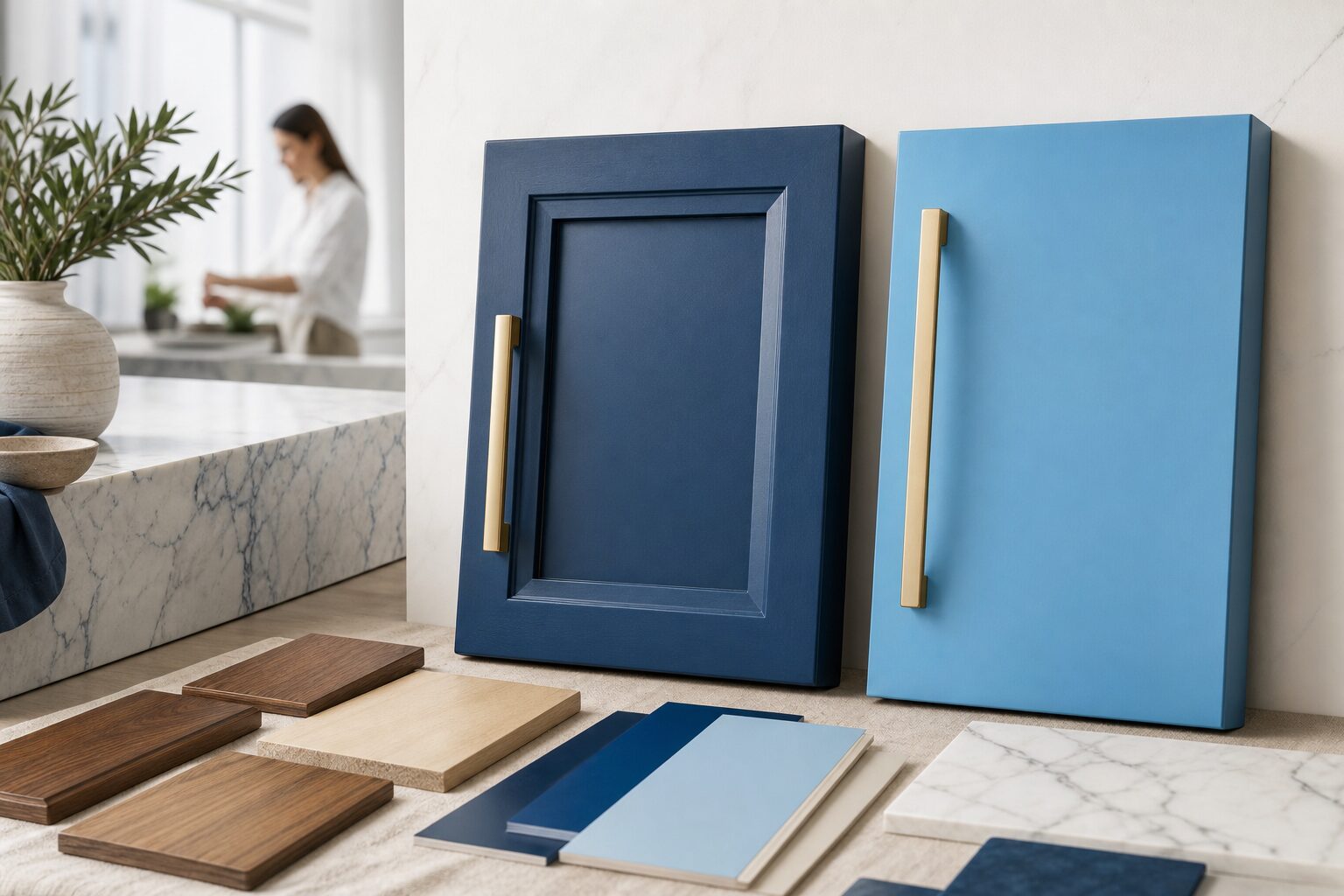
Ask your cabinet maker or remodeler for samples of the exact wood species, finish, and hardware you’re considering. Samples in your own kitchen, in your own light, will tell you far more than a showroom display. Live with the sample for a few days. See how it looks in morning light, afternoon light, and evening light.
Get a detailed specification that includes box material, wood species, finish type and number of coats, hardware brand, and hinge type. This protects you. It also ensures that what you’re paying for is what you’re getting.
If you’re working with a kitchen remodeler, ask them about their cabinet partners and why they recommend them. A contractor who has relationships with quality cabinet makers will steer you toward options that perform well in real homes. California Signature Kitchen, Bath & Flooring works with cabinet manufacturers who understand how to build for our climate and our light. We can walk you through the trade-offs between framed and frameless, help you choose a wood species and finish that works for your space, and make sure your cabinets are specified and installed correctly.
For a deeper dive into specific styles, explore our guides on Shaker cabinets and slim frame kitchen remodeling and two-tone kitchen cabinetry. Both are popular approaches in Southern California kitchens, and they each have distinct cabinet requirements. You can also browse our full cabinet options to see how different specifications perform in finished projects.
Pro tip: Cabinet finishes in kitchens benefit from regular maintenance. Wipe down doors weekly with a soft, slightly damp cloth. Avoid harsh chemicals that can strip finish over time. A quality finish will last 10 to 15 years with basic care; a poor finish can fade and wear in half that time.
Frequently Asked Questions
Are frameless cabinets better than framed?
Not necessarily better, just different. Frameless cabinets offer more interior storage and a cleaner contemporary look. Framed cabinets are more forgiving during installation and suit traditional aesthetics. The choice depends on your kitchen’s design, your walls’ condition, and your storage needs. Both can be high-quality if specified and installed correctly.
How long do kitchen cabinets typically last?
A well-made cabinet with quality finish and hardware can last 15 to 20 years or longer in a residential kitchen. Lifespan depends on construction quality, finish durability, hardware quality, and how well the cabinets are maintained. Budget cabinets may show wear in 5 to 8 years. Premium cabinets with proper care can last 20+ years.
Should I choose paint or stain for my cabinet finish?
Paint offers unlimited color options and a clean, contemporary look. Stain shows wood grain and natural character. Paint hides wood imperfections better; stain requires higher-quality wood. Choose based on your aesthetic preference and how much wood character you want visible. Both can be equally durable if applied with multiple quality coats.
What’s the difference between soft-close and standard hinges?
Soft-close hinges have a mechanism that slows the door as it closes, preventing slamming and extending hinge life. Standard hinges close at normal speed. Soft-close hinges cost more upfront but reduce wear and provide a quieter, more refined feel. In a kitchen you use daily, they’re worth the investment.
Can I mix framed and frameless cabinets in one kitchen?
Yes. Some kitchens use frameless cabinets for base and wall units, then add framed open shelving or display cabinets for visual interest. This works if the styles are coordinated and the overall design feels intentional. Mixing them randomly can look disjointed. Discuss this with your designer or remodeler to ensure cohesion.
What wood species is most durable for kitchen cabinets?
Harder woods like walnut and cherry are more dent-resistant than softer woods like alder. However, durability in a kitchen depends more on finish quality and moisture protection than wood species. A well-finished maple cabinet will outperform a poorly finished walnut cabinet. Focus on finish quality and box construction first, then choose your wood species based on aesthetics and budget.
